Get Full Government Meeting Transcripts, Videos, & Alerts Forever!
Get email alerts on the Water Sewer Budget topic
No spam. Unsubscribe anytime.
Village reviews water and sewer budget as aging pumps, higher energy costs strain operations
Summary
Village board members and staff reviewed the water and wastewater budget, discussing an operating shortfall, aging grit pumps that lack direct replacements, rising electric rates, a pending engineering grant application, and several capital priorities including generator backup for effluent valves and repairs to the clear well and sludge manhole.
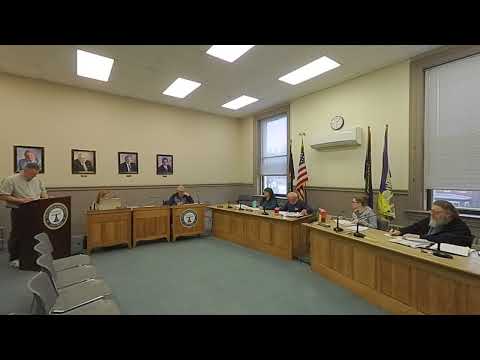
The Village Board on Thursday reviewed the proposed water and sewer budgets and a list of capital priorities, with staff warning that aging equipment and sharply higher energy costs are pushing the utilities toward an operating deficit.
At the meeting, David, a staff member at the water/wastewater plant, told the board the village has “been doing different things at the plant to improve the conditions” but that several pieces of equipment need replacement. He said two grit pumps are in “very rough shape” and the original pump models are discontinued, making exact replacements difficult to source. He described the pumps’ internals as being worn by abrasive grit and said operating on a single pump would not be sustainable for extended periods.
The discussion put the budget picture into sharper relief. Officials cited an anticipated operating shortfall of about $119,000–$120,000 under current assumptions; a separate line in the presentation estimated the year-end loss could be closer to $284,000. Staff estimated the sewer fund reserve would be roughly $587,000 at year end; a separate estimate given later in the meeting put an estimated year-end surplus (for combined water) at $661,891. Alyssa, a staff member responsible for finance numbers, agreed to provide breakeven rate calculations at the board’s next meeting.
Why it matters: aging mechanical equipment, volatile energy prices and uncertain contract revenues create near-term funding pressure that could require rate changes, drawing on reserves or capital financing.
Board members and staff discussed several near-term budget and capital items:
- Grit pumps and replacements: Staff said quotes were obtained but that earlier equipment specifications were incomplete or incorrect because the original pump models are discontinued. The plant is working with sales representatives and manufacturers to identify appropriate replacement pumps and impellers and to avoid overwhelming downstream equipment such as the grit classifier. No final purchase decision or contract award was made; staff said they are budgeting the replacement in the capital plan and continuing to gather firm quotes.
- Effluent filter valves and backup power: Staff said the effluent filter valves are part of the plant’s critical infrastructure and are being evaluated for connection to generator backup. Staff have contacted electrical contractors but have not yet received firm cost estimates; they reported many contractors are busy with other projects in the region.
- Clear well solids and filter beds: Staff reported a historic buildup of solids in the plant’s clear well that stirred into the process during a high-flow event. Plant staff described an in-house pumping and processing approach used two to three times weekly to remove solids, which staff said has reduced testing impacts. The board also discussed filter-bed maintenance and failing sweep actuators; staff said parts are outdated and replacement has been included in capital planning.
- Chemicals and supply: Staff identified liquid chlorine and ferric chloride as the plant’s two largest chemical costs. The mayor’s proposed budget includes an $8,000 increase for chemicals; staff said an anticipated shipment of chlorine arriving before year end should help. The board noted chemical supplies are affected by national supply and weather-driven demand and that prices that doubled in some recent months could remain elevated.
- Electricity costs and energy options: Staff told the board that the plant’s electrical supply charges have risen significantly in recent months—some months roughly doubling—and that the utility’s supply component reflects a widely fluctuating market. National Grid was identified as the electric supplier. Board members asked staff to pursue options: staff will investigate whether the plant is on a commercial rate class, whether a fixed-rate contract or alternate supplier option exists, and whether grant money for solar or other green-energy initiatives could offset operating costs.
- Contracted customers and revenue opportunity: A board member proposed renegotiating a standing contract that charges PPD a flat $3.06 (described in the packet) for sewer service; the member suggested raising that rate to $7. Staff said the contract is a set amount, remains unsigned in its current form, and that the original contract (referred to in the packet as the 2781 contract) should be reviewed at the next meeting to determine an appropriate update. Staff and board members agreed that any revenue from a revised contract depends on the other party’s agreement.
- Generator rental versus purchase: The plant currently uses a rented generator at roughly $1,200 per month (the rental has been in place about 18 months); the board discussed buying a generator—possibly used—or installing a permanent unit with a concrete pad and a natural-gas or diesel connection. Staff will obtain quotes and check procurement rules before recommending a purchase.
- Capital requests and priorities: Staff listed capital items including a $50,000 line for engineering work (staff said a grant application has been submitted and the village would expect to fund a portion, possibly 20 percent, if the grant is awarded), filter-bed valve replacement, sludge-manhole repairs and security improvements such as cameras. Staff identified security upgrades, the clear well issue and the sludge well manhole as among the top priorities; several other items were described as important but either dependent on state approvals (work in creek crossings) or awaiting better cost estimates.
What was directed: staff agreed to bring the original contract referred to as “2781” to the next board meeting for review; Alyssa will provide breakeven rate calculations for water and sewer; staff will continue to seek accurate pump specifications and firm price quotes; and staff will pursue contractor estimates for generator backup of effluent valves and investigate available grant funding for engineering and security improvements.
What was not decided: No formal votes were taken on rate changes, contract adjustments, or capital purchases. No contract awards were authorized. The grant application remains pending; staff described the application as submitted but did not say the award was confirmed.
Context and constraints: staff said the plant has saved money by performing repairs in house when possible, and credited the maintenance team for recent fixes to the bar screen and biogas burner. At the same time, supply-chain issues, discontinued equipment lines, and high regional demand for contractors (cited as partly related to a new stadium project) are constraining timelines and price certainty. Staff also noted a separate, older contract with SUNY that remains unsigned and “out there for years.”
Next steps: the board scheduled a budget follow-up meeting for Monday at 9 a.m., when staff will present breakeven numbers and updated line-item figures; staff said they will bring contract documents and any updated quotes or grant information to that session.