Get Full Government Meeting Transcripts, Videos, & Alerts Forever!
Get email alerts on the Community Development topic
No spam. Unsubscribe anytime.
Mexico City director outlines code rewrite, demolitions and animal-control improvements
Summary
Deputy City Manager and Community Development Director Nathan Mylobaro told the City Council the department is rewriting property-maintenance code, has removed seven homes so far in 2025, has exhausted demolition funds, and plans improvements to animal control, airport planning and zoning updates.
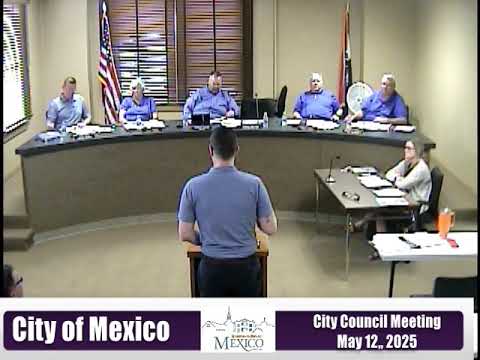
Deputy City Manager and Community Development Director Nathan Mylobaro told the Mexico City Council on May 19 that his department is preparing a major rewrite of the city’s property-maintenance code and pressing to clear a backlog of derelict buildings and neighborhood blight.
Mylobaro said the rewrite will consolidate scattered provisions and simplify enforcement. “My intention is to have a thoroughly rewritten code of property maintenance, regulations and processes in front of council at some point in the relatively near future,” he said. He described the rewrite as an effort to make enforcement “more effective, but also easier to understand.”
The director gave council a series of operational updates that the department will pursue. He reported that, so far in 2025, the city has torn down seven homes and that 10 additional demolitions are in the queue; he said the city had “exhausted funds for demolition” and that funding will be discussed during the budget season. He also said the city uses the International Property Maintenance Code as the base standard and will integrate that code more cleanly into the municipal code book.
Mylobaro addressed vehicle and yard violations as the most common code complaints and urged residents to correct issues before they receive citations. He said the department will update courtesy materials and forms — including new door hangers and citation templates — and expand staff training and community outreach so enforcement is clearer to property owners.
On animal control, Mylobaro described facility and process improvements planned or underway: fencing to connect an outdoor run to the building, better ventilation and flooring, improved staffing and an animal-control webpage to replace reliance on a single Facebook page. He said the humane society covers spay-and-neuter costs for adopted animals and that the department did not previously record totals; he intends to track spay/neuter numbers going forward.
Mylobaro also discussed the municipal airport as an economic asset, noting the facility can handle large business jets and will need long-term planning for a new fuel depot, fuel lines and major runway repairs over the next 10–15 years. On planning and zoning he said the city’s comprehensive plan is more than 10 years old and recommended revising zoning districts — including creating a downtown mixed-use zone — to encourage the types and locations of development the city wants.
He noted Community Development can apply for federal Community Development Block Grant (CDBG) funds for demolition and abatement work and said the department will continue hazardous-waste collection efforts. The presentation concluded with an offer for council members and residents to tour the airport and animal-control facilities.
Mylobaro invited council questions and council members raised the issue of dead or ash-borer–infested trees on private property; Mylobaro said residents are responsible for trees on their property but that the city would investigate potential grants or programs to assist low-income property owners.
Council took no formal action during the presentation; Mylobaro’s items were presented as departmental updates and proposals for future ordinances, budget requests and code amendments.