Get Full Government Meeting Transcripts, Videos, & Alerts Forever!
Get email alerts on the Finance Bills Escrow topic
No spam. Unsubscribe anytime.
Pompton Lakes redevelopment agency approves two invoices amid questions over escrow billing and bill review
Summary
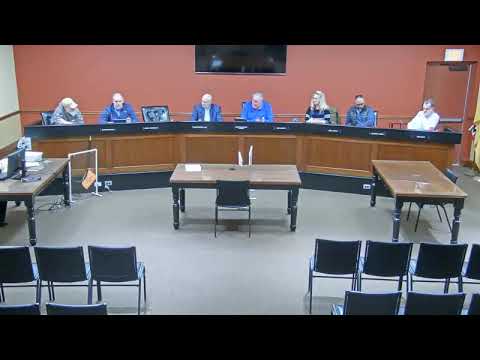
The Pompton Lakes Redevelopment Agency voted to approve two professional invoices on March 20, 2025, while several board members said they had not had enough time to reconcile the bills and urged clearer review of charges billed to developer escrows.
The Pompton Lakes Redevelopment Agency approved two professional invoices at its March 20, 2025 regular meeting, while members debated whether board approval should precede charging bills to developer escrows.
Board members voted to approve an invoice from Marazati Hopkins LLP for $2,467.30 and a Talia's Engineering and Design professional services invoice for $928.75. Agency staff told the board both charges would be billed to developer escrows rather than to the agency’s operating budget.
Why it matters: board approval of bills that are ultimately charged to developer escrows raises transparency questions for elected and appointed members who said they want time to review itemized charges before voting. Several board members said they had received the invoices shortly before the meeting and had not had time to reconcile line items.
Board discussion focused on two related issues: the practical authority and timing of votes, and the level of detail included with invoice packages. Board counsel explained that department heads sign the purchase orders and that, in these instances, the escrows for the affected projects would ultimately bear the charges. Agency counsel also said other governing bodies sometimes approve bills at meetings and later have separate controls in place to review or reject charges — but that patterns vary by entity.
Members asked for more detailed bill breakdowns. Staff said the submitted invoices include itemized time entries and narrative descriptions for work on specific project files (for example, work tied to 201 Montague Ave and other redevelopment accounts). One board member described the review process as a “reasonable smell test” when reviewing attorney bills, saying there is limited ability to audit time entries line-by-line during a meeting.
The vote was recorded by voice; meeting minutes show the motions carried with members voting in favor and at least one abstention recorded for the first invoice vote. The minutes do not list a roll-call tally attached to each invoice vote in the transcript excerpt.
Documents and context: the invoices discussed include billed time attributed to redevelopment-plan work, correspondence and plan reviews. Staff identified Colliers Engineering as a consultant whose work coordinates with some engineering invoices and plan reviews. Members asked that future bill packages be provided with enough time for review at least a few days before the meeting so they can reconcile charges against escrow account records.
The meeting did not include any applications, presentations or resolutions; the agency’s executive director was absent. The board also approved minutes from its Feb. 6 reorganization and regular meetings earlier in the session.
Next steps: members asked staff and counsel to consider whether to change the timing or packet practice so that board members can see and question invoices before voting, and to clarify which charges are charged to developer escrows versus agency funds. No formal policy change was adopted at this meeting.