Get Full Government Meeting Transcripts, Videos, & Alerts Forever!
Get email alerts on the K12 Budget topic
No spam. Unsubscribe anytime.
Goochland school leaders ask county for 5.9% transfer increase as budget workshop highlights pay, interventions and state policy changes
Summary
At a Jan. 21 budget workshop, Goochland County School Board staff asked the county for a proposed 5.9% ($1,655,000) increase in its transfer and outlined new local revenue changes, costs tied to a state dual-enrollment law, requests for academic intervention staff and planned capital-to-operating shifts totaling $500,000.
Goochland County School Board staff on Jan. 21 presented a budget package that requests a 5.9% increase in the county transfer—about $1,655,000—and flagged multiple cost pressures and program priorities for fiscal 2026, including teacher pay competitiveness, expanded academic intervention staffing in elementary schools, and costs tied to a recently passed state law on dual enrollment.
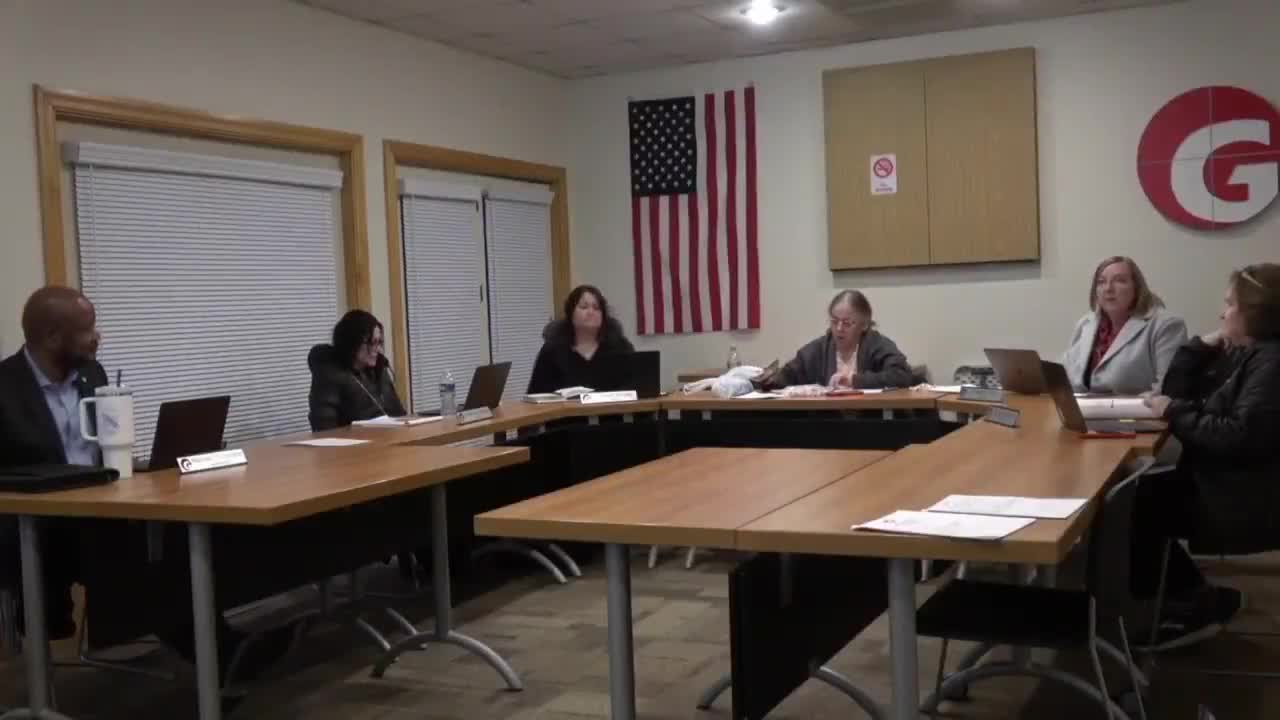
The request and program details were delivered during a budget workshop at the County Administration Building. Miss Weiss, a staff member presenting the finance slides, said the division will seek the county transfer increase to cover a 3% salary initiative, several operating shifts from the capital improvement plan and to hold the division harmless for certain technology contracts funded in the prior year.
Why it matters: the package would change what services the division can sustain next year and responds to new state requirements and local shifts that affect both revenue and expenses. Board members focused on staffing to support literacy and math in early grades, teacher and staff compensation, and a range of one-time and recurring cost items that the division says must be resolved during county negotiations.
Top priorities and new local revenue
Staff highlighted a set of modest local revenue changes to help narrow the gap. Miss Weiss said the division will increase the tuition charged to out-of-county students from $5,000 to $6,000 and raise the county-employee dependent tuition from $1,000 to $1,200. The division projects about 12 out-of-county students and about four county-staff students under those categories; the combined revenue impact was presented as $76,800 after staff clarified an initial arithmetic discrepancy.
Miss Weiss also said the division will charge a $125 fee for each student attending two summer enrichment camps (STEM and fine arts), generating an estimated $8,750 in the relevant fund while continuing to offer scholarships using free-and-reduced-lunch criteria.
State law affecting dual enrollment (ACA)
Miss Weiss warned that a new state law effective fall 2025 will require public school divisions to make certain dual-enrollment courses available at no cost to qualifying high school students. "We will no longer be able to charge a fee for dual enrollment," she said, describing the change as removing both the revenue and the offsetting tuition payment the division previously paid. Staff estimated the net effect will increase the division—s cost for the program by roughly $54,000, bringing the projected total program cost to about $137,000 because the division still funds teacher time, stipends and part-time instructor salaries tied to those courses.
Salary competitiveness and pay request
Dr. Wagner, a staff member addressing salary and benefits, said maintaining competitive pay remains the division—s highest priority to recruit and retain teachers and employees in the Richmond metro area. Staff presented benchmarking that showed Goochland teacher starting pay slightly above the regional median (a 2.3% difference at step 0) following a market adjustment in spring 2024, and noted that other divisions are considering 3% or higher increases. The division—s overall requested increase to the county transfer was presented as a 5.9% step from last year to cover salary and other priorities.
Academic interventions and how they would be expanded
Dr. Gower, a staff member who led the instructional portion of the presentation, detailed why the division is seeking additional elementary academic interventionists and other specialists. Board materials and the presentation argued the need persists independent of federal pandemic funding: intervention staffing originally hired with federal dollars was reduced when that money expired, and current staffing leaves some schools with fewer specialist supports.
Gower described a range of intervention models (teacher-led small groups, push-in and pull-out specialists) and said needs have grown partly because the assessment regime (referred to in the meeting as "VLA") identifies a larger share of students for intervention. He listed specific staffing asks discussed in the workshop: increase ESL/ESOL staffing from 0.75 to 1.0 FTE plus an additional position, move an EMT program position from 0.25 to 0.5 FTE, and add elementary interventionists to reduce the student-to-specialist ratios at schools currently without full math or literacy specialists.
Gower noted Bird Elementary (the division—s Title I school) currently has additional staff funded by federal dollars and can support math and literacy K'1, while Randolph and Goochland Elementary lack that level of specialist coverage.
Textbook fund, capital-to-operating shifts and one-time needs
Staff said the textbook fund will be tapped next year to buy science and social-studies instructional resources aligned to new state standards. The presentation also proposed shifting $500,000 of items normally in the capital improvement plan into the operating budget for next year. Specific items listed included a 65-passenger diesel school bus (presented at $147,000), one student-transport vehicle ($43,000), two replacement maintenance vehicles ($108,000), a serving line at Randolph Elementary ($80,000), parking-lot striping at the high school ($70,000), pipe repairs at Byrd Elementary ($28,000) and a water-heater replacement at GTAC ($24,000).
Other fiscal risks and contested items
Staff flagged several additional budget exposures: a proposed Canvas contract cost presented as roughly $2.525 million; uncertainty in E-rate funding (noted as potentially affecting the budget by about $41,000 if an adverse court ruling affects reimbursements); rising tuition at Maggie L. Walker Governor's School (estimated impact just under $31,000); a potential shift in earlier state/local cost-sharing that could increase the division—s share by about $143,539; possible Head Start/preschool funding changes (about $70,000); and the loss of a $300,000 CIP general-maintenance allocation. Staff also said the health-insurance procurement at the state level could affect premiums but that their consultant currently projects a 0% premium change based on claims experience.
Board questions, next steps and public timeline
Board members asked for clarifications on scholarship criteria for summer camps (staff said the division would use free-and-reduced-lunch criteria), the exact revenue arithmetic for tuition changes (staff corrected the figures during the presentation), and for a year-over-year percentage comparison and a balanced-budget presentation at the next workshop. Staff said they will present a balanced budget proposal at the next workshop and aim to advertise a budget for public hearing in February; the school board's timeline discussed included a public hearing presentation at the board's regular February meeting and submission of the recommended budget to county administration afterward.
"We will hear from teams that will say, you are obligated to provide intervention. Why aren't you doing it?" Dr. Gower said, describing how parental expectations and new state requirements are increasing pressure on divisions.
Ending
No final budget vote was taken at the workshop; the board adopted the evening's agenda at the start of the session and later adjourned. Staff asked the board to consider the 5.9% request as a pragmatic starting point for negotiations with county administration and said updated documents, including a balanced presentation and year-over-year deltas, will be provided at the next workshop.