Powhatan advertises 75¢ tax rate as county and schools spar over FY26 funding and behavioral program pilot
Loading...
Summary
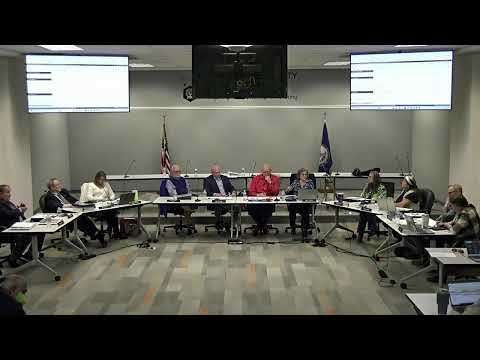
Powhatan County supervisors voted March 6 to advertise a proposed real-estate tax rate of $0.75 per $100 of assessed value (75¢) as the county and school board continued a joint review of the county and Powhatan County Public Schools’ draft fiscal 2026 budgets.
The vote came at a joint budget workshop at which County Administrator Brett Shardine presented the county’s draft FY26 operating budget and 10-year financial forecast and Superintendent Dr. Teigen outlined the school division’s FY26 request, a roughly $1.6 million gap in the schools’ plan and a separate request that the county consider providing $2.0 million in additional support.
Shardine told the boards the draft county budget would hold general fund operating spending near $32.8 million, a roughly 6.3% increase over the prior year funded by assessment growth, new construction and a proposed 3¢ increase over the current 69¢ tax rate (the draft started at 72¢). The draft includes a proposed $1.5 million increase to the school transfer, a 3% general pay increase countywide, and the net addition of about 3.4 full-time equivalent positions. He said the county’s revenue projection for all funds is about $82.7 million, and that the draft meets the county’s policy targets for fund balance and debt under the model assumptions.
“If we adopted the 72¢ rate and didn’t change that for the next 10 years … around FY29 or so, we would drop below our policy level,” Shardine said while reviewing the forecast. In a worst-case scenario where the county pursued the full capital improvement program on the current schedule, he said the model shows fund balance pressure that would require much larger tax increases in later years; his examples projected tax-rate pressure in the high 70s to 90¢ range in out years if no changes were made to CIP timing or scope.
Dr. Teigen told the joint meeting the schools’ FY26 request includes roughly $991,830 of additional local revenue expectations and about $3.55 million in total expenditure increases driven primarily by compensation, benefits, transportation and student-support changes. The division’s total budget presented was roughly $66.75 million; staff cited a preliminary deficit in the mid six figures to low seven figures depending on which items remained in the package and asked the supervisors to consider additional local support.
The school presentation listed specific line items that drove the increase: a reading specialist required by the Standards of Quality, additions to student services and behavior supports (an “alternative education” program to address disruptive behavior), cybersecurity infrastructure work, and incremental increases to administrator and specialist pay that the division said are needed to remain regionally competitive. The full alternative-education proposal for the division was described by schools staff as approaching $700,000; school leaders and supervisors spent much of the meeting discussing whether to pilot a smaller program first and how a scaled pilot could reduce the immediate county contribution the schools requested.
“We have to keep working at it year by year,” Shardine said of the long-term affordability challenge, adding that economic-development projects (he cited a proposed data-center project) or a different CIP schedule could change the county’s revenue trajectory and reduce tax pressure.
Supervisors and school-board members debated both the scale of the behavior program and the proper role of county funding. Several supervisors urged starting with a pilot (one suggested a single elementary school) before committing the full division-level sum, while school leaders argued early, divisionwide investment could reduce out-of-district placements and longer-term costs. Dr. Teigen and several supervisors also noted state mandates such as the Virginia Literacy Act and the Standards of Quality increase local obligations that are not fully funded by the state.
Public commenters raised related concerns: several residents criticized the school division’s legal spending and salary growth in recent years and urged greater linkage between the new strategic plan and the proposed budgets. One resident recommended the county and schools link budgets to SMART targets and produce clearer prioritization of projects and hires.
Action taken: the Board of Supervisors passed a motion to advertise a $0.75 tax rate for the fiscal-year advertisement—the vote recorded as aye from Supervisors McClung, Powers, Morissette, Vice Chair Kenny and Chair Donati. County staff said advertising the higher rate preserves flexibility while the boards continue budget deliberations; any adopted rate cannot exceed the advertised rate without re-advertising.
What’s next: county and school staff will return to more detailed departmental reviews at follow-up workshops (the county scheduled a department-by-department workshop for March 13). Supervisors instructed staff to continue negotiations with the schools on how to bridge the remaining gap, and several supervisors asked the schools for a smaller pilot option for the proposed alternative-education program and for more detailed CIP prioritization tied to structural or safety needs.
The joint workshop highlighted the tension officials face statewide: meeting rising personnel, transportation and technology costs while keeping major capital projects affordable over a 10-year horizon, and balancing immediate service needs against the longer-term tax implications for county residents.