Get Full Government Meeting Transcripts, Videos, & Alerts Forever!
Get email alerts on the Solar Panels topic
No spam. Unsubscribe anytime.
Powhatan Schools’ solar arrays have cut energy costs; board hears plan to expand to high school
Summary
A district presentation documented about $375,000 in avoided utility costs over five years from a power purchase agreement; the vendor and district said the high school could be added at no direct cost after a planned roof replacement in 2026.
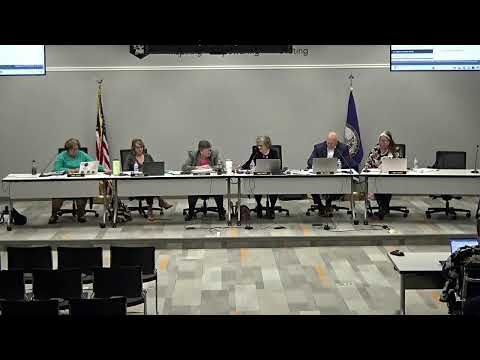
Powhatan County School Board heard a briefing on existing solar installations and a possible expansion to Powhatan High School, with officials saying the district’s power purchase agreement has produced measurable savings.
The presentation, given by Bob Benway, said Powhatan’s solar arrays — installed in 2019 on the middle school and three elementary schools through a partnership with SunTribe Solar and Dominion Energy — have generated energy credited under a net‑metering arrangement and produced roughly $375,000 in savings over five years. "We could pay 8.57¢ per kilowatt hour for the life of these cells," Benway said, comparing that fixed price to an average utility price of about 12.32¢/kWh used for the savings calculation.
Those numbers matter because the panels are covered by a long‑term power purchase agreement (PPA): Benway said the contracted rate is fixed for about 25 years, which protects the school division from future market increases. He added the system does not include on‑site storage: "There is no energy storage capability in this system," Benway said, so any excess generation is exported under the agreement and Dominion may sell it at market rates.
Why it matters: the PPA enables the district to host solar equipment with no upfront installation cost and to buy the resulting power at a below‑market fixed price, producing budgetary relief and predictability for energy spending.
Key technical and financial details from the presentation: - Benway reported the district system’s historical production figure of roughly 10,000,000 kilowatt‑hours (aggregate production cited in the presentation) and said one site has roughly 400 kilowatts of capacity. (Figures described in the meeting were presented as system totals and are treated as approximate.) - Using a 3.57¢/kWh spread between the PPA and the historical average utility price, the district calculated nearly $375,000 saved over a five‑year span. - The high school’s roof was cited as the primary barrier to adding panels in 2019. Benway said the district hopes to replace the high school roof in 2026 and that SunTribe and Dominion have modeled an expansion that would not require an upfront payment from the division: "We really didn't pay anything upfront," he said, describing how the program uses district roof space in exchange for below‑market energy pricing.
Board members asked technical and operational questions during the discussion. In response to whether the system ever produces more energy than the schools can use, Benway said, "On a good sunny day, especially in the summertime, there is excess energy, and that is just pushed right back out to the grid." He also described how SunTribe performs maintenance visits and inverter service without charging the district for routine upkeep under the contract.
Board members and staff discussed educational uses for the arrays. Benway and the district said SunTribe has offered lesson‑level support, including data and demonstrations for middle and high school classes to use in STEM or environmental curricula.
Ending: The presentation left two operational constraints in place: the system currently has no battery storage and any high‑school expansion depends on a roof replacement. District staff and the vendor described the PPA as a long‑term cost‑saving arrangement that also offers potential hands‑on learning opportunities for students.