Get email alerts on the Landscape Variance topic
No spam. Unsubscribe anytime.
Eagle Pass planning panel deadlocks on landscape-variance request for proposed 51,000‑sq‑ft warehouse
Summary
Developers sought to cut a city landscaping requirement from 39 trees and 78 shrubs to five trees and 10 shrubs for a 51,000‑square‑foot warehouse at 118 Industrial Boulevard; staff recommended denial and the commission took no final action after competing motions failed to pass.
The City of Eagle Pass Planning & Zoning Commission on March 5 heard a public hearing on a variance request from developer Paco Mondragon to reduce landscape requirements for a proposed 51,000‑square‑foot industrial warehouse on a 5.06‑acre lot at 118 Industrial Boulevard.
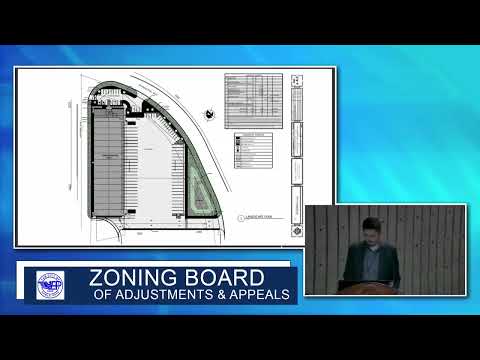
City planning staff presented the item and said the parcel is zoned industrial, served by public utilities and surrounded by other industrial uses. Planner Mister Madera said the commission’s recently amended ordinance requires 15% of impervious area be landscaped and, under the current tiered calculation, this project’s impervious area (about 177,000 square feet) translates to a requirement of 39 trees and 78 shrubs. “We would not recommend further reductions through this variance,” Madera said, noting the department had already amended the ordinance to reduce tree requirements citywide.
Mondragon, the applicant, told the commission he had submitted the variance and argued the lot shape, slope and operational constraints create a hardship. He said much of the site is sloped and that roots near foundations and truck maneuvering areas limit where trees can be placed; he also said tenants typically maintain landscaping and that ongoing maintenance and water needs can be costly. Mondragon proposed five trees and 10 shrubs and said he was willing to explore adding several more trees in visible frontage areas or using shrubs and xeriscape near the detention pond and other constrained locations.
Commission discussion focused on whether the application met the statutory criteria for a zoning variance, and on possible compromise solutions. Madera and other staff noted that some green areas adjacent to the curb are right‑of‑way and therefore do not count toward the ordinance’s landscape-area calculation even if the developer will maintain them. Staff also noted the ordinance now allows xeriscaping as an alternative to grass in some cases.
A motion to table the application so the applicant could produce revised landscape drawings was made but received no second and therefore failed. A later motion to deny the variance received three affirmative votes; commissioners and staff recorded that the vote did not reach the required threshold for action, so the motion did not carry. As a result, the commission took no final, binding action on the variance during the meeting.
Because no final action was recorded, the applicant may return with revised plans or pursue the matter with city council (per the applicant’s options discussed during the hearing). The public hearing was closed before the commission moved on to other items.
Ending: The Planning & Zoning Commission left the landscape-variance request unresolved; the applicant said he would consider revised plans and the commission suggested a site visit or additional visual materials could help the panel assess feasible tree placement without obstructing operations.
AI generated
The text on this page is AI generated. Summaries, highlights, analysis, and video transcripts are all produced from the original source material.
AI can make mistakes, so if you spot one, and we will fix it for everyone.
Note: the source content is unaltered by us. Any content source we link to, be it a video, an audio recording, or a document, is presented exactly as its publisher released it. That publisher is usually a government body, sometimes an individual official or another organisation.