Get Full Government Meeting Transcripts, Videos, & Alerts Forever!
Get email alerts on the Hospital Board Appointments topic
No spam. Unsubscribe anytime.
Council legal counsel says hospital nominations met statute after Watkins raises point of order
Summary
Council member Enolia Watkins challenged the process used to nominate candidates to the Health Care Authority board, alleging undue influence by the hospital CEO; city legal counsel said the nominations complied with the Health Care Authority Act of 1982 and denied the point of order.
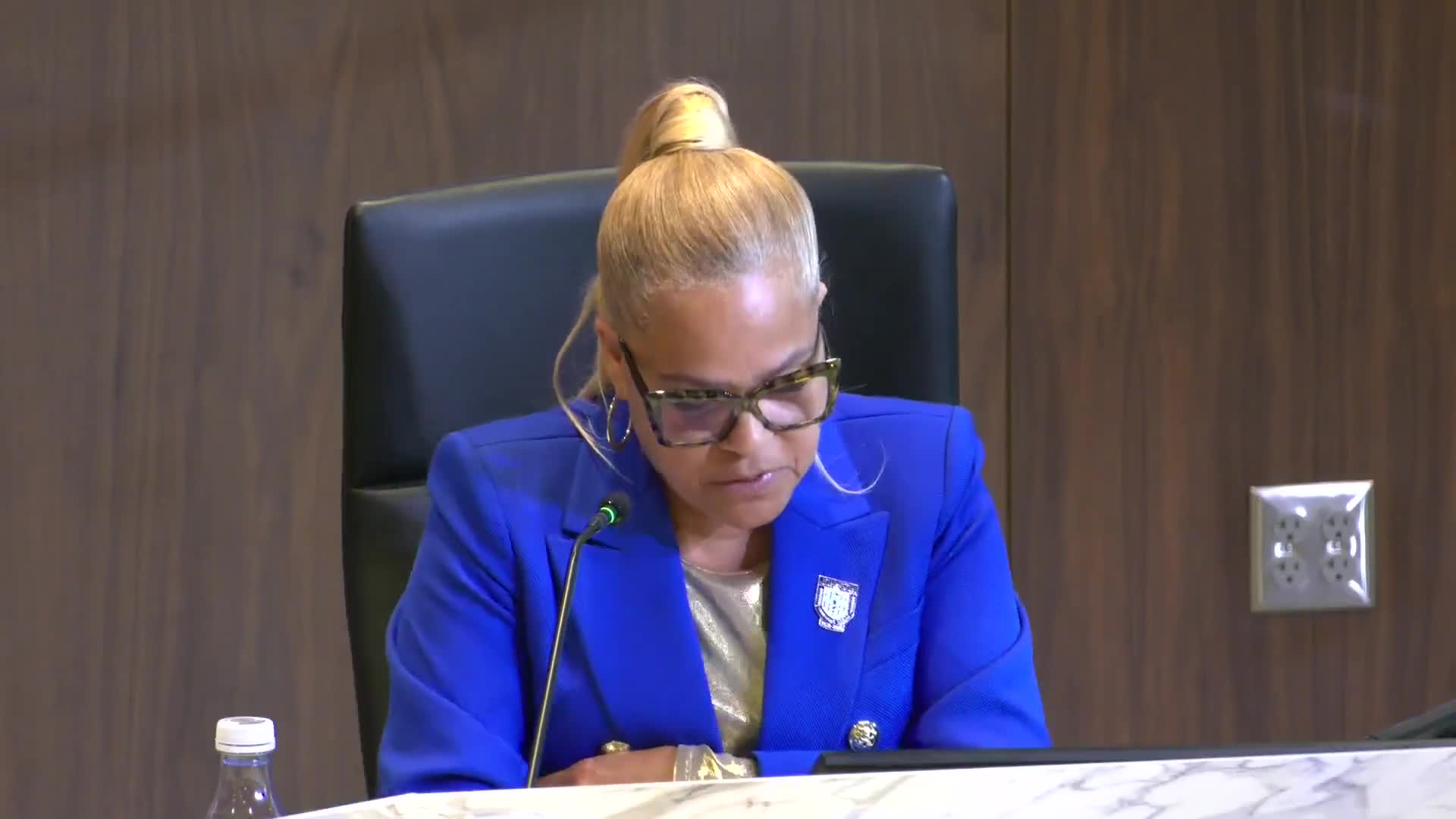
Council member Enolia Watkins raised a point of order at the May 8 Huntsville City Council meeting, alleging that the hospital system’s CEO improperly influenced a slate of nominees to the Health Care Authority board and that the proper process was not followed.
Watkins said the CEO had led “a charge to who could and who could not be nominated,” and that she had not been afforded the opportunity to meet with nominees as she expected. “It was illegal, and you all know it,” Watkins said during the meeting.
City legal counsel William Riley responded that he had reviewed the procedure and found no violations of statute or local procedure. “The statute provides a procedure whereby the nominees are to be submitted to the council…containing at least three names,” Riley said. He added that the law limits the council’s authority to appointing representatives from the submitted slate and that preferences or customary practices do not equate to legally required procedure.
Riley told the council the exception that might allow a late point of order did not apply here because he found no procedural irregularity under federal, state, or local law. He said he consulted colleagues in his office and was confident in his legal opinion.
Other council members discussed the political and practical aspects of the nominations. Councilman David Little and Councilman Claude Kling said the hospital-side process, not the council’s, appeared to be the source of members’ concerns and urged improved communication. Several council members said they would ask the hospital board to meet with council members in the future to discuss nominees as a courtesy, but that such meetings are not mandated by the state statute.
Outcome: The council did not grant Watkins’s point of order. Legal counsel concluded the nomination process complied with the Health Care Authority Act of 1982 and related procedures; the council did not take further formal action at the meeting.
Why this matters: Appointments to the Health Care Authority board affect governance of local hospital assets and policy. The exchange highlights tension between customary practice (courtesies such as CEO-accompanied meetings) and the statutory process that governs nominations and council authority.
Additional context: Riley noted statutory constraints on nominees, including that nominees cannot be physicians holding elective office and that the nomination letter must contain at least three names and be submitted within 10–90 days of the vacancy. Several council members asked staff to clarify recommended practices and consider formalizing expectations for future nomination communications.