Lifetime Citizen Portal Access — AI Briefings, Alerts & Unlimited Follows
Snohomish County reports structural, mold and asbestos finds at Edmonds and Everett bridge-housing sites; schedule and costs affected
Loading...
Summary
Facilities staff told the Snohomish County Public Infrastructure and Conservation Committee that moisture remediation is complete at both properties but revealed structural damage at Edmonds and asbestos-bearing paint at Everett, prompting design changes, schedule delays and added costs including a $547,000 kitchenettes change-order estimate.
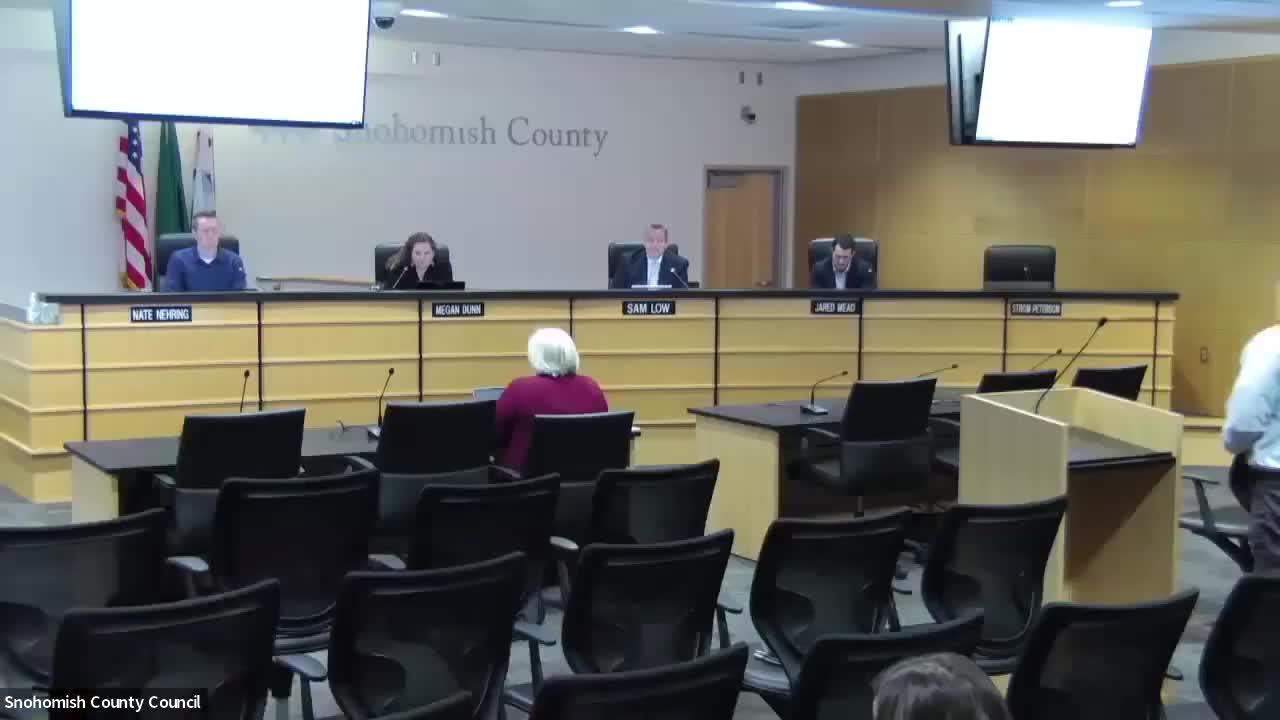
Snohomish County facilities staff updated the Public Infrastructure and Conservation Committee on two bridge-housing properties in Edmonds and Everett during the committee’s Jan. 21 meeting.
Lance Meinhold, project manager for Facilities, said moisture remediation at both locations is finished. "The moisture remediation has been completed," Meinhold said, and work at Edmonds revealed previously undisclosed structural damage and widespread wood deterioration beneath roof drains and windows.
The damage at Edmonds includes blackened exterior sheathing, joists that no longer bear on their adjacent walls, missing subflooring and areas where previously attempted repairs are visible. Meinhold said a temporary shoring wall has been installed and that he will meet with the building-envelope consultant and a structural engineer to determine permanent repairs. "The roof leak that we believe caused this has been sealed by our facilities techs," he said.
At Everett, Meinhold reported additional mold removal and discovery of an asbestos-bearing painted material inside wall cavities. The asbestos-bearing material will be encapsulated during the remodel, he said.
The Edmonds site had been scheduled to start construction in early January, with occupancy expected in June. Meinhold said City of Edmonds plan-review requests for improvements along Highway 99 — including driveway, utility and sidewalk changes and removal of exterior porticos — require responses from the county’s design team and have pushed the start of construction back to April and occupancy to roughly September. To reduce schedule slippage, the county issued a limited notice to proceed so the contractor can begin certain off-site critical-path tasks before the full building permit is issued.
Meinhold said the kitchenettes were restored to the Edmonds project scope after staff concluded some residents may remain up to three months and would need space for light meal preparation. He said the kitchenette change order is estimated at $547,000 and "the contractor has found an alternative for the appliances which is a mini fridge and a microwave, which may lower that estimate." He added that the construction contingency in the spreadsheet is based on 20% of the construction amount and that the newly revealed damaged conditions will significantly affect costs.
For Everett, Meinhold said the contractor is installing heating units and that construction is waiting on a City of Everett building permit and a purchase order from county purchasing. The contractor identified permit submission for the fire-sprinkler drawings and procurement of new electrical gear as critical-path items with long lead times; staff said they are seeking alternate manufacturers to reduce lead time and meet the contractor’s 180-day schedule.
When asked about monthly operations and maintenance estimates while units remain in a temporary state, Meinhold reported an estimated cost of about $13,000 per resident room at Edmonds "so far what we've [been] anticipating spending until we can start construction," and about $8,800 per room at Everett. The committee asked clarifying questions about insurance impacts; Meinhold said the planned kitchenettes will not include ovens, gas appliances or stoves and so are not expected to increase insurance costs.
Meinhold said the county’s property officer and the prosecuting attorney’s office are discussing whether there are grounds to pursue action against the former owner for failing to disclose the property condition, "if they even knew about it." He offered tours of either facility and a copy of the budget spreadsheet to committee members.
Why it matters: the discoveries add design, permitting and remediation steps to two projects intended for temporary shelter, pushing occupancy and increasing near-term costs. Committee members pressed for cost detail and were told contractors are seeking cost reductions where feasible.
The committee received the update; no formal action or vote on the projects was taken during the meeting.