Get Full Government Meeting Transcripts, Videos, & Alerts Forever!
Get email alerts on the Solar Energy topic
No spam. Unsubscribe anytime.
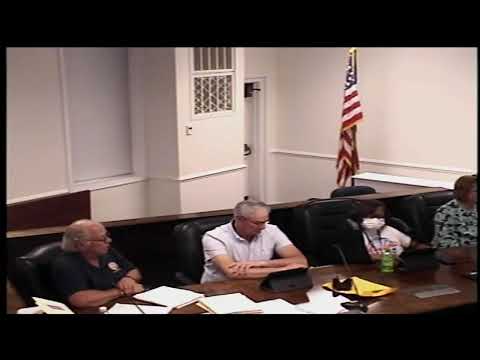
Mecklenburg planning commission denies Antlers Road 90-MW solar project after lengthy public hearing
Summary
The Mecklenburg County Planning Commission on a recorded vote denied a comprehensive-plan review for the proposed Antlers Road solar project, a 90-megawatt facility that would have used roughly 490 acres of disturbance on leased land.
The Mecklenburg County Planning Commission on a recorded vote denied a comprehensive-plan review for the proposed Antlers Road solar project, a 90-megawatt facility and associated substation and switchyard that would use about 490 acres of disturbance on roughly 1,009 leased acres.
The project proponent, Natalie Gerber, senior manager of development at RWE Clean Energy, told the commission the company reconfigured its proposal after a 2022 denial to reduce prime farmland impact to about 220 acres, enlarge setbacks from Mines Creek to 300 feet and increase the setback from Antlers Road to 200 feet. Gerber said the application would include a decommissioning bond, on-site sheep grazing for vegetation management, pollinator plantings, and a proposed energy credit program that would pay about $50 per month for five years to 50–60 neighboring households.
Commissioners denied the application on the grounds it was not in substantial compliance with the county’s comprehensive plan. The motion cited the site’s inclusion in mapped high-priority forest and ecological core areas, high watershed-impact model scores, proximity to Mines, Allens and Coleman creeks (which drain to the Roanoke River), and the comprehensive plan’s preference for small- or community-scale rather than utility-scale solar in rural conservation areas.
Gerber said the project would be built on leased land rather than purchased acreage, would limit panels to roughly 330 acres under array, keep about 520 leased acres in conservation for the life of the project and provide a draft siting agreement to the county. She described a timeline that anticipates state and federal permitting (including permit-by-rule and DEQ stormwater permits), construction starting in late 2027 or early 2028 and operations by 2029 if the county and board approvals proceed.
Members of the public addressed the commission for and against the project during the public hearing. Laurie Huber, a resident near Highway 58, said, “I am a unapologetically pro-solar member of the community,” and urged the commission not to “close the door” on solar development. Farming resident Ryan Romack said solar leases provide stable long-term income for landowners and called the project “an enormous opportunity for the landowner and our farming community.”
Opponents raised water-quality, wildlife, visual-impact and decommissioning concerns. Betty Upton, who said she owns property adjacent to the proposed site, said she feared “toxins in these panels” running into streams used by cattle and described potential effects on land values and rural quality of life. Gwen Wilden cited a so-called “good neighbor agreement” circulated around another project and alleged developers were using payments to silence critics; she also cited reported erosion and stormwater failures on other regional projects.
After public comment, a commissioner moved to deny the application, saying the project did not align with the comprehensive plan’s rural conservation objectives and posed the greatest potential impact to aquatic and ecological resources. The motion was seconded; commissioners then conducted a roll-call vote. The roll call as recorded in the hearing transcript shows the following votes in favor of denial: Miss Prado, Miss Samantha, Mr. Watson, Mr. Clark, Mr. Rankin, Mr. Johnson, Mr. Aaron, Mr. Hayes, Mr. Simmons, Mr. Raymond, Mr. Warren, Mr. Trump and Mr. Perez. The motion carried; the application was denied.
Planning staff noted the application had been revised from a 2022 submission and that the applicant had requested a 2,232 statutory review under the Virginia Code; the commission’s denial means the project will not advance to the board under the current application.
The commission also heard requests for further county-level regulatory safeguards voiced by residents, including annual or five-year soil and water testing, bonding or penalties for failed environmental performance, and stronger decommissioning guarantees. Several speakers urged the county to require more specific monitoring and enforcement measures before granting approvals for future utility-scale solar projects.
The commission’s denial applies to the current comprehensive-plan review and does not, by itself, prohibit the developer from submitting a revised application or pursuing appeals available under state or local law.