Get Full Government Meeting Transcripts, Videos, & Alerts Forever!
Get email alerts on the School Budget topic
No spam. Unsubscribe anytime.
Gloucester officials present preliminary FY2026 budget, warn state funding shortfall will not cover costs
Summary
Superintendent Dr. Vladeau presented a preliminary FY2026 budget to the Gloucester County School Board on Jan. 28, citing a $77.8 million current operating budget, declining enrollment, the end of ESSER funds and understaffed state formula funding (SOQs) as major challenges; no budget vote was taken.
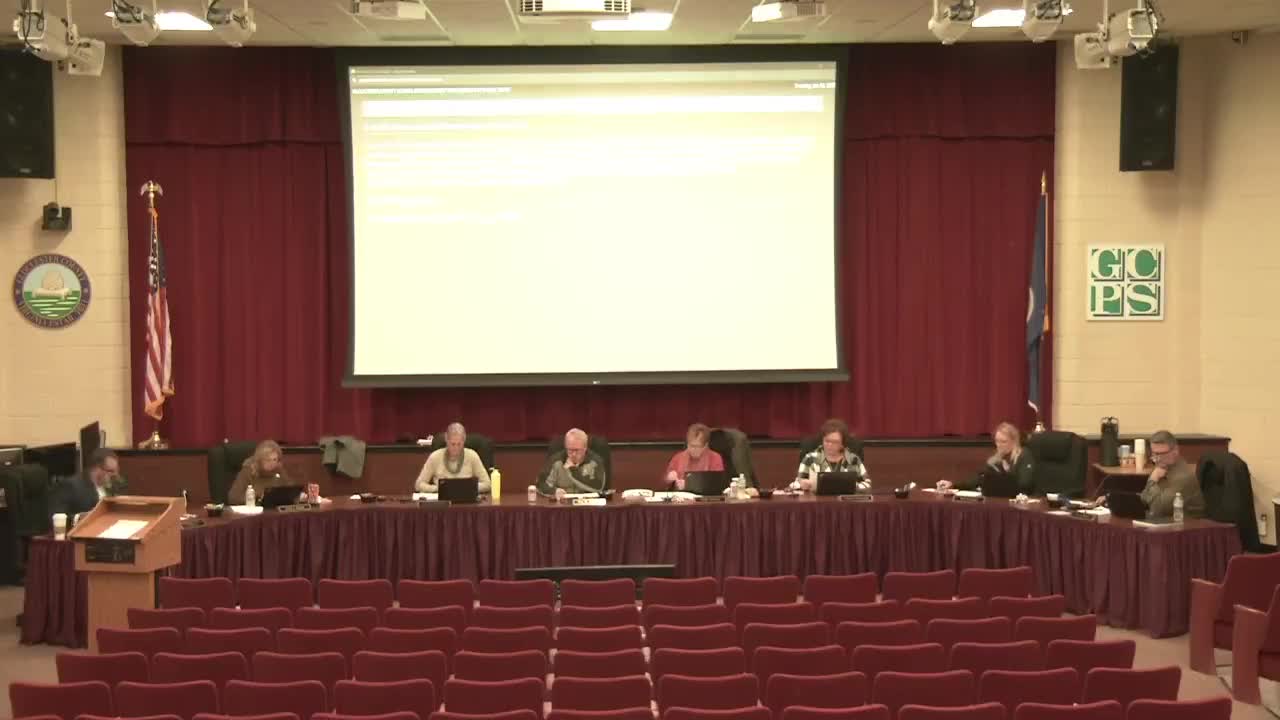
Gloucester County School Board members on Jan. 28 heard a preliminary FY2026 budget presentation from Superintendent Dr. Vladeau, who said the division is operating on a current-year budget of $77,794,229 and outlined enrollment-driven funding pressures, the loss of federal ESSER funding and a shortfall between state Standards of Quality (SOQ) funding and actual local staffing and operating needs.
The presentation, delivered during a budget work session, laid out why the superintendent said the board must consider both additional revenue and efficiency measures. "I couldn't be more proud than the work that our staff are doing," Dr. Vladeau said, while also warning that "you cannot run a public school when you're funded at SOQ levels." The board took no formal vote on the FY2026 budget at the meeting.
Dr. Vladeau said most K‑12 funding formulas are enrollment-driven and noted recent enrollment stability or slight decline, citing Cooper Center (University of Virginia) projections that enrollment is likely to stay steady or decline slightly through FY2028. He said Gloucester's local composite index rose from about 0.3795 in the FY23–24 biennium to about 0.3999, meaning the locality now bears a larger share of the cost of education.
The superintendent highlighted several specific items he said were funded in the current year and new investments: universal screening and implementation of a standard response protocol for safety, increases in career and technical programming, and expanded dual‑enrollment and industry certification opportunities. He reported a 93.4% on‑time graduation rate, a 50% reduction in dropouts relative to a prior baseline, a 124‑student increase in dual‑enrollment participation, a 97% increase in industry certifications and a 57% increase in work‑based learning (figures presented by the superintendent as division results).
Dr. Vladeau told the board the division benefited from ESSER funds between FY2022 and FY2024 and that those one‑time federal funds have largely expired, creating ongoing funding gaps. He also said the division employs more staff than SOQ formulas fund: "The SOQs fund 315 teacher contracts, yet we employ 399," he said; similarly, the state funds fewer bus drivers, maintenance and assistant principals than the division employs. The superintendent cited a JLARC (Joint Legislative Audit and Review Commission) study noting SOQs are underfunded.
On staffing ratios, Dr. Vladeau explained that one full‑time teacher FTE generally equals about 20–25 students and that, if the district maintained FY2020 ratios, current staffing would be roughly 18 teaching positions higher than an enrollment‑adjusted formula would indicate. He also said the district is close to the National School Counselor Association recommendation of 1:250 in counselor staffing and that a General Assembly bill proposing state funding to achieve a 1:250 ratio has not passed.
Board members who spoke at the meeting echoed the superintendent's emphasis on compensation, staffing and long‑term funding. Board member Russell Drew said investments are essential: "Investments key," he said, stressing that many improvements made with ESSER funds were one‑time and the division still needs recurring funding for safety, programs and personnel.
No members of the public spoke during the public comment period. The superintendent noted key upcoming dates in the budget calendar: a proposed budget presentation on Feb. 20, the General Assembly session adjournment (Feb. 22) as a determinant of final state funding levels, and a board budget work session on March 13.
Votes at a glance
- Motion to adopt the meeting agenda: moved and seconded during the roll call; unanimous voice vote in favor. - Motion to adjourn: moved and seconded; unanimous voice vote in favor.
The board did not take any formal votes on appropriations, staffing changes or program cuts at the Jan. 28 session. Dr. Vladeau and board members said further budget deliberations and possible budget requests to the county will follow the upcoming proposed budget presentation and after the General Assembly's actions on state funding.