Get Full Government Meeting Transcripts, Videos, & Alerts Forever!
Get email alerts on the K12 Budgeting topic
No spam. Unsubscribe anytime.
School board directs superintendent to recalculate FY‑26 budget, debates staff cuts and new behavioral hires
Summary
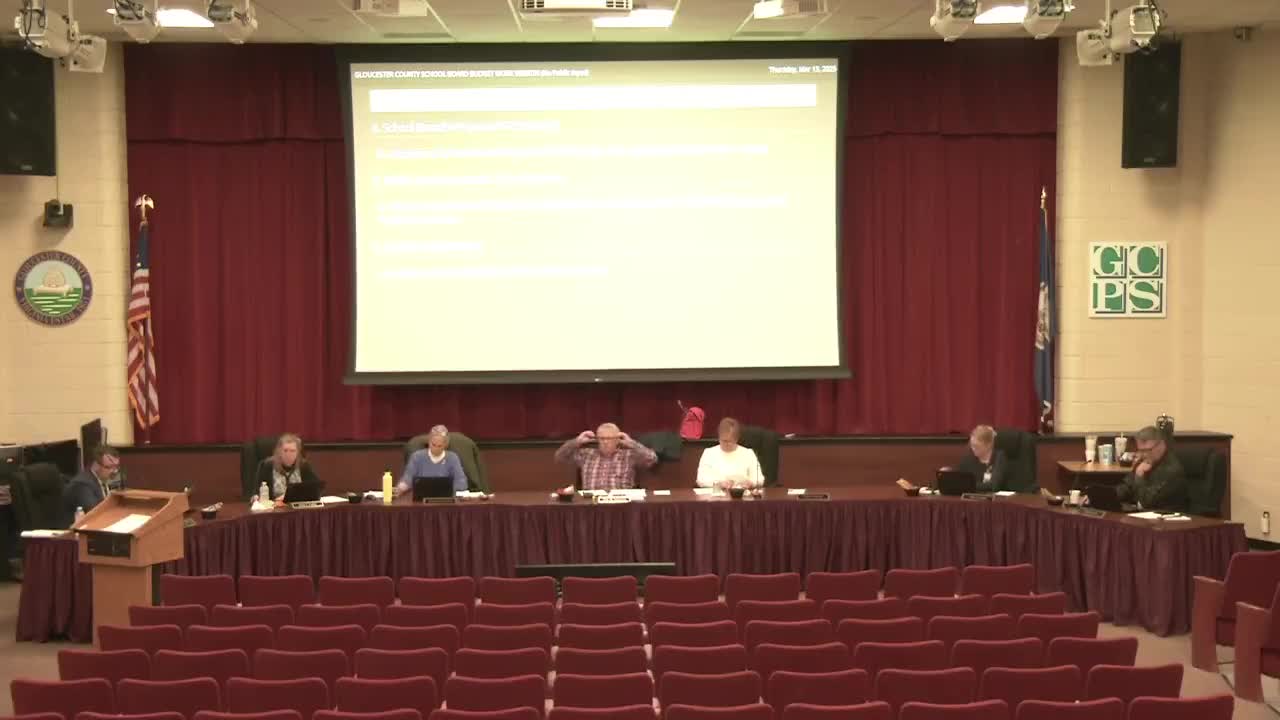
Madam Chair Arsenovic presided over a Gloucester County School Board work session in which the board directed Superintendent Dr. Gladue to recalculate the division’s FY‑26 budget using the state “crossover” figures and a needs‑based proposal, and to present the corrected numbers at the board’s joint meeting with the Board of Supervisors.
Madam Chair Arsenovic presided over a Gloucester County School Board work session in which the board directed Superintendent Dr. Gladue to recalculate the division’s FY‑26 budget using the state “crossover” figures and a needs‑based proposal, and to present the corrected numbers at the board’s joint meeting with the Board of Supervisors.
The vote to instruct the superintendent passed on a roll call after a motion to “redirect Dr. Gladue and his team to recalculate the numbers based on the crossover budget and the recommended needs‑based budget” and to present that revised budget at the joint session. Board members voting yes included Mr. Drew, Vice Chair Parker, Mr. Anderson, Ms. Solomon, Ms. Scruggs and Mr. Sinovic; the motion carried.
Why it matters: the superintendent presented a recommended FY‑26 budget totaling $81,988,924 and identified a county appropriation request of $495,729 to close a projected gap. The discussion included proposed investments (ramping up pay and targeted student supports), the expiration of federal ESSER funding and “All‑in‑1” lump‑sum funding, and proposed staffing adjustments that the superintendent said would be addressed largely through attrition.
Budget overview and federal grants Dr. Gladue told the board “this is an estimate. It’s the superintendent’s job to project what the school district needs,” and cautioned that final state or governor actions could change revenue. The administration’s FY‑26 recommendation shows a modest overall increase of about 0.64% over FY‑25 and pulls recurring federal grant dollars into a separate grant fund; the presentation lists the total grant fund at $3,526,472 and the district’s recommended FY‑26 total at $81,988,924.
Staffing, class size and proposed new positions The proposal includes a net reduction target of 18 positions to be achieved mainly through attrition, and at the same time proposes hiring or converting positions described by staff as strategic investments: three behavioral interventionists and two additional social workers to serve schools, a plan to raise starting bus driver pay to $20 per hour, and a proposal to convert a part‑time gifted position to full time. Dr. Gladue and staff emphasized that the board’s elementary class‑size goal of about 19 students would remain a guiding policy and that averages may vary by school.
Supporters stressed classroom and teacher impacts. Board members and speakers described classroom disruptions and loss of instructional time tied to students with severe behavior needs; several members said they supported adding behavioral specialists to reduce classroom removals and to improve teacher morale. Staff said the interventionists would be school‑based and, if approved, the district would prioritize internal candidates for those roles.
Grants, ESSER and ‘All‑in‑1’ funding Finance staff said ESSER funding expired Sept. 30, 2024 and that some gap in federal operating revenue reflects that expiration. The superintendent and finance staff told the board the division received a lump sum roughly $1.6 million in FY‑24 labeled “All‑in‑1” funding; that money is being spent across multi‑year literacy and tutoring efforts and the administration said FY‑26 is the last year in which remaining All‑in‑1 balances may be spent under state rules.
Food service and ‘what‑if’ scenarios Director‑level staff presented three food service scenarios (best, likely and worst case) showing sensitivity to federal meal program participation, state calc‑tool estimates and local sales. The administration said the FY‑26 food services plan does not rely on fund balance and showed varying outcomes depending on federal participation and state program availability.
Board concerns and next steps Several board members said the recommended budget felt “lean” given rising costs and unpredictable “unanticipated” expenses; one board member urged presenting a needs‑based budget to the Board of Supervisors even if it exceeds the county’s likely contribution. The board approved a motion directing Dr. Gladue to recalculate the FY‑26 budget using the state crossover data and the needs‑based proposal previously presented, and to deliver the corrected figures at the joint meeting with the Board of Supervisors on March 18 (the joint session was announced during the meeting). Staff said they would return with revised totals and line‑by‑line backup at that session.
Ending The board set the recalculated budget as the administration’s task and scheduled the joint discussion with the Board of Supervisors to consider funding choices and next steps.