Get Full Government Meeting Transcripts, Videos, & Alerts Forever!
Get email alerts on the Gifted Education topic
No spam. Unsubscribe anytime.
Board hears gifted‑education update; parent urges more advanced and AP offerings
Summary
Gifted services staff described screening, identification and enrichment work while a parent urged the board to preserve and expand advanced courses and AP offerings, saying some advanced students feel underchallenged in middle school.
The Gloucester County School Board heard a divisional update on gifted education Thursday and received a public comment urging more advanced coursework and continued Advanced Placement opportunities for high-achieving students.
Gifted specialist Gay Murphy told the board the division uses universal screeners (CogAT for a specified grade and STAR district assessments) plus teacher and parent referral and portfolio review to identify students for gifted services. Murphy said the division’s aim is to identify roughly the top 10 percent of students; currently 382 students across the division are identified as gifted. Identification rates grow with grade level; shortages at younger grades reflect fewer in‑school opportunities during early years and, for some cohorts, COVID-era effects.
Murphy described services that range from in-class differentiated instruction and push‑in support to weekly pull‑out enrichment (30–60 minutes) at the elementary level, accelerated math and higher-level classes at middle school, and AP, honors and dual‑enrollment at high school. She said options also include regional governor’s‑school opportunities and a menu of enrichment competitions (Future Problem Solvers, Odyssey of the Mind, World Peace Game).
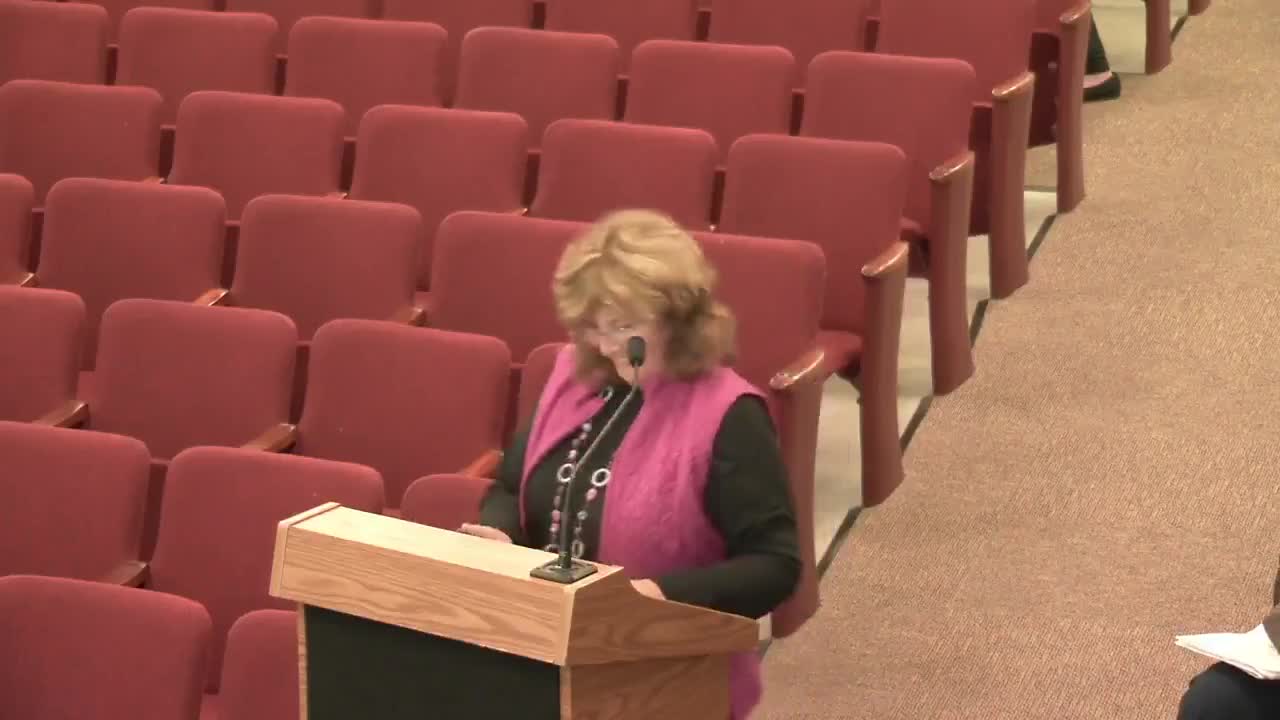
During public comment Karen Scalf, a Gloucester resident and local educator, said her child was identified gifted in kindergarten but now finds some middle‑school classes (science and history) not separated by ability. Scalf asked the board to preserve AP offerings and advanced classes even if small enrollments make scheduling difficult, arguing the classes matter for competitive college admissions and for students who need appropriately challenging coursework.
Board members and staff discussed identification timelines, the use of multiple criteria and rubrics in eligibility determinations, and next steps for submitting an updated five‑year local gifted plan to the Virginia Department of Education in fall for technical review. Murphy invited board members and the public to observe World Peace Game sessions currently running in several elementary schools and said experience with those programs has been “transformative” for participating students.
Murphy said the division administered about 75 referrals this year and processed roughly 150 portfolio folders; each referral typically takes 60–90 days to review through the eligibility committee. The board did not take formal action during this presentation; the updated five‑year local plan will be returned to the board in spring for approval ahead of the VDOE submission.