Get Full Government Meeting Transcripts, Videos, & Alerts Forever!
Get email alerts on the Special Education topic
No spam. Unsubscribe anytime.
School board adopts annual special-education plan after review of corrective actions
Summary
The Gloucester County School Board voted to approve the division's annual special-education plan and application for federal funds after a presentation on corrective-action progress, staffing, regional autism classrooms and expanded assistive-technology supports.
The Gloucester County School Board voted unanimously Thursday to adopt the division’s annual special-education plan and application for IDEA and state grant funding, following a detailed update from Dr. Jennifer Tingley on corrective-action work and program expansions.
The vote completes a required step in the local agreement with the Virginia Department of Education and clears the way for federal and state flow-through funds (Section 611 and Section 619) to be distributed under the approved plan.
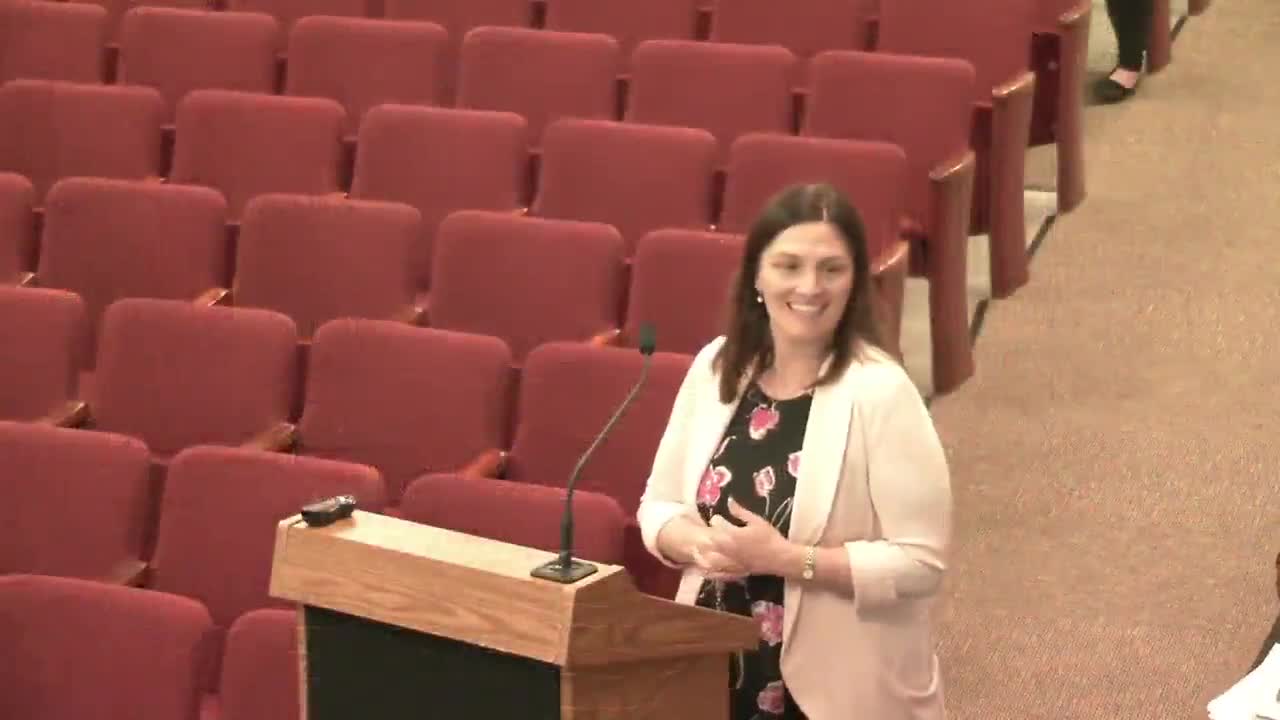
Dr. Jennifer Tingley presented the plan and described work done since a VDOE audit last year: implementing a corrective-action plan, expanding new-teacher mentoring and training, opening a second regional autism elementary classroom (Botetourt Elementary) in addition to the existing Petsworth classroom, and expanding on-site assistive-technology (AAC) supports. She told the board regional partners such as VCU ACE provide monthly consultation to keep more students served locally instead of sending them out of division.
Tingley said the division opened the Botetourt regional classroom to serve students across neighboring localities and noted that regional autism classrooms have typically been capped at about six students; staffing for those classrooms generally includes one teacher and two paraprofessionals. She also reported an on-time graduation rate for students with disabilities of 95 percent in the region and said the division began the school year fully staffed in special education.
Board members asked clarifying questions about classroom caps, assistive-technology procurement, grant and regional funding sources, and parent supports. Tingley said the division is preparing to expand communication-inclusive practices across non‑special‑education spaces (front offices, cafeterias) and expects more details on the state Medicaid billing program that could generate additional revenue next year.
The motion to adopt the plan was made by Board member Mr. Drew and seconded by Board member Parker. The board voted by roll call: Drew — yes; Parker — yes; Anderson — yes; Solomon — yes; Scruggs — yes; Brewer — yes; Arsenovic (Madam Chair) — yes. The motion carried.
Board direction and next steps identified during the meeting included continuing corrective-action implementation, monitoring the VDOE review, expanding parent supports and training for universal-design strategies, and pursuing Medicaid/fee-for-service billing and regional grant opportunities to support expanded assistive-technology purchases and classroom staffing.
The approved plan will be filed with the Special Education Advisory Committee (which reviews the plan quarterly) and submitted to VDOE for technical review, as required by federal and state regulations.
Notes: the board packet includes the full draft of the annual plan and an accounting of how Section 611 (school-age) and Section 619 (preschool) funds will be used (salaries/benefits and partial staffing).