Get Full Government Meeting Transcripts, Videos, & Alerts Forever!
Get email alerts on the Municipal Funding topic
No spam. Unsubscribe anytime.
Legislature debates one‑time surplus payments and sales‑tax sharing for towns and villages; no final vote
Summary
Lawmakers and municipal leaders debated proposals to distribute $3 million–$5 million to Putnam County towns and villages from county fund balance and discussed a separate proposal to extend a 1% sales‑tax mechanism; the committee held extensive public comment but did not take a final vote.
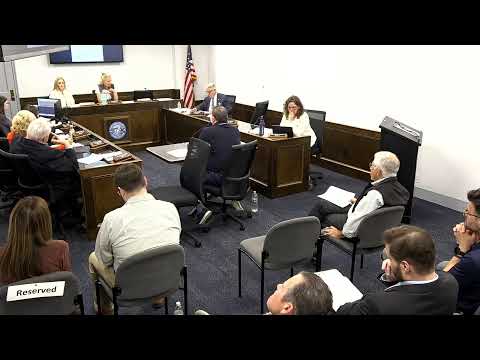
The legislature spent the latter part of its April 28 meeting on a contested discussion of proposals to share county funds with towns and villages.
Chairwoman Sage introduced a proposal to allocate a one‑time surplus sharing amount ($3,000,000 was presented; some legislators suggested $5,000,000) to be distributed based on 2020 census population and demonstrated need, with the sponsor suggesting funds could be available for capital projects such as infrastructure and essential services. Several legislators recommended a two‑year program (2025 and 2026) rather than a single year.
A separate, longer‑running effort remains under discussion to extend an existing sales‑tax rate and share proceeds with municipalities. Several legislators urged that sales‑tax sharing remain the sustainable, long‑term mechanism, and noted that state legislation to implement a sharing agreement is pending in Albany. Others said they preferred using unassigned fund balance for an immediate one‑time distribution so towns have concrete dollars this year.
Municipal leaders and town supervisors made multiple public comments. The mayor of Cold Spring and Putnam Valley’s supervisor urged that the county avoid imposing a grant‑style process that would require towns to return repeatedly to committees with intermunicipal agreements (IMAs) and instead allow towns flexibility to plan projects. Jackie McLastan of Putnam Valley said she supported both a short‑term distribution and a longer‑term sales‑tax sharing mechanism, and told legislators, “we’ll take the checks on the way out,” expressing urgency for funds.
County officials and auditors flagged practical and legal issues. The finance commissioner explained that a distribution from fund balance is possible but must be certified and that IMAs and documentation are typically required for auditability; the county auditor noted that IMAs and project budgets are the common way the county ensures funds are properly spent and audited. Several legislators objected to an approach that would grant broad authority to towns to use money for personnel without explicit limits; others said narrowly prohibiting personnel costs would hamper legitimate short‑term needs (for example, hiring engineering consultants for infrastructure projects).
Legislators and municipal leaders also raised process concerns: IMAs and standard IMA review by multiple committees can take months, while towns said they need predictable, timely disbursements to plan and, in some cases, to bond for projects. Several supervisors recommended a multi‑year plan with quarterly disbursement to provide predictability and enable municipal planning.
No final vote on a surplus distribution or a sales‑tax sharing change occurred at the meeting. A motion to move related language to the full body was proposed in committee; committee leadership concluded the measure—as written at that time—was not ready for final action and moved to the next agenda items. Legislators said more work with the county executive, the law department and municipal leaders was necessary and recommended returning the item to full once a clearer implementation mechanism and documentation plan are prepared.
Public comment was extensive: supervisors and mayors from multiple towns and villages urged both immediate assistance and a longer‑term sustainable sharing mechanism; several speakers emphasized that towns need predictable revenue to plan capital projects and to avoid shifting costs to property taxpayers.
The record shows broad support among local officials for getting dollars to towns, but no consensus on amount, timeline, or the administrative mechanism for distribution. The legislature will continue discussions at future meetings and consult the county executive and legal staff on the practical steps for certification, IMAs, reporting, and auditability.