Get Full Government Meeting Transcripts, Videos, & Alerts Forever!
Get email alerts on the Public Safety Impaired Driving topic
No spam. Unsubscribe anytime.
Alderman Davidson recounts personal losses, frames stance on late-night drive-through policy and impaired-driving concerns
Summary
Alderman Davidson used a council floor statement to explain how personal experience with roadside fatalities informs his positions on policies such as a proposed 24-hour drive-through approval, citing traffic fatality figures and concerns about impaired driving.
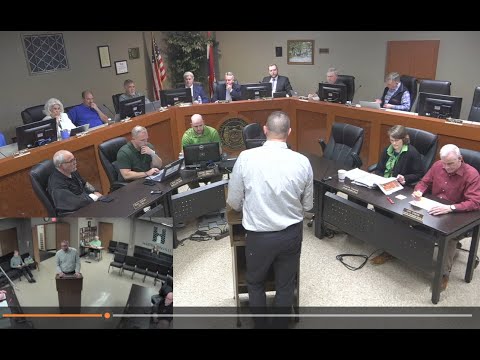
Alderman Davidson told the Harrisonville City Board of Aldermen that personal experiences with motor-vehicle fatalities inform his approach to policy questions such as whether to permit a 24-hour drive-through operation.
Speaking during the aldermen reports portion of the meeting, Alderman Davidson described multiple incidents—both his experiences as an officer responding to crashes and a family loss—that, he said, shaped his views. “Those are some of the reasons. I could give you many more, but I could give those are just some of the reasons why I utilize my past to make decisions on what I do from here,” Davidson said.
Davidson recounted prior duty calls in which he delivered death notifications and described working fatal-crash investigations that involved impaired drivers. He also described a family tragedy: he said his 15-year-old niece was killed in a crash involving an impaired driver and that he later provided victim-impact testimony in court. He further said a currently hospitalized child in his family is awaiting a liver transplant, explaining that those experiences influence his judgment on public-safety issues.
Davidson cited statewide traffic-fatality figures, saying “hundred and 58 deaths in this state by motor vehicles since this year started, as of yesterday,” and told colleagues that a “rule of thumb” is that many of those fatalities involve impaired drivers. He referenced law-enforcement reports from Colorado noting a spike in impaired-driving concerns after that state legalized recreational marijuana, saying, “I don't know that that's gonna happen here, but they will tell you in Colorado, in law enforcement, that things spiked when they did that.”
Alderman Franklin offered condolences during the meeting to the family of the late municipal judge the council had recently memorialized. The remarks by Davidson followed a prior committee vote—referenced in his remarks—on whether to approve a 24-hour drive-through; Davidson said the personal history influenced his position in that committee discussion.
Nut graf: Davidson used a personal, narrative approach to explain why public-safety considerations—especially impaired driving—figure prominently in his municipal decision-making. He framed the comments as background to explain a council-level decision he had been asked to clarify.
Context and limitations: Davidson spoke in his capacity as an alderman and recounted both professional experiences as an officer and personal family losses. The transcript records his statements and the cited statewide fatality figure but does not contain supporting documents or external data sources within the meeting record; the article therefore reports those figures as Davidson stated them rather than as independently verified statistics.
Ending: The board did not take separate action tied directly to Davidson’s remarks during that segment; his remarks appeared as part of aldermanic reports and situational context for earlier committee consideration of a 24-hour drive-through request.