Get Full Government Meeting Transcripts, Videos, & Alerts Forever!
Get email alerts on the Zoning Dispensary Hours topic
No spam. Unsubscribe anytime.
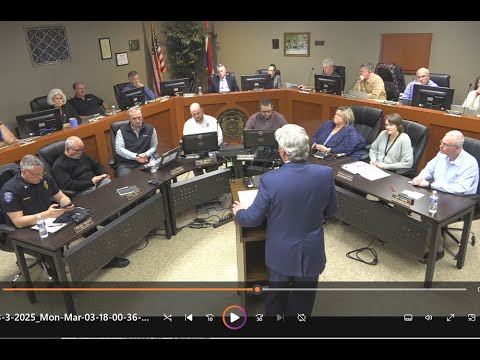
Harrisonville aldermen deny ordinance to allow 24-hour cannabis dispensaries
Summary
The Board of Aldermen voted to deny an ordinance that would have amended the municipal zoning code to permit dispensary facilities to operate 24 hours; aldermen cited public-safety and enforcement concerns while others cited tax revenue.
The Board of Aldermen of Harrisonville on a recorded vote denied an ordinance (Council Bill 04) that would have amended Section 405.573 of the municipal code to allow cannabis dispensary facilities to operate 24 hours.
The measure was first offered for approval but failed on an initial roll call and members later voted to formally deny the ordinance, removing the proposed 24-hour allowance from consideration. The debate focused on anticipated public-safety impacts, enforcement capacity and whether the city should capture tax revenue from local dispensaries.
The nut of the debate was public safety versus revenue. Several aldermen and members of law enforcement raised concerns that permitting round-the-clock sales could increase the risk of impaired driving and overnight incidents near nearby truck stops and highways. Others said the city had previously decided not to send the matter to a public vote because officials wanted the tax revenue and local control that a local dispensary brings.
City staff confirmed the ordinance was an amendment to the zoning code (section cited in the bill text) and that the change, if adopted, would apply to dispensary facilities across the city in the zoning category described in the ordinance. Staff also said plan/zoning recommended approval before the board but received no public comments in the current notice period.
Aldermen pressed staff and each other on available enforcement data. The city attorney and staff reported that inquiries to other jurisdictions produced no conclusive data showing whether 24-hour operations cause a measurable increase in late-night impaired-driving incidents. Law-enforcement representatives were described during the discussion as having expressed reservations about keeping dispensaries open overnight.
Business impact and ownership also featured in the discussion. Aldermen noted an applicant/owner has told staff he considers 24-hour operation essential to the viability of his business and that he owns at least one existing location outside Harrisonville. Opponents said allowing 24-hour operations at that site — adjacent to truck stops and a highway — would create avoidable late-night demand and safety risks.
Votes and procedure: a motion to approve the ordinance (mover: Alderman Mills; seconder: Alderman Turner) failed on roll call. Following that result, Alderman Dorhof (Doerhoff) moved to deny the ordinance; that motion, seconded by Alderman Davidson, passed on roll call, and the board recorded the denial of Council Bill 04. The board clerk confirmed the ordinance will not proceed.
Where this leaves the applicant: staff noted an applicant that currently operates on standard hours may continue to operate under existing local rules; the denied ordinance would have expressly authorized 24-hour operation for the zoning category in question — that change will not occur. The applicant may seek other options consistent with existing zoning or pursue locations outside city limits.
The board did not identify any further formal direction to staff on additional restrictions or a referral to study alternate hours; members indicated they had considered but rejected returning the question to a public vote when the dispensary issue initially arose.
Ending: The denial was final at the meeting and was recorded by the city clerk; aldermen who want additional data on enforcement outcomes or comparative studies indicated they may request further information at a later date.