Get Full Government Meeting Transcripts, Videos, & Alerts Forever!
Get email alerts on the Food Truck Policy topic
No spam. Unsubscribe anytime.
Pacific commission asks staff to draft food-truck regulations, debates permanent vs. temporary operations
Summary
Commissioners asked staff to draft a food-truck ordinance after an extended discussion about permanent trucks, competition with brick-and-mortar restaurants, allowable locations, and permitting approaches.
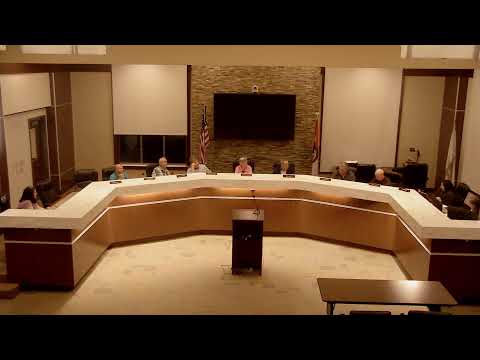
After an extended discussion, the Planning and Zoning Commission asked city staff to draft a formal ordinance on food trucks that would define when and where food trucks may operate in Pacific, how permits would work, and how to address existing trucks.
Staff explained the city currently lacks specific code language governing food trucks and that if an activity is not listed as permitted it is effectively prohibited in many zoning districts. City engineer AJ Grondo (via comments relayed by staff) raised practical questions about whether conditional use permits (CUPs) would apply, since CUPs are parcel-specific and food trucks may operate at multiple sites. The city attorney suggested itinerant (moving) food trucks would be best addressed with business licenses and health/inspection requirements, whereas truly permanent setups could be regulated via a CUP and typical site requirements (setbacks, congestion, traffic hazard review).
Key points discussed by commissioners and public speakers: - Two food trucks currently operate in commercial (C-2) areas; both obtained electrical permits but the code does not explicitly list food trucks as a permitted C-2 use. - Commissioners expressed broad support for allowing non-permanent/itinerant food trucks, pop-ups, and special-event vendors, while opposing permanently fixed food-truck sites that would compete directly with brick-and-mortar restaurants. - Commissioners asked staff to consider distance or buffer rules to protect existing restaurants, designated areas where food trucks may operate, operating-hour limits, whether temporary-use permits should expire after a set period (for example one year) and whether extensions should require Board of Aldermen approval. - Business owners and applicants who addressed the commission said food trucks can be a stepping stone to brick-and-mortar businesses and requested pathways that allow a food-truck operator who buys property to pursue a permanent restaurant within a defined timeframe.
The commission directed staff (zoning staff, AJ Grondo, and the city attorney) to draft a proposed ordinance and return for review. Commissioners also asked staff to include provisions that address existing food-truck operations so the new code would not leave currently operating vendors in regulatory limbo.
No formal ordinance vote occurred at the meeting; the direction was for staff-level drafting and subsequent review by the commission.