Get Full Government Meeting Transcripts, Videos, & Alerts Forever!
Get email alerts on the Environment Water Quality Carbon Capture topic
No spam. Unsubscribe anytime.
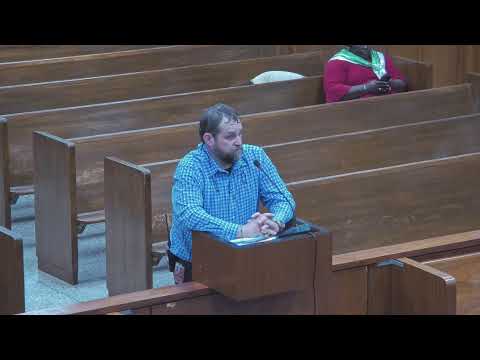
Pitkin resident warns council about carbon-capture disposal and Chicot Aquifer risks
Summary
Michael Nichols, a natural-resources professional from Pitkin, spoke during public comment to warn councilors about planned CO2 disposal wells and pipelines, urging the city to become informed and request more information.
Michael Nichols of Pitkin addressed the council during public comment on Feb. 10 to warn that plans for carbon-capture disposal could threaten groundwater in the Chicot Aquifer and asked the City of Crowley to be informed about nearby permitting and testing.
Nichols, who identified himself as a natural-resource professional, said he has worked on soil and water issues for decades and described a technical concern: “when CO2 meets water, it forms carbonic acid,” he told councilors, and over time that process can “leach the soils” and mobilize heavy metals that could contaminate groundwater. Nichols said projects have advanced to the stratigraphic-test stage — he referenced “Class V” wells that are permitted and said the next regulatory step would be “Class VI” injection permits and pipeline construction.
Nichols asked councilors to request and review information and offered to supply materials to the city. Mayor Martin asked Nichols to email the material to the mayor so staff could distribute it to the council; Nichols agreed and said he would provide documentation and further information.
Councilors did not take action on the matter at the meeting; Nichols’ remarks were received during the public-comment portion of the agenda and were recorded as a request for information and increased awareness rather than a request for an immediate municipal policy change.
Nichols urged attendees to study incidents elsewhere and to review technical literature, and he emphasized that carbon dioxide behavior differs from natural gas: CO2 is heavier than air and can behave differently if released from pipelines or subsurface storage, he said. He framed his remarks as a call for local officials to monitor the permitting process and to work with neighboring jurisdictions and state regulators.
No regulatory or zoning items tied to the CO2 issue were on the council’s agenda that evening; Nichols left contact information and volunteered to provide further materials to the mayor and council.