Get Full Government Meeting Transcripts, Videos, & Alerts Forever!
Get email alerts on the Land Use Residential Professional Yurt topic
No spam. Unsubscribe anytime.
Planning commission recommends denial of yurt for residential ‘intensive therapy’ citing neighbor impacts
Summary
The Planning Commission recommended denial of a conditional use permit for a yurt proposed as an occasional intensive therapy space after commissioners cited potential impacts to neighbors, private‑road maintenance questions and uncertainty about future uses.
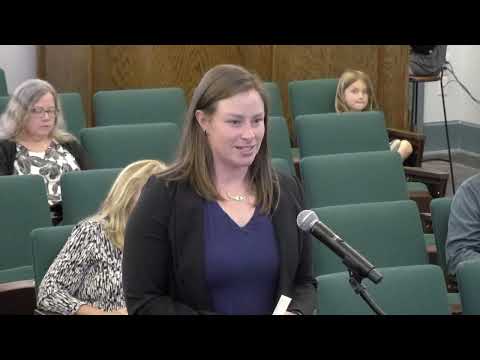
Michelle Booth, a licensed clinical social worker, sought a conditional use permit to place a yurt on a property accessed by a private road (3 Oak Lane) and to use it occasionally for multi‑hour therapy intensives and small private group gatherings.
Planning staff presented the application as Case U‑2255‑25‑1, noting the requested category in the application was recorded as a “residential professional” use under Article 9‑1‑7 of the Culpeper County Zoning Ordinance and that conditional use requirements are governed by Article 17. Staff recommended four conditions if approved, including limiting the permit to the applicant (the CUP would not run with the land), a recorded shared maintenance agreement for the private road (Appendix B, section 6.12.2), a cap on public events (no more than 12 per calendar year) subject to building‑official capacity, and obtaining any required VDOT land‑use/entrance permits prior to a zoning permit.
Booth described the proposed use as occasional, intensive trauma‑recovery work: “The purpose is for occasional use. It's not for regular use because the business of the yurt is occasional intensive therapy work,” she told commissioners, adding she sees relatively few clients who require full‑day intensives and estimated the activity would generate about 6–12 vehicle trips per year for that purpose. Booth said the yurt would not be a year‑round commercial building, that she does not intend to host weddings or function as an event venue, and that she and nearby neighbors had discussed the plan.
Nearby residents raised concerns at the public hearing about safety, the size and permanence of the structure, parking and access on the private easement, and potential future escalation of uses. Terry Weaver said he was “concerned because it's a rural area” and worried about the structure being “built really close to our place.” Commissioners questioned whether the private‑road easement and deed restrictions would permit this use and whether VDOT entrance or road improvements could be required. Staff told commissioners a recorded shared‑maintenance agreement could be required before a certificate of occupancy and noted that VDOT had raised questions about whether an entrance permit or paving might be warranted.
Commissioners expressed concern that the proposed occasional gatherings and therapy intensives could be difficult to enforce if neighbors later complained; one commissioner urged reliance on the building official’s capacity limits and complaint‑driven enforcement. Commissioner Evelyn (last name not given in the record) said she could not support the application, citing “potential for significant impacts to the surrounding residents” and uncertainty around safety and access.
A motion to deny Case U‑2255‑25‑1 passed; the commission will forward its recommendation of denial to the Board of Supervisors. Staff noted the applicant can continue to serve clients from existing licensed office space in Culpeper and Fairfax and that home‑occupation rules allow limited in‑home business activity under separate provisions of the zoning ordinance. The commission’s action is a recommendation to the Board of Supervisors and not a final permit denial by the county.