Get Full Government Meeting Transcripts, Videos, & Alerts Forever!
Get email alerts on the Public Transit Dart topic
No spam. Unsubscribe anytime.
West Des Moines council hears DARTreimagining plan focused on ridership vs. coverage
Summary
DART staff outlined two network concepts a0ridership and coveragea0and asked West Des Moines to state a preference before a regional vote. Officials warned budget limits and a pending state property-tax cap could force large service cuts.
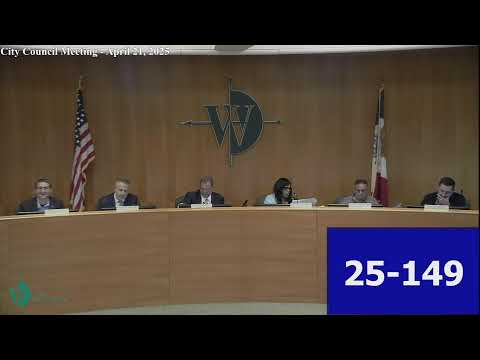
Erin Hochman, chief strategy officer at the Des Moines Area Regional Transit Authority, told the West Des Moines City Council on April 21 that DART is asking member cities to choose priorities for a redesigned bus network: higher-frequency service on fewer corridors to boost ridership, or broader coverage to give more residents access to transit.
Hochman said the agency has designed two illustrative concepts and is collecting public input before the DART Commission votes on network priorities and a draft budget. "We know that we need to, as we design a network, have a clear conversation as a community around what our goals for our transit investment are, and how do we allocate the resources we have," Hochman said.
Why it matters: DART's operating budget is largely supported by property taxes; Hochman said the legislature is considering a bill that would cap DART's property-tax revenue growth at 2 percent. If enacted as written, the agency's modeling shows service reductions in the range of 30 to 40 percent. Council members and DART staff said that makes the current discussion urgent because the level of service the region can afford will determine whether the network prioritizes ridership or coverage.
Details of the proposals: The "ridership" concept concentrates service on fewer routes with higher frequency. DART's consultants modeled that, across the region, the ridership concept would allow the average resident to reach about 23 percent more jobs and West Des Moines residents to reach about 66 percent more jobs within a 45-minute transit trip compared with the existing network. The "coverage" concept spreads service over more routes with lower frequency and includes microtransit zones (on-demand service with virtual stops) to reach low-density neighborhoods. In the coverage concept the average resident in the region would reach about 9 percent fewer jobs and West Des Moines residents 6 percent more jobs than current service, while the share of residents with access to any service would increase.
Budget context and timing: Hochman said DART presented budget scenarios to the Commission, including a best-case scenario that maintains current service and a scenario that would reduce total service by roughly 20 to 25 percent to lower member communities' property-tax burden. She told the council the Commission is scheduled to receive public-input results and a staff report on May 6 and to vote on priorities and a draft budget May 19.
Council reaction: Several council members pressed on practical trade-offs. Councilman Kevin Trevillian said a tilt toward ridership would concentrate service where it benefits the most people but warned that residents who lose routes would raise strong objections. Councilman Hudson and Councilman McKinney emphasized the economic role of transit for job access; McKinney noted employer impacts and urged DART to consider workforce shuttles or partnerships to fill gaps.
Technical notes: Hochman said vehicles and delivery models will also be reviewed: DART will evaluate the cost-benefit of operating by contract versus in-house, review fleet needs, fare policy and fare-collection systems, and consider using vanpool vans for workforce shuttles. She said microtransit currently averages about 3.7 trips per vehicle-hour in Ankeny and that a virtual-stop variant might yield slightly higher productivity.
What's next: DART asked Mayor Russ Trimble to report West Des Moines' preference to the DART Commission at its May 6 meeting. Hochman said DART has received more than 800 survey responses so far and will continue public meetings through early May before the Commission votes on May 19.