Get Full Government Meeting Transcripts, Videos, & Alerts Forever!
Get email alerts on the Signage And Lighting topic
No spam. Unsubscribe anytime.
Ames council delays vote on proposed digital-billboard rules after public concern about brightness and wildlife
Summary
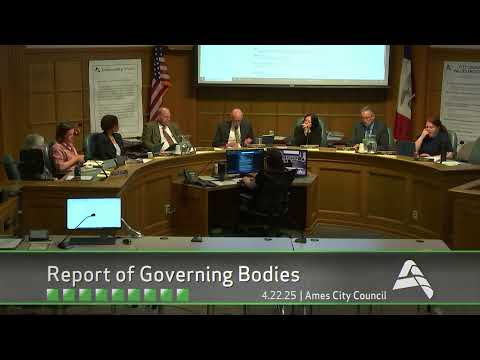
The Ames City Council on Monday continued a public hearing on a proposal to allow electronic billboards in certain highway corridors and to set a 250-nit evening brightness limit for digital displays, saying the city needs more technical input before deciding.
The Ames City Council on Monday continued a public hearing on a proposal to allow electronic billboards in certain highway corridors and to set a 250-nit evening brightness limit for digital displays, saying the city needs more technical input before deciding.
City planning staff presented proposed standards that would allow digital displays only in limited highway corridors and would regulate size (industry-standard 672 square feet) and a 250-nit luminance cap for evening operation. “We feel like this is the most direct way of measuring brightness,” city planning staff member Kelly said during the presentation, noting the standard differs from the city’s usual “light trespass” approach for outdoor lighting.
Residents and advocates urged the council to consider ecological and human-health impacts. Lorna Carroll, a member of the Lights Out Ames group, told the council that artificial light harms wildlife and human circadian rhythms and asked whether the city had assessed the proposal against five lighting principles that emphasize targeted, low-level, controlled and warm-colored lighting. “I encourage us all to take that very seriously,” Carroll said.
Representatives of Lamar Outdoor Advertising, the company proposing the sign, attended and said digital displays can operate at lower output and are often dimmed automatically by a light sensor. Jason Palmerin, representing Lamar, said 250 nits is an industry benchmark and that operators typically reduce output in sensitive areas: “We can probably go down to … 2%,” he said, describing adjustments Lamar can make for ambient conditions.
Council members from both sides expressed interest in finding a compromise on brightness and asked for outside technical perspective. Council Member Garton moved to delay consideration, consult further with Lamar about flexibility in the lighting parameters, and invite an outside expert (for example, an independent wildlife/lighting consultant who helped with Brookside Park design). Council Member Bebe Hanson seconded the motion. The motion to continue the hearing to the next regular council meeting carried by voice vote.
The council’s action does not approve the ordinance; it pauses the process to allow staff and the company to bring more information about measured brightness in comparable locations, available dimming options, and wildlife impacts. City staff noted that the proposed changes to proximity and zoning restrictions would expand where billboards could be located along Highway 30 if the SGA (government) proximity exclusion were removed.
The hearing will remain open and the council asked staff to return with additional technical material and to coordinate input from interested parties, including Iowa State University and community experts.
Why it matters: The decision would change long-standing limits on signs in parts of Ames and could set a precedent for future electronic signage. Residents who testified said the city should prioritize dark-sky and bird-protection guidance; the billboard representative said technical adjustments are feasible but asked for time to work with staff.