Get Full Government Meeting Transcripts, Videos, & Alerts Forever!
Get email alerts on the Land Use Zoning topic
No spam. Unsubscribe anytime.
Clayton aldermen discuss overlay options for Concordia Seminary property, focus on tree protection and grading limits
Summary
City staff and legal advisers told the Board of Aldermen that creating an overlay to govern the Concordia Seminary property is possible but legally and technically complicated; members prioritized tree preservation and stormwater controls while cautioning against premature zoning changes.
City planning staff outlined options for an overlay or urban design district to guide redevelopment of the Concordia Seminary property, and aldermen spent more than an hour weighing tree-protection, grading limits, stormwater controls and the limits of the city’s authority.
Planner Anna (staff) told the Board of Aldermen on April 23 that the site is currently governed by the R-2 Residential Zoning District but that portions of the seminary campus already operate under a conditional use permit for institutional multifamily and dormitory uses. Anna said the city faces a choice between a broader “overlay” aimed at larger redevelopment and an “urban design district” tuned to small-scale infill, and that either approach could be used depending on the board’s goals.
“The question is: what are we trying to protect against?” Anna said. “If we want to prevent large-scale regrading or preserve tree canopy, we need to be explicit about that, because the legal effect differs if the property is replatted into many buildable lots.”
Why it matters: Board members said the seminary parcel, which includes open fields and wooded areas adjacent to existing neighborhoods, raises concerns about stormwater, noise, lighting and the loss of mature trees if the land is redeveloped. The aldermen repeatedly returned to the tension between protecting existing topography and trees and the limits of local control when a property owner plats land that meets subdivision and zoning standards.
Most of the discussion focused on three practical constraints. City planners warned that a subdivision plat that meets the city’s subdivision regulations is a largely ministerial act under Missouri law and therefore difficult to deny once it complies with technical standards. Kevin (land use law expert) told the board the courts limit municipal discretion at the plat stage and that the council’s best chance to shape outcomes is to adopt clear rules in advance rather than try to block plats later.
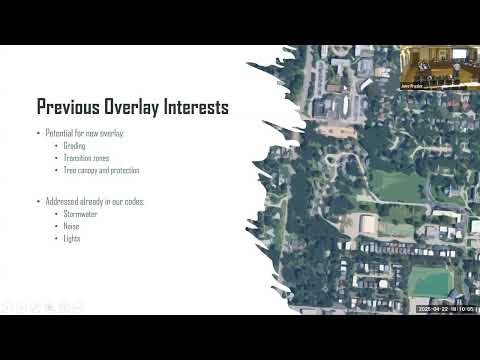
Board members who spoke said they favor stronger protections for mature trees and for neighborhood buffering but differed on whether to craft property-specific overlay rules or pursue citywide code updates. One alderman urged a citywide update to canopy and tree-caliper rules so large trees are valued higher across Clayton; others argued a localized overlay could address unique features of the Concordia parcel, such as transition zones and retaining-wall height limits.
Staff explained tradeoffs for grading rules. Anna said some overlay provisions — for example, limits on retaining-wall heights and rules governing where regrading may occur — could apply to future plats, but broad language prohibiting regrading would be hard to defend without a specific public-purpose rationale tied to flooding, erosion or health and safety. She warned that when a large institutional site is subdivided, storm sewer, road and drainage requirements typically force regrading and creation of retention basins that change where trees survive.
Several aldermen emphasized that tree-canopy protection is a clear priority and could be advanced citywide. Staff proposed possible triggers — for example, higher canopy or tree-preservation requirements for projects that create more than a set number of lots — and suggested block-level canopy targets for larger subdivisions so tree preservation is considered at the neighborhood scale rather than only lot-by-lot.
No ordinance or formal motion was introduced. The board directed staff to refine options that (a) prioritize tree preservation and (b) consider subdivision- and platting-related requirements, and to return with specific regulatory language and maps. City staff also noted that stormwater rules, subdivision standards and state law will shape feasible approaches.
The board’s discussion ended without a vote to adopt a new overlay; aldermen indicated they want further analysis of targeted overlay language versus citywide code amendments before deciding on next steps.