Get Full Government Meeting Transcripts, Videos, & Alerts Forever!
Get email alerts on the Short Term Rentals topic
No spam. Unsubscribe anytime.
Clayton aldermen direct staff to draft short-term-rental rules for downtown, targeting small office-to-residential conversions
Summary
After a detailed staff presentation of possible rules, the Board of Aldermen asked staff to prepare a draft text amendment to permit and regulate dedicated short-term rentals in a targeted downtown area, with caps, buffers, occupancy and operations requirements for consideration at a future meeting.
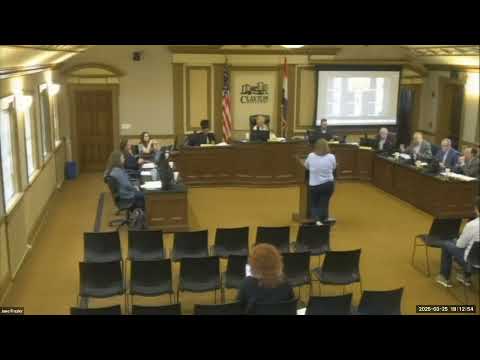
The Board of Aldermen on March 25 heard a staff briefing on short-term-rental regulatory options and instructed staff to draft a text amendment to the city code to allow and regulate dedicated short-term rentals in parts of downtown Clayton.
Anna Crane, director of planning and development services, reviewed national best practices and staff's preliminary recommendations. Staff proposed defining three short-term-rental types (hosted, unhosted and dedicated), recommending a 24-hour minimum and a 30-day maximum, and focusing the new regulations on the downtown core area to target older office buildings that could be repurposed. Staff also proposed permitting and compliance tools including a conditional use permit (CUP) for an initial review, an annual license or occupancy permit, annual inspections, and operational requirements such as on-site posting of a contact for police and information provided to guests.
What staff proposed: Key elements discussed were a location limit (downtown core or overlay), a buffer or density cap (examples ranged from a block-level cap to a 500'1,000 foot buffer or a fixed number of permits citywide), and building-size limits intended to favor small office conversions rather than large multifamily properties. Staff offered a sample rule that would permit buildings with up to four units to seek licenses while excluding larger multifamily properties like Clayton on the Park. Parking requirements would be lower than standard dwelling-unit rates, with case-by-case waivers possible through the CUP process. Penalties and a permit-revocation process were central to enforcement discussions.
Council concerns and guidance: Aldermen asked for more detail on buffer and cap options, requested outreach to downtown stakeholders (including condo and apartment associations and business groups), and asked staff to consult police and public-safety leadership about enforcement and operations. Several aldermen said they preferred to exclude larger multifamily buildings from the initial program and to target small, older office buildings where short-term rentals could support reuse rather than trigger redevelopment. Alderman questions also sought clarity on sewer/water and conversion practicality, and on whether annual inspections would require additional staff; staff said a modest cap at program launch would limit inspection burden.
Next steps: Staff will prepare a draft text amendment and draft ordinance for a future formal meeting and asked for direction on outreach and the preferred draft structure. No ordinance was voted on during the March 25 discussion; aldermen signaled support for staff work to produce a draft for review and public notice.