Get Full Government Meeting Transcripts, Videos, & Alerts Forever!
Get email alerts on the Duty Day And Additional Minutes topic
No spam. Unsubscribe anytime.
District, teachers' association discuss adding daily collaboration time; proposal seeks 60 minutes, $4.5M cost
Summary
Negotiators discussed a proposal to add daily collaborative/instructional minutes to teachers' duty day — up to 60 minutes per day — with an estimated annual cost of about $4.5 million. Funding sources, schedule impacts and bargaining tradeoffs remain unresolved; parties agreed to continue talks and to share proposals ahead of the next session.
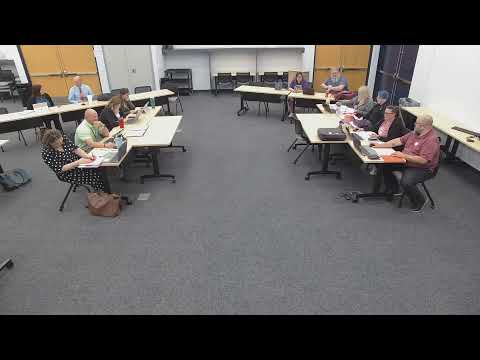
Negotiators for the school district and the teachers' association spent the meeting discussing a proposal to add daily collaboration or instructional minutes to the teacher duty day, including a scenario that would add 60 minutes per day and carry an estimated annual price tag of about $4,500,000.
The proposal presented to the group described adding collaboration time at every level and outlined cost estimates tied to adding 20 or 60 minutes daily. "If you go to the next thing down, it says this proposal is seeking 60 minutes," a district participant said. The document attached to the proposal listed a $4,500,000 annual cost for the 60‑minute scenario and noted the district had identified at‑risk funds as one possible source.
Why it matters: adding time to the duty day would change teachers' schedules, require bargaining over compensation or contract language, and could entail broader changes to the school calendar or daily schedule. District staff said the plan was not intended to be contingent on at‑risk funds alone and that, if those funds were unavailable, the district would identify other sources.
Negotiators described how added time could be used. District presenters said the time could provide daily collaboration and preserve instructional minutes while giving teachers time for planning and professional work. One administrator framed part of the proposal as an effort to give teachers consistent collaborative time, saying the goal is "to get that collaboration time built in every day." Association members pressed for clarity about whether added time would be paid as additional compensation or incorporated into the contract, and repeatedly emphasized they would not accept added required work without commensurate pay.
The parties also discussed how the change might be implemented differently by level. The association provided a level-by-level breakdown it said had been discussed internally: elementary — roughly 8 hours total (examples: open house 1 hour, back-to-school 1 hour, Title I night 2 hours, four 1-hour faculty meetings); middle school — about 9 hours (open house, back-to-school, quarterly faculty meetings, Title I, grade orientation); high school — about 9 hours (open house 1 hour, graduation 3 hours, faculty meetings, freshman orientation). Those totals were presented as examples of equivalencies the association would like to see used when bargaining.
Board members and administrators raised operational questions: whether the district would change to a traditional period day or alter the high school schedule (block vs. period) to accommodate added minutes; possible reductions in elective offerings; and downstream effects on staffing. A board member, who had taught in multiple schedule formats, warned that schedule changes can increase workload and reduce planning time for teachers. Association representatives said those schedule questions should be part of separate discussions that could involve memoranda of understanding (MOUs) or phased changes.
On funding, negotiators said the $4.5 million figure had been prepared by staff but that additional details — for example, whether the figure included non‑payroll costs such as utilities, supervising staff or support personnel — were not immediately available in the meeting. One district participant said they would check the cost breakdown and provide more detail in follow up.
Outcome and next steps: the parties agreed to continue bargaining. The association said it would not present any language that increases required work without equivalent compensation, and both sides agreed to exchange written proposals and cost details before the next session. The group set a follow‑up negotiations session for May 28 starting at 9:30 a.m. and said they would cancel the May 15 meeting. The district also agreed to place proposal documents in a shared drive for review ahead of the next session.
Concerns flagged during discussion included whether added minutes would be daily collaboration or occasional professional development, how added minutes would be funded, the potential impact on high‑school electives and student course access, and the mechanics of implementing schedule changes without disrupting current programs.