Get Full Government Meeting Transcripts, Videos, & Alerts Forever!
Get email alerts on the School Discipline And Mental Health topic
No spam. Unsubscribe anytime.
District behavior team reports declines in office‑managed incidents, outlines MTSS tiered behavior supports and MHIT role
Summary
Behavior coordinators reported that office‑managed major referrals have fallen while classroom‑managed minor referrals increased, and presented a multi‑tiered behavior support plan aligned with MTSS and Character Strong.
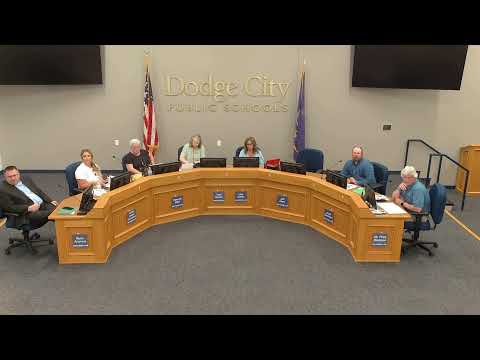
District behavior coordinators and mental‑health liaisons presented discipline referral data and a multi‑tiered approach to behavior supports to the Dodge City USD 443 Board of Education.
Presenters said district demographics are roughly 83% Hispanic and that students with IEPs make up about 16% of the population; majors and minors by demographic generally reflect those proportions. The team said the number of ‘majors’ (office‑managed incidents) has fallen this year, while ‘minors’ (classroom‑managed incidents) increased — a sign staff characterized as positive because more issues are being addressed in classrooms instead of by administrators.
The district described a four‑part Tier 1 foundation — building relationships, setting clear expectations, consistent routines and active supervision with positive reinforcement — and said it will strengthen Tier 2 and Tier 3 responses. The board was told the district adopted the Character Strong curriculum for secondary schools and will use that vocabulary and menu of supports for Tier 2 interventions, including counselor‑led small groups and mentor components.
Corey Birkin, one of the behavior team presenters, described an expanded Tier 3 process that uses a functional behavior assessment and a data‑driven behavior intervention plan for students who need highly individualized supports: “There are interviews with parents, interviews with students, interviews with teachers...and then I compile the data and we get together as a team and discuss what the function of that behavior might be.” Presenters said they had success with some students using that approach this year and that Character Strong includes tools schools can use internally.
Presenters also described the district’s Mental Health Intervention Team (MHIT), which was funded through a grant and places six liaisons assigned to buildings to connect students and families with community providers such as Compass Behavioral Health and Sunflower Counseling. The team said MHIT staff participate in CARES/MTSS meetings, assist with data collection and help deliver school‑based support and training.
The board asked clarifying questions about how attendance and tardies are tracked in referrals; staff said attendance referrals include full‑day absences and tardies as tracked in the district’s EduClimber system. No formal board action was requested; the presentation was informational.