Get Full Government Meeting Transcripts, Videos, & Alerts Forever!
Get email alerts on the Salmon Recovery topic
No spam. Unsubscribe anytime.
Jamestown S'Klallam seeks state funds to buy 32 acres, study low‑flow fixes on lower Dungeness
Summary
The Jamestown S'Klallam Tribe presented two Salmon Recovery Funding Board proposals to the Dungeness River Management Team: a state‑funded riparian fee acquisition of up to 32 acres and a separate study to identify low‑flow mitigation and permitting needs in the lower three miles of the Dungeness River.
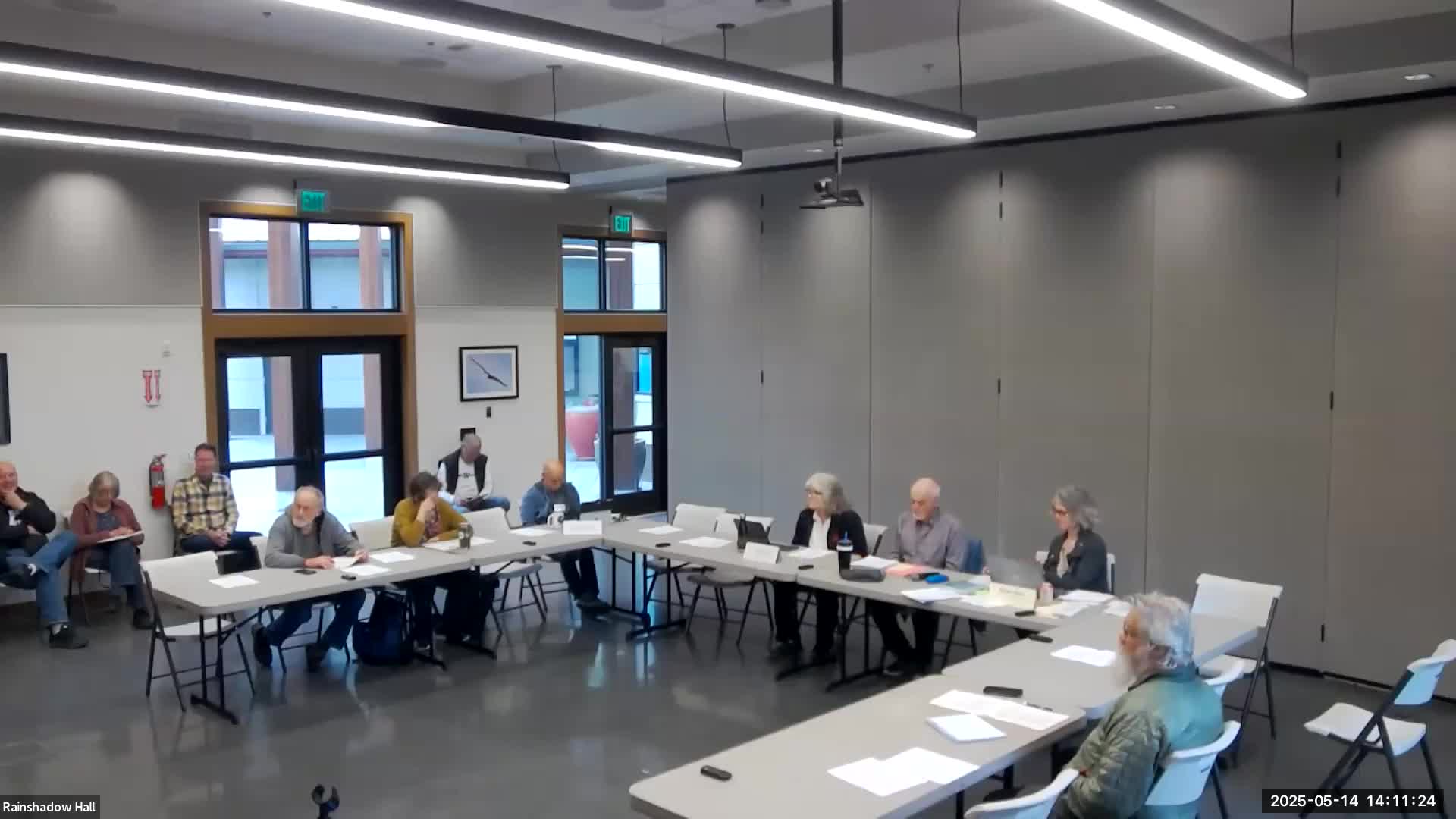
The Jamestown S'Klallam Tribe asked the Dungeness River Management Team on Wednesday to support two Salmon Recovery Funding Board proposals: a fee‑simple acquisition of up to 32 acres of intact riparian forest on the lower Dungeness River, and a separate low‑flow mitigation assessment to guide future construction work aimed at improving fish passage.
Cheryl Bauman, coordinator for the North Olympic lead entity for salmon, told the group the lead entity runs an annual grant round and forwards top projects to state and federal funding programs. “One of the things we do every year is we wanna run a grant round to allocate state and federal funding to advance salmon restoration and protection,” she said.
Hilton Turnbull, presenting for the Jamestown S'Klallam Tribe, said the riparian acquisition would “acquire up to 32 acres of intact riparian area from a single landowner, through fee simple acquisition,” and would adjoin the tribe’s existing Rivers Edge conserved lands. Turnbull said protecting connected riparian forest and side‑channel networks is “a key component of the tribe's overall Dungeness River restoration strategy” and would secure mainstream habitat the tribe could restore in later phases.
Turnbull described the separate proposal as a climate‑adaptation and low‑flow mitigation study focused on the roughly three miles below Copper Ridge. The study would identify where and how to implement design measures, any permitting or landowner permissions required, and produce a preliminary (design) deliverable that could lead to future construction funding. He said that scoring rules from the state required the tribe to split acquisition work from design work into two proposals.
On funding, speakers described a mix of state and federal sources but emphasized the acquisition proposal in this round would rely on state riparian dollars. Cheryl Bauman noted the state legislature set aside a new statewide riparian appropriation this session, and Turnbull said the recent legislative action resulted in a multi‑phase package that included funds administered through the Recreation and Conservation Office and conservation commissions. “This would all be state,” Turnbull said when asked whether the acquisition would be covered by the riparian allocation.
Members asked technical and practical questions: whether the parcels included the river centerline (Turnbull said the ownership lines stop short of the west bank and do not cross to the opposite side), what construction actions might follow an acquisition (Turnbull said acquisitions allow the landowner to investigate restoration such as adding large woody debris), and how project scoring and funding decisions would be handled (Cheryl Bauman and staff said projects are scored by a technical team and then recommended to a policy group; funding decisions are expected in June).
The DRMT technical team informed members it had roughly $500,000 expected from regular Salmon Recovery Funding Board allocations for this round and that riparian allocations statewide were still being clarified. The technical team recommended funding projects in rank order within riparian and non‑riparian categories, and recommended allocating next year’s funding to a cost‑overrun request for the Johnson Creek triple‑culvert project if that project demonstrates a path to construction in 2026.
Implementation questions remain: Turnbull said the tribe was finalizing appraisals and due diligence and had not shared price details with the landowner, so acquisition cost estimates were not disclosed at the meeting. He confirmed the tribe intends to hire consulting firms to complete geomorphic and design assessments rather than rely solely on in‑house staff for the design study.
Next steps for DRMT members included submitting numeric scores and comments on the two Jamestown projects before the policy group convenes in early June; Cheryl Bauman asked members to return scores promptly and said she needed feedback before the June 4 meeting.
Details that could affect whether either proposal advances include the final statewide riparian allocation formula, the lead entity’s technical scores, and whether the Johnson Creek project receives a one‑year allocation as the technical team proposed.
Ending: The proposals are at the vetting and scoring stage; the DRMT and the lead entity will forward recommendations to the Salmon Recovery Funding Board and the Recreation and Conservation Office for final funding decisions in June.