Get Full Government Meeting Transcripts, Videos, & Alerts Forever!
Get email alerts on the Affordable Housing Strategy topic
No spam. Unsubscribe anytime.
Bellevue Office of Housing previews 2025 affordable‑housing strategy; city sets 10‑year target of 5,700 units under 80% AMI
Summary
Office of Housing staff updated the Planning Commission on the city’s 2025 affordable housing strategy update, the new 10‑year target and outreach plan. Staff said achieving the 5,700‑unit target will require new tools and revenue sources and greater production of deeply affordable units (under 50% AMI).
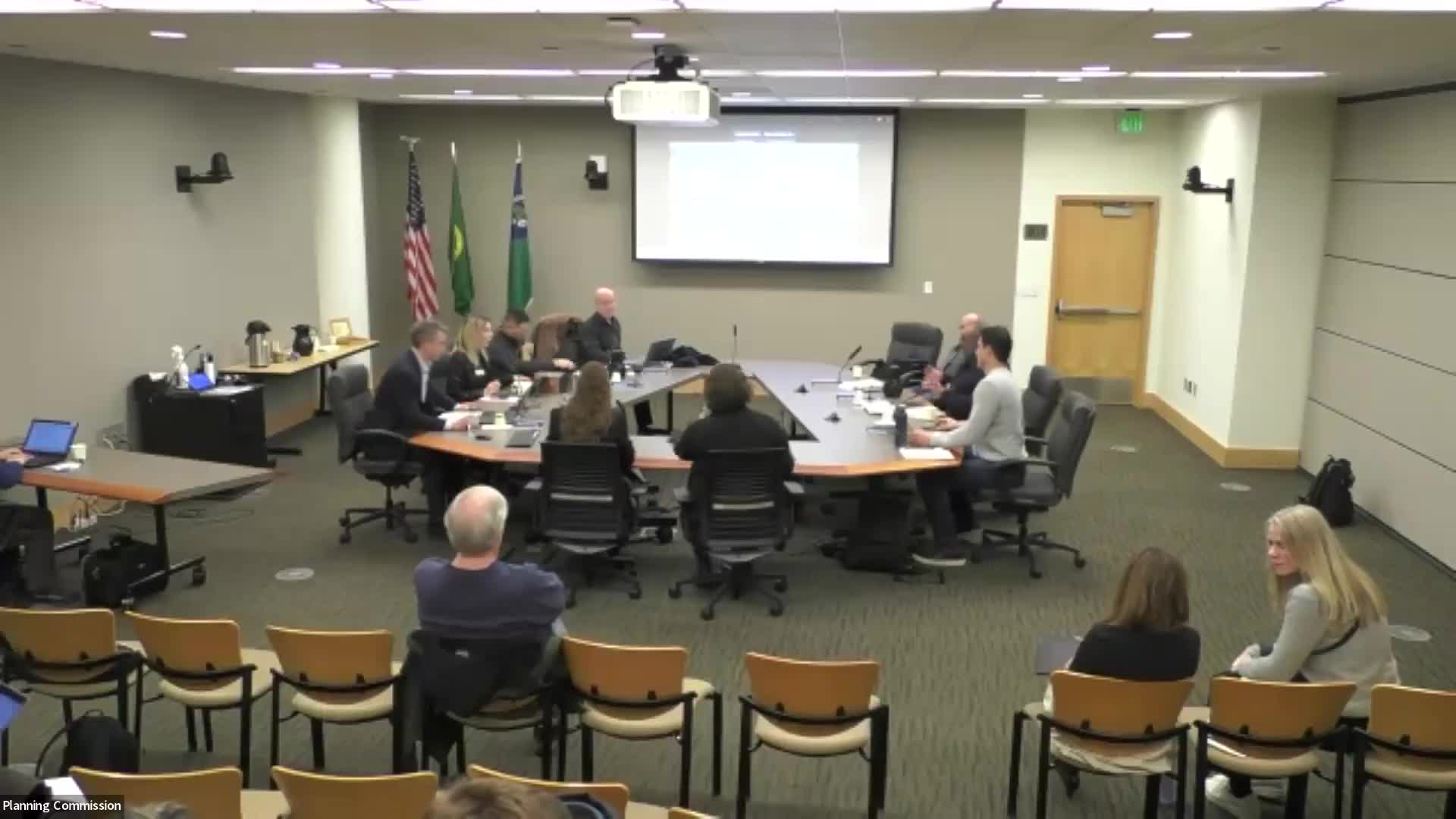
The City of Bellevue’s Office of Housing on Feb. 12 briefed the Planning Commission on its 2025 affordable housing strategy update, presenting a new 10‑year target and an outreach and analysis schedule. Staff emphasized that the city’s recent implementation work has met the prior target early, but the new target — to produce or preserve 5,700 units affordable to households under 80% of area median income (AMI) over the next 10 years — will require expanded tools and likely new local revenue sources to reach deeper affordability levels.
Senior affordable housing planner Hannah Bohnmiller and Office of Housing Director Bianca Siegel presented the update and said the strategy will be action‑oriented: staff will identify, prioritize and sequence near‑ and mid‑term actions with an implementation plan and dedicated tracking. The strategy relies on the city’s 2022 housing needs assessment and the comprehensive plan updates; it will not duplicate those analyses, staff said.
What staff reported
Bohnmiller summarized the city’s 2017 strategy implementation and the subsequent “Next Right Work.” She said Bellevue invested about $27.5 million over the last seven years in affordable housing programs (primarily through ARCH and city funds) and helped attract approximately $500 million in private and tax‑exempt bond investment. The city’s multifamily tax exemption program produced about 336 affordable units across nine projects between 2017 and 2023, she said. Council adopted the new 10‑year target when it launched the strategy update in late 2024.
Staff stressed the distribution of need across income bands: the new target preserves sub‑targets for 0–30%, 30–50% and 50–80% AMI because “the needs, resources, and tools … are very different,” Bohnmiller said. Staff’s baseline analysis shows the city must roughly double historic annual production/preservation and markedly increase production at under 50% AMI to meet the target.
Funding and tools
Office of Housing staff said existing land‑use and incentive tools alone will not meet the new target. The presentation named local revenue as a necessary focus — for example, ongoing allocations akin to the city’s housing stability funding — and staff said they will evaluate a range of tools, including potential local revenue measures and public‑private partnerships. Bohnmiller said the strategy team will also examine how to use city‑owned sites and how existing programs (for example, MFTE) can be adjusted to extend affordability terms.
Engagement, timeline and process
Staff described a multi‑phase public engagement plan: a launch and education series (including a March 6 Better Cities film screening and two April “Housing 101” events), stakeholder questionnaires and focus groups, community‑facilitated conversations, and targeted outreach to communities most affected by housing instability. The project team said it would use existing housing need analysis (no new housing needs assessment) and produce an implementation plan that sequences actions and identifies responsible departments and resources.
Commissioner comments
Commissioners broadly praised the work completed to date and the updated target but asked detailed questions about feasibility and funding. Several commissioners asked staff to separately track new construction versus preservation results (staff reported the city’s recent production has been roughly split between new and preserved units). Commissioners also asked how the city will protect affordability after tax‑exemption terms end (for example, MFTE projects) and whether the city will pursue options to extend affordability terms; staff noted the state now allows MFTE extensions in some circumstances and said the team will evaluate that tool.
Commissioners and staff discussed the scale of funding needed to build the deeply affordable units the strategy emphasizes, how to partner with nonprofit and for‑profit developers, and whether the city should identify specific funding options during the strategy process. Staff said some new local revenue tools will be required to meet the city’s sub‑targets for the lowest AMI bands.
Ending
Office of Housing staff will continue public outreach, begin deeper technical analysis and bring recommended near‑ and mid‑term actions to decision makers later in 2025. Commissioners requested further detail about how previous investments translated into units by AMI band, and staff offered to supply more granular production and preservation figures as the strategy analysis continues.