Commission studies HOMA proposal to expand urban housing opportunities across Bellevue; small‑site, parking and fee questions raised
Loading...
Summary
The Bellevue Planning Commission reviewed the scope Feb. 26 for a citywide land‑use code amendment (HOMA) aimed at increasing housing density and affordability in mixed‑use areas and asked staff for more detailed neighborhood‑level analyses before releasing draft code language for public review.
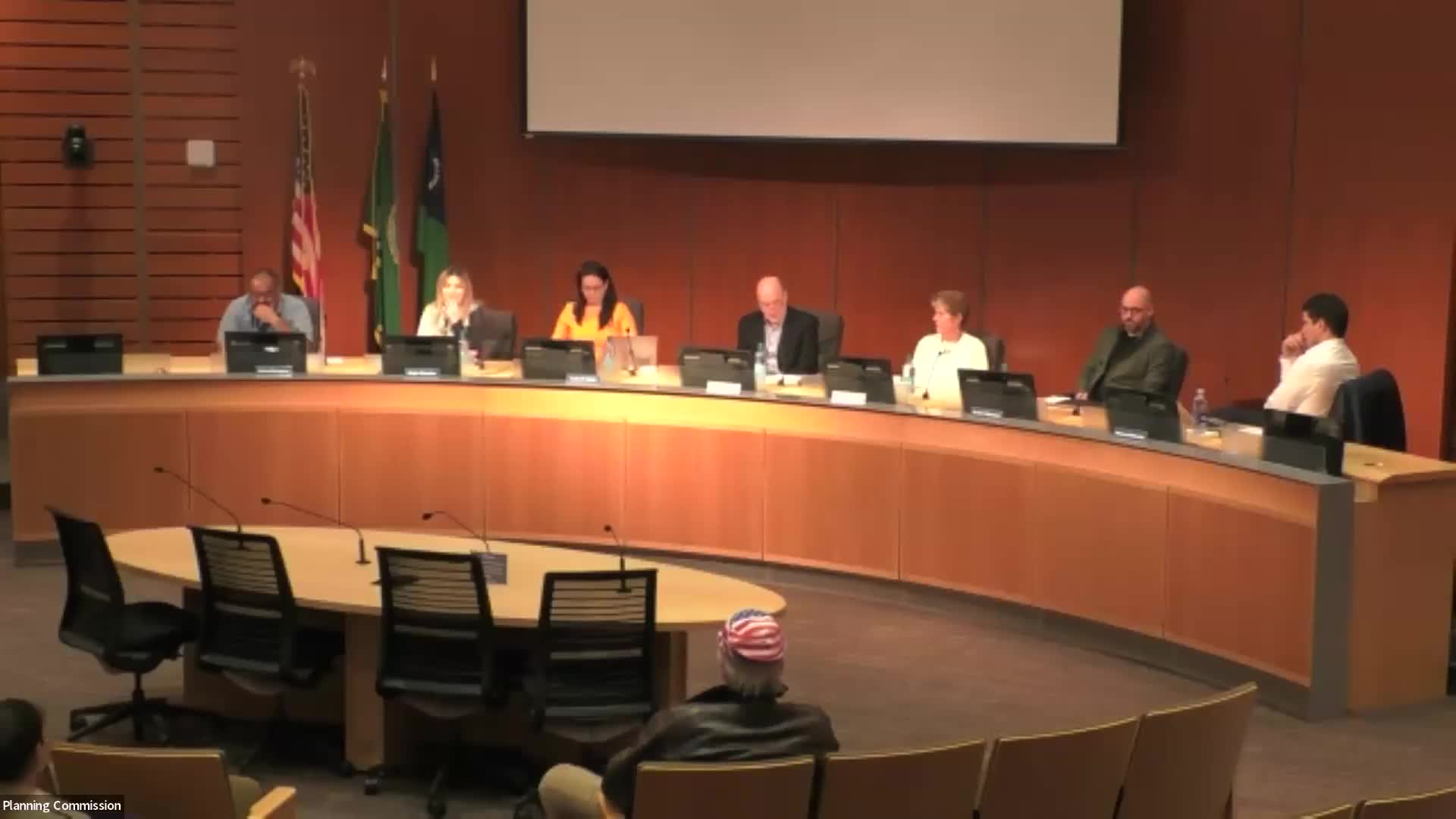
The Bellevue Planning Commission reviewed Feb. 26 a draft scope for a citywide land‑use code amendment — called HOMA (Housing Opportunities and Mixed‑Use Areas) — intended to boost housing production and affordability in mixed‑use districts.
Staff framed HOMA as the Phase‑2 replacement of an earlier interim official control (IOC) and asked the commission for direction before staff releases draft code language for public review. ‘‘This initiative is abbreviated as the HOMA, an acronym for housing opportunities and mixed use areas,’’ Strategic Planning Senior Planner Justin Panganiban said during the meeting’s opening remarks.
Why it matters: HOMA would change rules in multiple mixed‑use zones across Bellevue — increasing residential FAR, updating ground‑floor use rules, adjusting transition‑area controls and offering FAR exemptions for targeted uses (affordable housing, childcare, grocery and some nonprofit/community spaces). The proposal excludes Wilburton (separately handled) and BelRed (under separate review) but targets several neighborhood shopping centers and the Crossroads and Eastgate TOD areas.
Key elements presented - Scope and scale: staff described five development scales (low to downtown core) and a set of rezonings for sites now inconsistent with the adopted Future Land Use Map; Factorio 1 and portions of Crossroads were identified for larger upzones.
- Mandatory vs. voluntary: staff proposed two tracks, a mandatory option (affordability requirement with fee‑in‑lieu) and a voluntary, incentive‑based approach. Both would offer FAR and form changes to encourage residential development.
- Code changes: reductions in some setbacks, removal of structure lot‑coverage limits that incentivize surface parking, residential parking reductions in targeted areas, rework of transition overlays and targeted FAR exemptions for affordable housing, childcare and grocery uses.
Public and stakeholder outreach Staff described two phases of outreach: developer workshops and five public information sessions (two virtual, three in‑person). The team also published a story map and collected survey responses. Staff said initial economic analyses show limited near‑term feasibility under current market and cost conditions and that the LUCA seeks to reduce constraints that currently make housing production difficult.
Questions and items commissioners asked staff to clarify Commissioners asked for more granular information and analysis on several fronts before recommending a draft code for release: - Small‑site effects: staff said “small sites” are defined as lots under 40,000 square feet; GIS screening showed roughly 79 parcels under that threshold within the HOMA footprint, but eligibility depends on ownership assemblage.
- Parking and transit context: commissioners asked for neighborhood‑level parking analysis (some mixed‑use centers have minimal transit access and could require more on‑site parking); staff indicated commercial parking reductions were out of scope for this LUCA.
- Fee calibration and affordability: commissioners requested clearer, comparable fee‑in‑lieu scenarios and a concise explanation of how any fee would translate to units produced (cost per square foot, subsidy assumptions and developer feasibility inputs).
Schedule and next steps Staff said a draft code would be released to the public the week after the meeting, with a planning commission public hearing anticipated in March or April and an adoption target of summer/early fall 2025. Staff asked commissioners for direction on the elements above to inform the draft.
Ending Commissioners broadly supported further work and asked staff to return with detailed, neighborhood‑sensitive analyses of parking, access and small‑site economics and clearer fee‑to‑units modeling prior to the public hearing and recommendation.
Quoted speakers are listed in the article’s speaker section; quotations are verbatim from the meeting transcript.