Get Full Government Meeting Transcripts, Videos, & Alerts Forever!
Get email alerts on the Wetlands And Site Plan Approval topic
No spam. Unsubscribe anytime.
Planning board pauses Best Electric site-plan approval pending DEC wetland sign-off
Summary
At an April 8 work session the planning board said it will not grant final site-plan approval for Best Electric until the applicant provides a wetland determination or a consultant biologist report related to DEC jurisdiction; board members also requested truck‑turning diagrams, curbing details, and 8‑foot screening plantings.
The Planning Board on April 8 said it will not approve Best Electric’s commercial site plan until the applicant obtains a Department of Environmental Conservation (DEC) jurisdictional determination or submits a wetland assessment from a consulting biologist and provides revised site details, including truck turning diagrams, curbing and screening.
Board members and staff said the DEC process has slowed many projects. Staff member, Planning Department staff, told the applicant that the board cannot grant final site-plan approval without either a DEC written determination (a jurisdictional determination, or JD) or a biologist’s assessment showing no wildlife or wetland jurisdictional interest. The board said it can consider a conditional approval tied to receipt of the required DEC/JD or consultant report but cannot allow construction to begin before site-plan approval and a building permit are issued.
The DEC timeline discussed at the meeting includes a 90‑day window for agency response; if DEC does not respond the applicant may send a certified letter that triggers an additional administrative response period. The board encouraged the applicant to pursue the biologist report to avoid delays in the agency process and to support any conditional approval the board might grant.
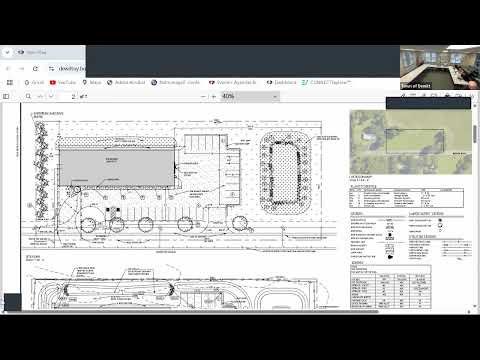
In addition to the wetland requirement, staff and board members requested several plan revisions. They asked the applicant to show worst‑case vehicle movements for deliveries (including occasional 53‑foot tractor‑trailers) so staff can confirm trucks can enter, turn and exit the site without blocking adjacent streets. Staff member, Planning Department staff, also asked the applicant to add commercial curbing where the street frontage requires it and to show the internal curb radii that the board typically requires for commercial driveways.
On landscaping and screening, the board asked for an 8‑foot screening buffer along the east property line to visually screen the neighbor and directed the applicant to select species that help manage stormwater; speakers referenced maples, crabapple and eastern red cedar as examples discussed in the meeting. Board members noted the site’s existing large rear tree will be removed and asked that new plantings perform a similar drainage and shading function to the lost tree while accommodating overhead utilities and the on‑site stormwater system.
Accessibility and parking items raised included a request that accessible parking and a loading stall meet an 8‑foot width standard shown on the plans; staff asked the applicant to confirm dimensions. Staff and board members also reviewed the plan’s stormwater layout and said it generally appears to function, but they asked the applicant to ensure that sheet‑drainage details and curb design work with the proposed planting and driveway radii.
Applicant representatives said they have been working on the DEC process and have engaged a biologist; they told the board they have waited through earlier rounds of review and are concerned about additional delay because of leasing pressures at their current facility. The board acknowledged the applicant’s frustration but said its hands are limited by the need to have either the DEC JD or a biome assessment on file before a final approval.
Next steps: the applicant is to provide the requested wetland assessment or DEC JD, a truck turning exhibit showing worst‑case movements, curbing details and revised planting/screening notes. The board indicated it is willing to consider a conditional approval tied to receipt of the DEC determination or biologist’s report but will not permit construction until the formal approvals and building permit are in place. No formal vote or motion was recorded during the work session.