Get email alerts on the Parks Maintenance topic
No spam. Unsubscribe anytime.
Parks operations managers describe workload, ADA upgrades and capital needs
Summary
Grounds and structural operations managers told the Parks & Community Services Board that Bellevue maintains about 800 acres of developed parkland at 78 in-house-maintained sites and that workload planning, ADA upgrades and capital renewal are top priorities.
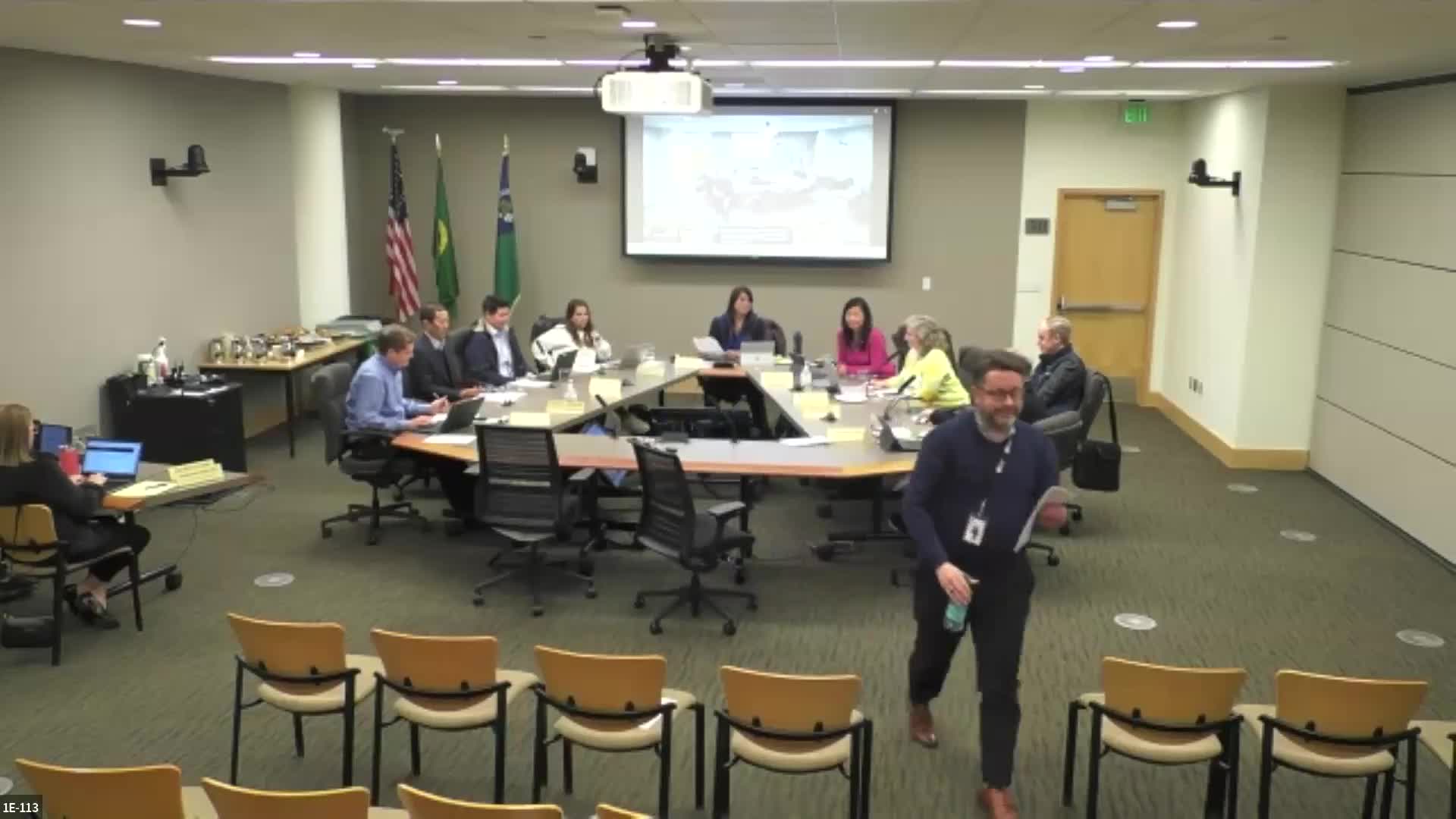
Grounds Operations Manager Justin Wilkinson and Structural Operations Manager Tom Purcell briefed the Parks & Community Services Board on maintenance operations, workload planning and capital projects needed to sustain Bellevue’s park network.
“We provide efficient, cost-effective, pleasant, safe parks,” Wilkinson said, summarizing maintenance goals and the division’s public-facing work. He told the board the city maintains roughly 800 acres of developed parkland across about 78 in-house-maintained sites; other open-space parcels are managed in natural-resources divisions, bringing the city’s total park and open-space acreage to roughly 2,700 acres.
Purcell described structural responsibilities — nearly 400,000 square feet of building space distributed across community centers, the Bellevue Youth Theatre and other park structures — and outlined facilities maintenance activities: custodial contracts for large community centers, HVAC and roof work, trail repairs, and emergency response to weather and plumbing events.
Managers highlighted projects and operating metrics: Bannerwood Sports Park (high play schedule), downtown park event impacts, LED retrofits at indoor courts and parking lots, drainage work at Lake Hills Field 2 and upgrades to Hidden Valley playground (recent renovation and design improvements to increase accessibility). They said the city has about 50 playgrounds in its inventory and typically replaces two to three playgrounds per year as part of a renovation plan with an approximate 8–12 year lifecycle for playground equipment.
Workload planning uses a site-level asset inventory and time-to-task standards to calculate labor hours and equipment needs. Wilkinson said managers track time-per-task (e.g., restroom cleaning, garbage collection) and maintain spreadsheets that translate site assets into required labor hours so staffing proposals match operating needs as new sites come online.
The managers described operational challenges: post-event recovery at downtown park, vandalism and graffiti (rapid repair goal of one to two days), isolated sites with repeated restroom vandalism (for example, Lakemont), and accessibility upgrades. Purcell noted recent ADA-focused improvements such as ramps and transition platforms on new playgrounds, and state grant-funded adult changing tables installed at ten locations.
Board members praised crews and asked follow-up questions about volunteer programs, budget split between in-house and contracted services, and the proposed Park Operations facility. Staff said volunteers work with Natural Resources for habitat and trail projects; Keep Bellevue Beautiful coordinates right-of-way cleanups. Managers said they would provide additional budget split information and that a consolidated Park Operations facility is a high priority because existing facilities are at or near capacity.
Members requested more detail on CIP priorities and the annual renovation plan; staff said those plans are updated regularly and are tied to condition and lifecycle data.
AI generated
The text on this page is AI generated. Summaries, highlights, analysis, and video transcripts are all produced from the original source material.
AI can make mistakes, so if you spot one, and we will fix it for everyone.
Note: the source content is unaltered by us. Any content source we link to, be it a video, an audio recording, or a document, is presented exactly as its publisher released it. That publisher is usually a government body, sometimes an individual official or another organisation.