Get Full Government Meeting Transcripts, Videos, & Alerts Forever!
Get email alerts on the Probation Services topic
No spam. Unsubscribe anytime.
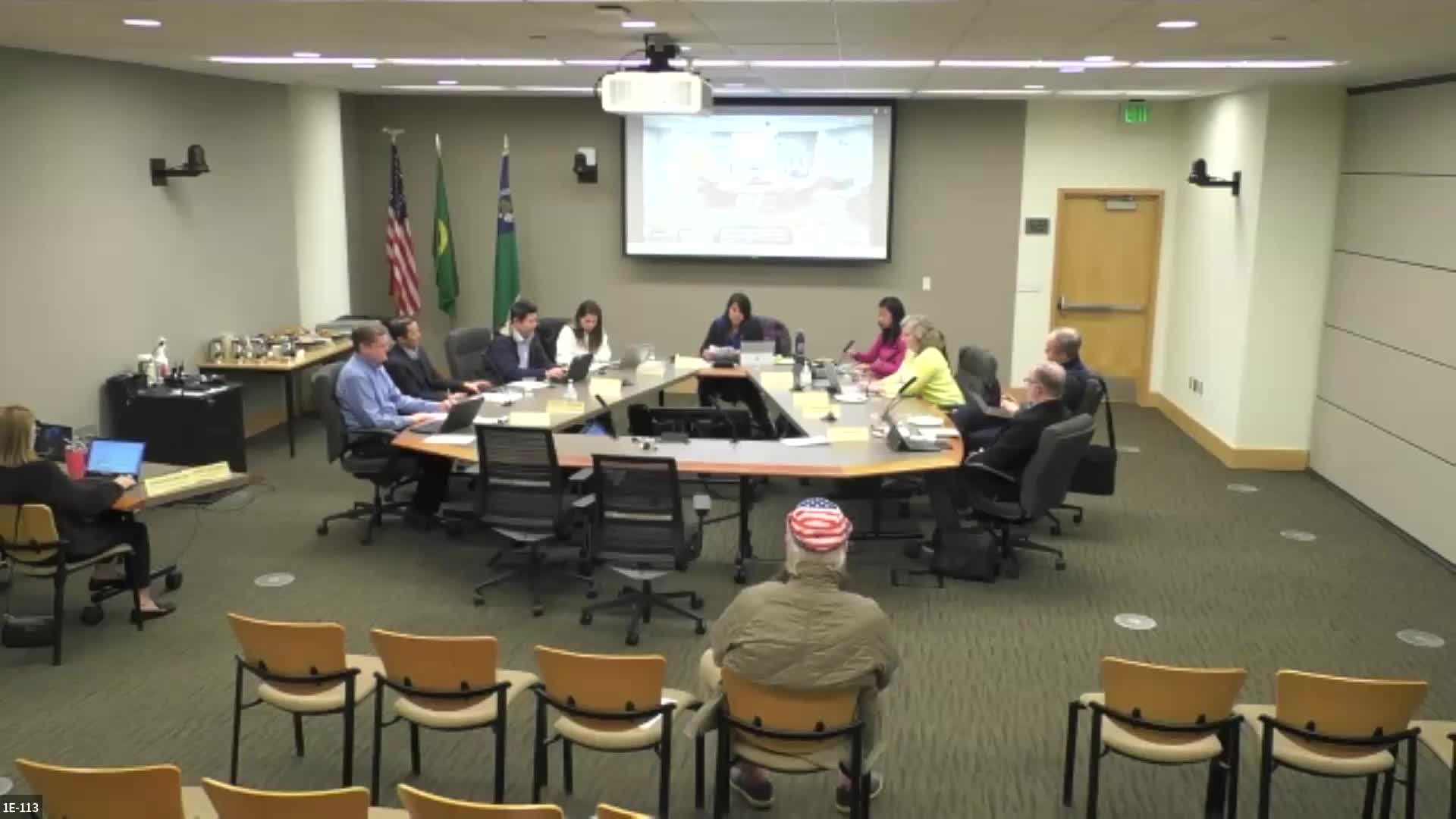
Bellevue probation manager outlines services, rising caseload and outcomes to parks board
Summary
Probation Manager Craig Fritz told the Parks & Community Services Board that Bellevue’s municipal probation office has seen referrals climb since 2020, serves about 1,500 clients and reported a 2024 three-year recidivism rate of 15.5% (3.5% for offenses committed in Bellevue).
Probation Manager Craig Fritz briefed the Parks & Community Services Board on the city’s municipal probation program, describing an upward trend in referrals, program offerings and performance measures.
“Probation essentially is a sentence that is handed down by the judge… it is an alternative to incarceration,” Fritz said, explaining that Bellevue operates its own probation unit while partnering with King County Courts to receive misdemeanor referrals. He told the board the division expects continued demand as Bellevue’s population and criminal-justice activity grow.
Fritz said referrals dropped during the pandemic but rose afterward. From 2022 to 2024 the division’s referrals roughly doubled; the office now serves about 1,500 clients in total. Fritz said the three probation officers (plus a supervisor) have “upwards of probably close to 300” cases each, while two compliance monitoring specialists each oversee roughly 400 compliance-only cases. He listed common barriers clients face — housing instability, transportation, language access and employment challenges — and described in-house services and community partnerships that aim to address them.
Performance metrics cited by Fritz included a recidivism measure calculated from cases closed in 2021 and tracked three years out: 15.5% overall and 3.5% for offenses committed in Bellevue. He highlighted the city’s electronic home monitoring (EHM) program, which he said produced more than $1,000,000 in criminal justice savings in 2024.
Programs Fritz described include defensive driving courses (Alive at 25 and age-based defensive driving), Coping with Anger, Domestic Violence Moral Recognition Therapy, the Gateway connection-to-services program, license restoration support, a resource closet (clothing, hygiene and job clothing), Bellevue Work Crew (city-run community service) and theft-prevention classes. He said many classes are offered at no charge and some are available in languages other than English; the office uses the language line and in-person interpreters when needed.
Board members pressed for comparative data and more detail on staffing and funding. Fritz said comparative recidivism data across jurisdictions is possible but not readily available in a single report and that some systems are not directly comparable; he offered to provide follow-up data. He also acknowledged caseload pressure and that workload and staffing are priorities for future review.
The board discussed the program’s placement in Parks & Community Services. Fritz and board members said the division fits the department’s community-services mission and allows direct collaboration on programs such as the work crew, which performs park maintenance and community projects.
Board members asked for additional metrics, including age breakdowns, offense types, and comparisons with neighboring jurisdictions. Fritz said those data exist but may require additional processing and offered to return with targeted reports. Volunteers support some Gateway functions; Fritz said the volunteer program is being rebuilt and volunteers help clients access benefits and online forms.
The presentation and question period occupied roughly 20 minutes of the meeting; the transcript records robust board interest in outcomes, staffing and how saved funds are used.