Get Full Government Meeting Transcripts, Videos, & Alerts Forever!
Get email alerts on the Grand Connection Crossing topic
No spam. Unsubscribe anytime.
Bellevue officials report 30% design milestone for Grand Connection crossing; funding, phasing remain key questions
Summary
Bellevue officials on Jan. 8 told the Parks and Community Services Board the Grand Connection Crossing has reached a 30% design milestone, with the city and Amazon sharing design costs and the city budgeting $15 million for continued work.
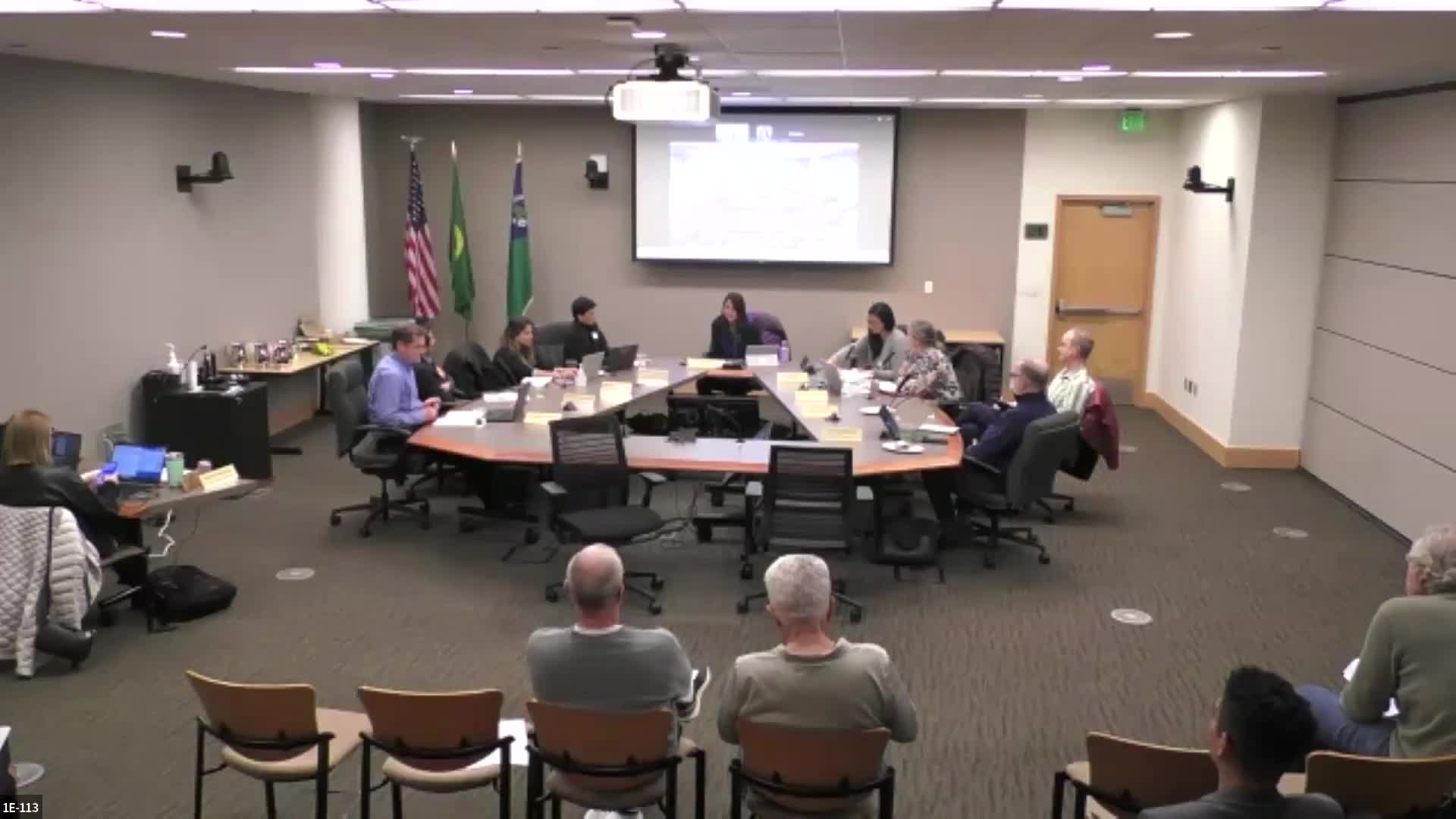
Bellevue officials on Jan. 8 updated the Parks and Community Services Board on the Grand Connection Crossing — a proposed pedestrian and bicycle bridge linking Eastrail to City Hall Plaza and downtown across Interstate 405. City staff said they have reached a 30% design milestone and are preparing cost, constructability and funding plans to move the project into later design stages.
The Grand Connection program covers roughly a mile-and-a-half route between Eastrail and Maidenbauer Bay, with a signature bridge crossing of I-405 planned to improve nonmotorized access between Wilburton and downtown. Jesse Canedo, Bellevue’s chief cultural and economic development officer, said the project “is about connection of people to places and connection of people to community,” and reminded the board that “for those that aren't familiar, the route's signature color is gold.”
Anthony Gill, the city’s Grand Connection program manager, described the 30% design deliverable as a milestone that produced detailed visuals, a constructability analysis and initial cost estimates. “We have reached a 30% design milestone,” Gill said, and he told the board the current design assumes a crossing width of roughly 30–40 feet over I-405 with wider gathering “nodes” that could expand to about 100–150 feet where the structure would widen for programming, seating and vertical access.
Gill said the current engineering and finance picture includes a 50/50 design-phase partnership between the city and Amazon and noted the city has programmed $15 million in the 2025–26 capital budget to continue design and engineering work. He added the team has discussed a federal earmark request with the congressional delegation and is coordinating private philanthropic support through a group called Friends of the Grand Connection.
City staff emphasized the crossing will likely be phased. Gill said the team is prioritizing a complete day‑one link from Eastrail to City Hall Plaza but will consider thinner initial sections for portions on privately owned parcels until those parcels redevelop and can support fuller integrated structures. Jesse Canedo said the crossing will also create substantial linear public space, estimating the crossing’s public area would be “about as much space as Ashwood Park in a linear fashion.”
On timing, staff said they are aiming to have the I-405 crossing completed by the end of the decade but warned that the schedule depends on lining up funding and testing constructability assumptions. “We are advancing as quickly as we can on the design work,” Gill said, while noting that funding and constructability reviews could move delivery later than the target.
Questions from board members focused on the day‑one scope of the crossing, how the crossing would integrate with redevelopment of public and private parcels near City Hall and Lincoln Center, transit and parking access, public safety and how the city will phase and maintain amenities. Staff said nodes within the crossing are intended to provide midspan vertical access (stairs and elevators) and emergency access, and that the design includes sound‑mitigating elements and planted edges to reduce highway noise.
The city plans to return to City Council in April with findings from the 30% design and a set of guiding principles for future redevelopment adjacent to the crossing. Staff said subsequent design phases and construction will be coordinated with property owners and other city initiatives (Wilburton land‑use updates, potential freeway‑lid concepts) to reduce future rework and protect public investment.
Board members and public speakers praised the project’s ambition but pressed staff to retain visible cues of long‑term design (so early phases feel like part of the ultimate vision), to prioritize green/public spaces in private redevelopment, and to clarify how the crossing will be programmed and patrolled after opening.
Staff provided several contact points and an online engagement hub for further public comment and said more detailed transportation and technical reports are available on the project page.
Ending: Staff will refine cost estimates, complete their constructability review and return to council and the Parks Board with recommendations and a capital plan. The crossing remains a multi‑phased, multi‑partner effort with design work continuing in 2025 and funding and construction timing still subject to approval and external commitments.