Get email alerts on the Water System Plan topic
No spam. Unsubscribe anytime.
Bellevue utilities outline water system plan update, flag storage and growth challenges
Summary
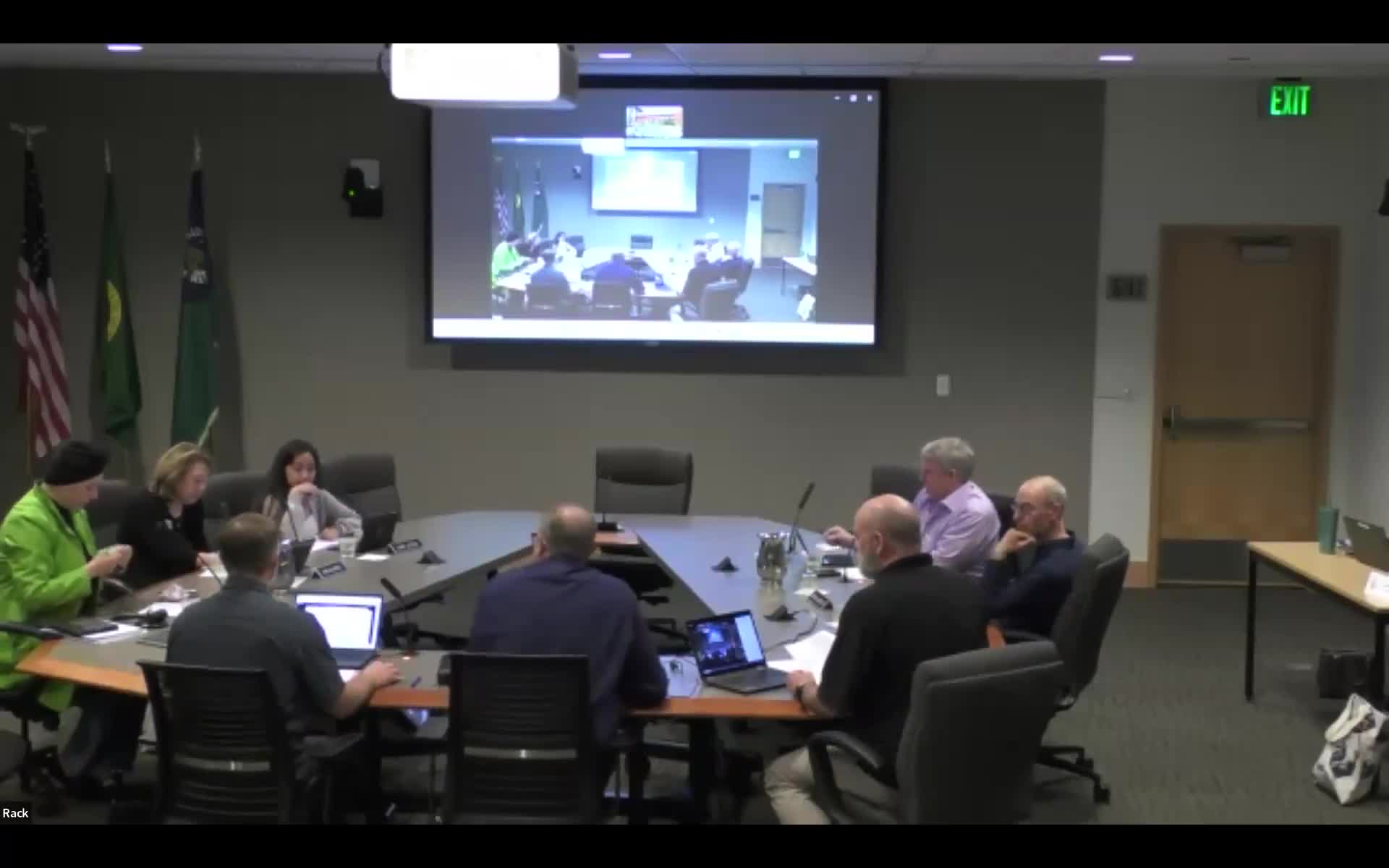
BELLEVUE, Wash. — Bellevue Utilities staff delivered an informational briefing May 1 to the city's Environmental Services Commission on a two-year update to the Water System Plan, outlining projected population and employment growth, system capacity concerns and the timeline for analysis and interagency review.
BELLEVUE, Wash. — Bellevue Utilities staff delivered an informational briefing May 1 to the city's Environmental Services Commission on a two-year update to the Water System Plan, outlining projected population and employment growth, system capacity concerns and the timeline for analysis and interagency review.
The presentation, led by the city's new water engineer and introduced by Eric LaFrance, Utilities Planning Manager, summarized planning work now under way and emphasized that the session was informational only: "This is only an informational briefing, so there isn't anything to approve tonight," the water engineer said.
The commission was told the update responds to both legal requirements and planning needs as Bellevue's retail service area prepares for higher growth. Staff said the analysis will inform near-term capital priorities, long-term asset-renewal planning and potential policy changes on technical, managerial and financial matters.
City staff described two key trends driving the update: population and employment projections that exceed earlier estimates, and a long-term decline in per-capita water use. Staff said the 2024 population report showed the service-area population was roughly 10,000 higher than earlier projections and that the service area could see about 75,000 additional people by 2044. Employment in the service area was reported near 150,000 in 2024 and forecast to reach about 220,000 by 2044.
At the same time, retail water consumption has fallen despite population growth. Staff said annual billed consumption dropped from about 5.1 billion gallons to about 4.8 billion gallons and that maximum daily consumption fell from roughly 39 million gallons to about 28 million gallons, a reduction staff attributed in part to conservation programs and changes in development patterns.
Bellevue's system geometry and storage also shaped the discussion. Staff said the system covers more than 36 square miles with nearly 1,400 feet of elevation change, requiring multiple pressure zones. The system holds more than 41 million gallons of storage spread across 24 reservoirs. The engineer explained the tradeoffs involved in reservoir siting and sizing, saying there is a "sweet spot" for elevation and capacity to balance pressure, water quality and emergency supply.
Staff highlighted several ongoing and completed projects intended to increase resiliency, replace high-risk mains and improve seismic reliability of reservoirs and pump stations. They also noted an active program goal to replace about 5 miles of high-risk water main each year and described recent emergency-well siting work that identified suitable areas for backup supply.
Commissioners asked about fire-protection storage in light of recent large wildfires on the West Coast. The water engineer said the city's current standard is roughly one day of storage and noted the implications of increasing that standard: "Even if we just say, okay, let's go to 2 days, that's obviously going to double that amount of storage," he said, adding that increasing storage could require many more reservoirs and would be a subject for policy review.
Staff outlined the update timeline: analysis and recommendations this year, policy review with the commission in the fall, a draft plan and public meeting in early 2026, followed by agency review (King County and the Washington State Department of Health) and final adoption via City Council resolution. Staff noted additional coordination is required with Cascade Water Alliance, neighboring utilities, the Department of Ecology on water rights issues, and other agencies that approve or review elements of the plan.
No formal commission actions were taken at the meeting. Staff said they will return with analysis and recommended policy changes later this year and will schedule public outreach and agency reviews ahead of a final plan submittal.
Public comment during the meeting included one speaker who raised concerns about water contamination and fluoride; staff confirmed the city purchases treated water through Cascade Water Alliance and that fluoride is added at regional treatment plants operated by Seattle Public Utilities.
The commission did not vote on any aspect of the water plan at the May 1 meeting; the next substantive commission touchpoint on the update is expected in the fall when staff will present analysis and potential policy recommendations for discussion.
AI generated
The text on this page is AI generated. Summaries, highlights, analysis, and video transcripts are all produced from the original source material.
AI can make mistakes, so if you spot one, and we will fix it for everyone.
Note: the source content is unaltered by us. Any content source we link to, be it a video, an audio recording, or a document, is presented exactly as its publisher released it. That publisher is usually a government body, sometimes an individual official or another organisation.