Get Full Government Meeting Transcripts, Videos, & Alerts Forever!
Get email alerts on the Civil Rights And Inclusion topic
No spam. Unsubscribe anytime.
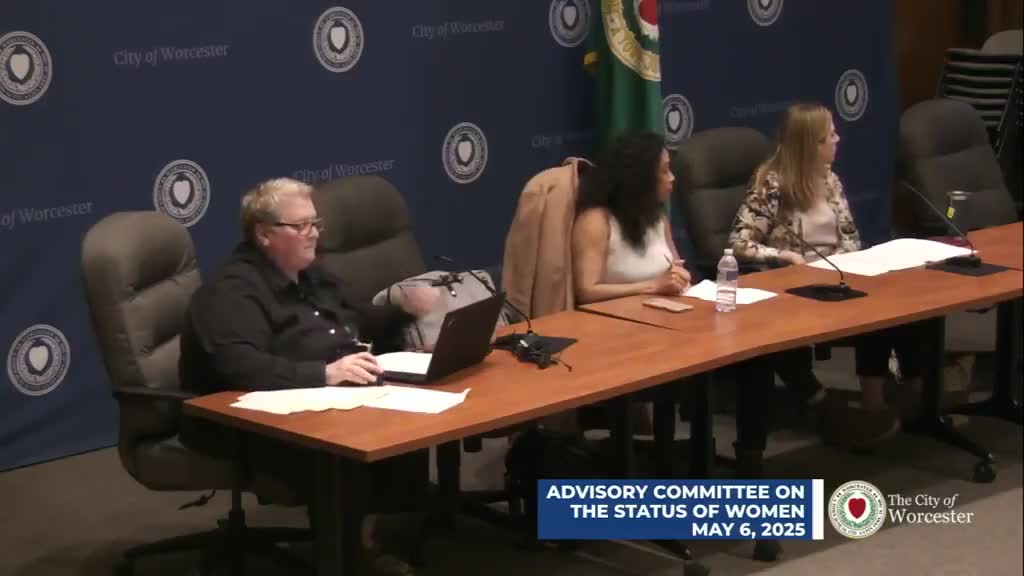
Trans residents ask Worcester committee to publicly affirm that 'trans women are women'; chair advises formal agenda submission
Summary
Two transgender residents asked the Advisory Committee on the Status of Women to affirm that trans women are women and to consider supporting local surgical-care providers. Committee staff said the request must be submitted to be placed on a future agenda in compliance with the Massachusetts Open Meeting Law.
A public commenter asked the Advisory Committee on the Status of Women to publicly affirm that trans women are women and to provide recognition and support for trans health-care access in Worcester.
Chrissy Bates, a resident who identified herself as a trans woman, said she had invited Dr. Jules Trebeau and praised UMass staff who provide gender-affirming surgical care, naming Dr. Ashley Alford by reference, and asked the committee to “affirm publicly that we are women.” Bates described access pressures and regional demand for procedures performed at UMass.
Committee staff said the topic was not on the posted agenda and cited state open-meeting requirements. “According to the open meeting law, we need to speak to the topics on the agenda,” Patricia Lafore, executive director of human rights and accessibility and staff liaison, told Bates. Lafore advised Bates to submit a request to the executive office of DEI so the committee could place the matter on a future agenda and allow time for a formal presentation.
Why it matters: Bates asked the committee for a formal public affirmation and for the committee to engage on issues affecting transgender women’s access to health care. Committee staff said it must follow the Massachusetts Open Meeting Law to schedule and consider new topics.
Discussion v. direction v. decision: the exchange was public comment; the committee did not take formal action. Staff directed the commenter to submit materials to the executive DEI office for possible inclusion on a future agenda.
Ending: Bates accepted the procedure for filing an agenda request and said she would follow up; staff said they could facilitate placing the topic on a future agenda.