Get Full Government Meeting Transcripts, Videos, & Alerts Forever!
Get email alerts on the Educator Preparation Programs topic
No spam. Unsubscribe anytime.
State Board approves elimination of several educator‑preparation programs
Summary
The New Hampshire State Board of Education voted to eliminate multiple educator‑preparation programs, citing low enrollment and staffing difficulties, and set Dec. 30, 2025, as the effective date with transition plans required within 90 days.
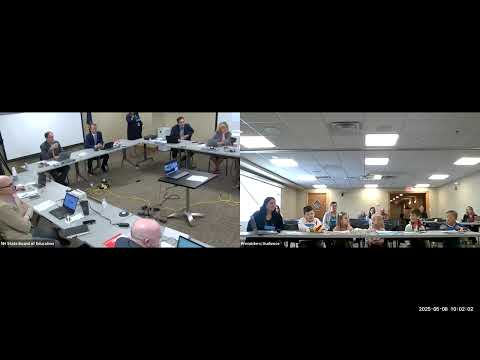
CONCORD, N.H. — The New Hampshire State Board of Education voted to approve the elimination of multiple educator‑preparation programs Tuesday, setting Dec. 30, 2025, as the effective date and requiring program transition plans to be submitted to the Department of Education within 90 days of the board’s approval.
Board members said the changes respond to persistently low enrollment in certain licensure pathways and difficulty staffing program leadership. Laura Stonking, administrator for the Bureau of Educator Preparation and Higher Education at the New Hampshire Department of Education, told the board the affected programs are outlined in the meeting’s executive summaries and include several science licensure tracks at Keene State College.
“Those programs were put on hold by the administration about four years ago … we can't hire someone to lead it,” Stonking said, describing the staffing challenge that contributed to the proposed eliminations. Dr. Catherine McCurdy of the University of New Hampshire said several of the programs proposed for elimination had very low enrollment in recent years, “perhaps one or two” candidates over the last five years.
The board’s action combined the formal elimination requests from multiple institutions. Presenters described measures intended to preserve pathways for prospective teachers: other institutions in the state system offer comparable content, the University System of New Hampshire (USNH) partners are coordinating messaging and pathways, and site‑based licensure and conversion programs at two‑year institutions such as NHTI remain options for candidates who need the subject matter content.
Board materials and presenters stressed that the eliminations do not remove subject matter content from the state; rather, they remove specific institutionally‑based preparation programs that lead directly to educator licensure. The board required each affected institution to file transition documentation; the motion specifies that a TCAT (transition/candidate action/transfer) plan for affected candidates be submitted to the Department within 90 days of board approval.
During discussion board members asked how the state will ensure continued access to certified teachers in affected fields and sought information about whether other state institutions would absorb candidates. Department staff and representatives from Keene State, UNH and Plymouth State described ongoing coordination across institutions to create pathways so students can remain in the New Hampshire system and obtain licensure through other approved routes.
The board did not eliminate educator content statewide; presenters repeatedly said comparable coursework and licensure routes remain available at other institutions or through site‑based licensure options. The board’s action becomes effective Dec. 30, 2025. Institutions and the Department will submit the required transition plans and next steps to the board and public records per the board’s instruction.
Less urgent follow‑up items recorded in the meeting included department efforts to document statewide program offerings and to update a program catalog so prospective teacher candidates can see available licensure program options across New Hampshire’s institutions.