Get Full Government Meeting Transcripts, Videos, & Alerts Forever!
Get email alerts on the Mental Health topic
No spam. Unsubscribe anytime.
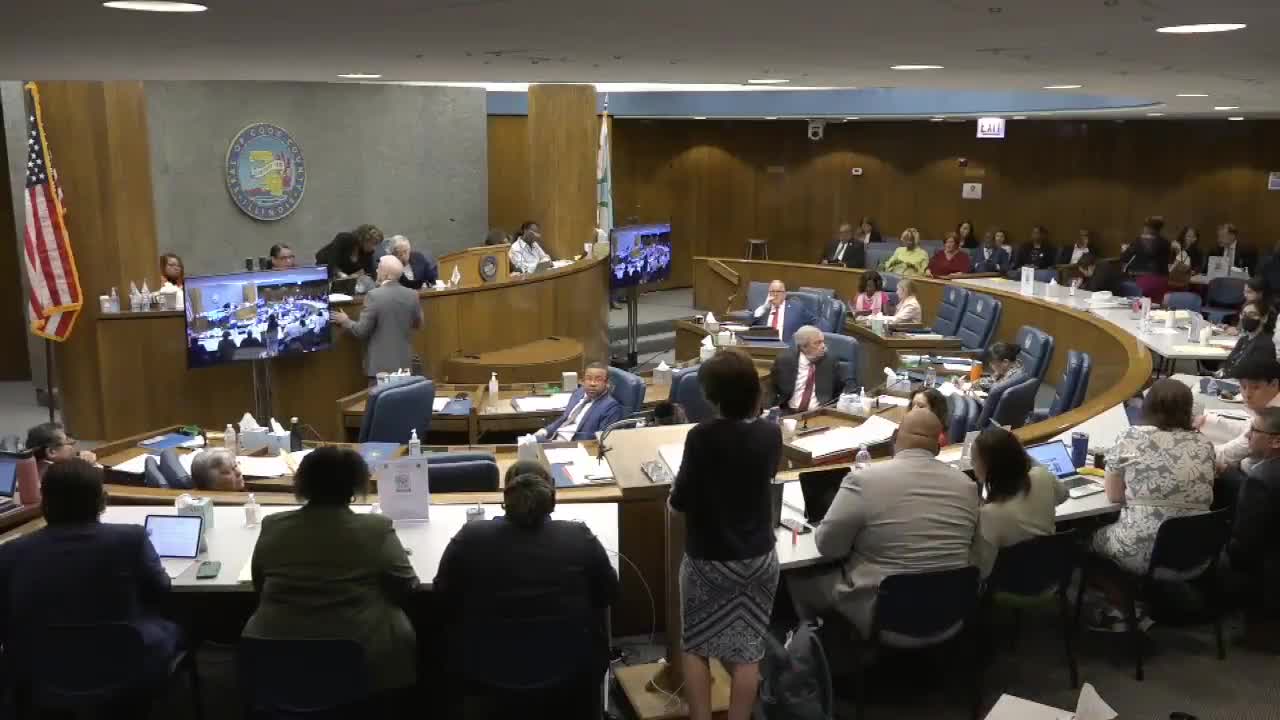
Cook County commissioners hear public testimony on mental health month, ShopTalk community initiative
Summary
Cook County commissioners received public testimony and a presentation tied to a resolution recognizing May as Mental Health Awareness Month and heard multiple speakers about ShopTalk, a barbershop- and salon-based outreach effort for youth mental health.
Cook County Board of Commissioners received public testimony and a presentation supporting item 25 28 13, a resolution recognizing May as Mental Health Awareness Month, and heard multiple community members describe ShopTalk, a barbershop- and salon-based outreach effort to connect youth to mental-health services.
Speakers told the board why the resolution and local outreach matter. "Your mental health is just as important as your physical health," said Christina Saldana, who testified as a parent and urged support for the resolution after describing her 12-year-old son's severe depression and periods when he reported having no will to live. "This highlights the importance of early identification and intervention," she said, quoting national statistics on onset of mental illness.
The public testimony put program details on the record. "ShopTalk is a safe space where we take the conversations ... and we redirect it to conversations about mental health, generational trauma, how you're doing in school," said Jimmy Wallace, who described about 20 ShopTalk events held over two years. Wallace said events offer free haircuts, food and a resource table and that volunteers help young people connect to services. "We just need help financially to keep this thing going," he added.
Commissioner Tara Stamps, sponsor of the mental-health resolution, described ShopTalk's approach and partnerships in detail. She said barbers and beauticians who participate complete a seven-hour student mental-health-first-aid training so they can "flag for an intervention" and facilitate warm handoffs to community partners, including collaborative crisis and behavioral health providers. Stamps described instances of students in crisis and the program's efforts to provide immediate, culturally informed support.
Why it matters: Commissioners and community speakers tied the resolution to urgent needs — limited access to providers, long waiting lists and rising self-harm among young people — and described a grassroots model intended to expand the county's mental-health outreach into trusted community spaces.
Details recorded in testimony and requests
- Waiting lists and provider shortages: Christina Saldana said therapy waiting lists can be "1 year" and described limited availability of psychiatrists for young men. (Source: Christina Saldana, public comment.) - Prevalence and onset: Saldana quoted national figures, including that about "50 percent of lifetime cases of mental illness begin by age 14 and 75 percent by age 24," citing the National Institute of Mental Health. (Source: Christina Saldana, public comment.) - ShopTalk activities: organizers described roughly 20 events over two years, serving youth ages roughly 14–24/27, providing haircuts, meals, resources and volunteer "trusted adults." (Sources: Jimmy Wallace; Calavito McGee; Dequan Smith.) - Training and handoffs: Stamps said participating barbers and beauticians completed a seven-hour student mental-health-first-aid training and that program partners offer warm handoffs for counseling and crisis care. (Source: Commissioner Tara Stamps.)
Discussion versus action
Speakers and commissioners discussed the resolution and community programs and requested support; however, the transcript does not record a formal board vote on item 25 28 13 during the excerpts provided. Presentations, public testimony and requests for financial and logistical support were made on the record.
Community relevance and next steps
Speakers asked the county to expand culturally competent, community-based interventions, especially in South Suburban Cook County and in neighborhoods with limited service access. Organizers requested financial support and partnerships so ShopTalk can continue and scale; commissioners acknowledged the need but did not record a formal adoption vote in the provided transcript.