Get Full Government Meeting Transcripts, Videos, & Alerts Forever!
Get email alerts on the Solid Waste topic
No spam. Unsubscribe anytime.
Poquoson to shift from convenience-site Saturdays to monthly precinct roadside bulk pickups starting July 1
Summary
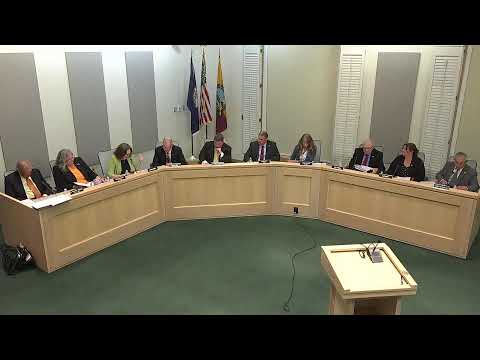
Poquoson City staff presented a plan to replace the Saturday convenience site with monthly, precinct-based roadside bulk and landscape pickups and added transfer-station access, and council gave staff consensus to proceed.
Poquoson City staff presented a plan to replace the current Saturday convenience-site model with monthly, precinct-based roadside bulk and landscape debris pickups and to expand drop-off access at the York County transfer station. Assistant City Manager Tanya O'Connell led the presentation with Public Works Operations Manager Bodina Wright and Public Works Director John Anderson on hand to explain operations and outreach.
The proposal calls for monthly roadside pickups within three precincts: Western (first Tuesday), Central (second Tuesday) and Eastern (third Tuesday) of each month. Residents would receive two free roadside bulk pickups per month (bulk and landscape separate, each up to a 6-cubic-yard pile, placed behind the ditch/curve by 7 a.m. on collection day) and one free drop-off per month at the York County Waste Transfer Station (operated by Republic Services, Monday–Saturday, 7 a.m.–4 p.m.). Staff said there is no proposed change to unlimited residential landscape disposal at the VIPSA facility or to the LEAP program. The program start date is July 1, with outreach materials (postcards, flyers, calendar updates and social posts) to be distributed beginning about May 15 and reminders run on Facebook during the first months of rollout.
Why it matters: staff said the current convenience site has grown to handle more than 11,000 vehicles on some Saturdays, creating traffic congestion that blocks City Hall Avenue and impedes access to the public safety building and nearby library. Officials said the shift aims to reduce peak congestion, lower overtime Saturday staffing burdens and provide more convenient, monthly options for residents.
Key operational and code details: the plan would keep standard prohibitions on items that cannot be collected (black bags, construction debris such as fencing, flooring, windows and treated wood; tree stumps and root balls; loose mulch, pine straw and similar) and requires separate placement of bulk and landscape piles. Piles must allow clearance for trucks and overhead wiring; the maximum allowed pile is 6 cubic yards. Because the City Code currently allows only one free pickup per calendar year, staff told council they will return with an ordinance amendment to permit 12 pickups annually and a once-per-month free transfer-station drop-off for solid-waste customers. During the transition staff will tag piles placed out on the wrong precinct week, do outreach to educate residents and provide a short grace period while residents learn the new schedule. The transfer station operator will track monthly free use by checking ID/address or license plate.
Costs, staffing and follow-up: staff said they expect net city cost to remain stable or not materially increase because weekday regular-time collection can replace Saturday overtime and current convenience-site staffing. Public Works Director John Anderson said the precise precinct-level cost is unknown until the program runs for a few months and staff can report back; he said the city pays transfer-station tonnage charges and would revisit pickup frequency if tonnage or complaints require more frequent collection. Council asked staff to return with a drafted code amendment and budget impact estimate; staff agreed to do so. Staff also noted that if once-per-month transfer-station access proves insufficient they could increase frequency in coordination with the transfer station.
Concerns raised: council members and some residents raised aesthetics and public-right-of-way concerns — piles visible on collection weeks, potential for extended curbside debris if residents leave piles out early, and impacts to neighbors and adjacent sidewalks/driveways. Council members asked about potential use by out-of-jurisdiction residents; staff said monthly address/license-plate checks at the transfer station should reduce that leakage. Staff also noted wear-and-tear concerns (screws/nails from debris in City Hall Avenue) and the convenience-site crews’ overtime and safety burden during peak events.
Next steps: council provided consensus to move the proposal forward and asked staff to return with a code-ordinance amendment, outreach materials, an updated solid-waste calendar and a cost analysis after several months of operation. Staff also will refine the draft outreach language to include positive examples (what residents can place at the curb) in addition to “don’ts.”