Get Full Government Meeting Transcripts, Videos, & Alerts Forever!
Get email alerts on the Animal Services topic
No spam. Unsubscribe anytime.
Patchogue board hears mixed public comments on proposed animal-rehab center; parking, fencing and fire-safety raised
Summary
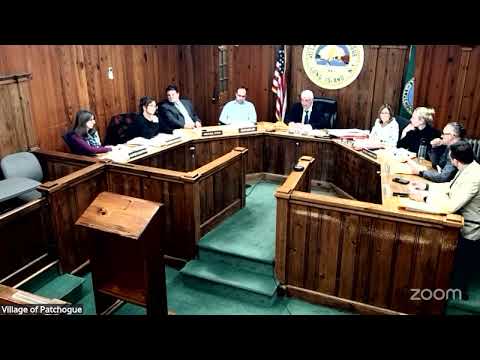
The Village of Patchogue Board of Appeals on Jan. 21 heard an application for an animal rehabilitation, training and adoption center at 173 Waverly Ave; public comments and letters both supported and opposed the move, and the applicant agreed to several site changes and must provide fire- and health-related documentation at the decision stage.
The Village of Patchogue Board of Appeals considered an application (No. 2506) for a rehabilitation, training and adoption center at 173 Waverly Ave on Jan. 21, a proposal that drew lengthy applicant testimony, letters both for and against, and questions about parking, fencing and fire-safety measures.
The applicant — filing under the project name listed in the agenda as United People (animal rehabilitation and adoption center) — described the current operation as a volunteer-run rescue and training program that works with service and therapy dogs, provides temporary housing for animals in cruelty cases, and conducts adoptions by appointment. The applicant said the current facility houses about 43 cats and varies in dog capacity by case; she said she generally limits intake to “never more than 10 big dogs” at a time and that many animals are case-specific and kept longer for training or hospice care.
The application seeks a special permit (Zoning Code §435-28 referenced in the hearing) for the proposed animal facility located in a D-1 zone and requested relief from village parking requirements; the application record shows 9 parking spaces proposed where the application referenced a larger required number. The applicant described the new premises as roughly 2,900 square feet (the current space was stated as about 2,089 sq. ft.) and said the operation is appointment-only, staffed by volunteers and typically open 10 a.m. to 4 p.m. daily. The applicant also said the organization holds state and county shelter licensing and is a 501(c)(3).
Neighbors and the public provided mixed input. Donald Roselli, who identified himself as an owner of houses across the street, called the applicant’s work “god’s work” but asked that the building exterior be improved, requested that drop-offs not occur at garage doors and urged that parking be limited to the proposed lot. In contrast, the board also received a lengthy emailed complaint (attributed in the record to an Alexa/ Alexis Harding) alleging hoarding and poor shelter conditions; the email urged denial and asked board members to inspect the applicant’s current location.
Several neighbors submitted letters in support; the clerk read letters from Richard Clark (Suffolk Collision Specialist), Virginia Livingston and Jamie Spinelli into the record. The applicant provided photos, architecture plans (the full set was reportedly submitted but some large drawings were not immediately located during the hearing) and explained the facility’s modular kennels and planned fenced exercise areas.
Technical and safety issues drew board questions. The applicant agreed to modify a proposed 8-foot vinyl fence to 6 feet to conform with the Village of Patchogue rule limiting fences to six feet. The board discussed parking-layout details and noted that portions of the parking plan were on a gravel lot; the applicant said volunteer and handicap spaces would be provided and that an asphalt company had offered donated paving when weather allows. The fire marshal’s representative highlighted fire-safety requirements: the building’s masonry construction and high ceilings make standard sprinkler installations problematic; the fire marshal recommended a system of heat sensors and alarm work that the applicant said could cost approximately $22,000.
The board also discussed state and county shelter guidance. The applicant said Suffolk County and New York State licensing set inspection and quarantine requirements and that, under prior inspections for a smaller facility, county reviewers had indicated a theoretical maximum that was well above the applicant’s typical operating counts. The applicant repeatedly said the organization operates on grants and public donations and that the relocation had been financed mostly by private donations while certain grants were on hold pending relocation.
Public-safety and nuisance concerns were raised by neighbors (noise, increased traffic, drop-offs), while supporters emphasized volunteer staffing, appointment-only visits and community programs such as service-dog training and temporary housing for animals of domestic-violence survivors.
After extensive testimony and admission of support/opposition letters into the record, a motion by Mr. Stein to close the application and move it to the decision calendar was seconded by Mr. Miggs; the board voted to close and advance the matter for decision. The transcript records follow-up items for the applicant (fire-safety plan, final parking/site plans and compliance with county/state shelter inspection requirements) that should be supplied for the decision-stage record.
Why it matters: The proposal combines animal welfare, community services and neighborhood impacts. The board’s decision will determine whether the operation can legally run a volunteer-staffed rehabilitation and adoption center at the site and under what conditions (parking, fencing, fire safety, limits on intake and hours).
Next steps: The application was closed and placed on the decision calendar; the applicant must supply any outstanding plans, the clarified parking plan and confirm required fire- and health-related compliance prior to a final decision.