Salina lays out Phase 1 of River Renewal project, authorizes property-acquisition work as crews prepare for 2026 construction
Loading...
Summary
City staff and HDR consultants described the RAISE-funded Phase 1 River Renewal scope—bridges, 6.3 miles of trails, canoe/kayak launches and park work—outlined a funding gap and approved a contract for real‑property acquisition to support a June 2026 bid letting.
Salina city leaders and project consultants on May 12 described the scope and schedule for Phase 1 of the Smoky Hill River Renewal project and authorized work to acquire private property needed for construction.
The study-session presentation framed Phase 1 as a transportation- and amenity-focused package funded largely by a U.S. Department of Transportation RAISE grant and local sales tax money. "We were blessed, really, to win this RAISE grant," HDR project manager Eric Dove said, noting the award lets the city move quickly from design toward construction. City utilities director Martha Tasker told commissioners, "we have about $17,000,000 of sales tax money to spend" on the overall program.
Why it matters: Phase 1 includes seven new and replaced bridges, pedestrian underpasses at North and South Ohio, trail connections to create a roughly 6.3-mile loop, four canoe/kayak launch sites (one ADA-accessible at Lakewood Lake), a boat-storage/maintenance building in Oakdale Park, a Fourth Street plaza area designed as a temporary event street closure, and other park and waterfront improvements. The work is paired with a separate U.S. Army Corps of Engineers ecosystem restoration effort. Together the Corps work and the RAISE-funded elements were described by staff as roughly $60 million; including related feasibility, property work and water-rights purchases the city estimated the combined program near $69,000,000.
Project funding and schedule Martha Tasker said the city expects roughly $17 million in dedicated sales-tax funds available for the effort and identified a local shortfall that would require additional city contributions if federal or partner funding does not cover all costs. Tasker and HDR staff stressed value-engineering continues. City staff wrote that the RAISE grant construction work is planned to begin in June 2026, with an in‑street completion milestone described in staff slides as "completed in February" and final paperwork to follow; Corps feasibility and design steps will continue on a different schedule.
Tasker described the federal cost-share for the Corps ecosystem restoration feasibility as 65% federal / 35% local. She and HDR staff repeatedly cautioned schedule and funding are contingent on partner allotments: "we all get done about 2030, assuming the Corps project receives the funding that it needs," Tasker said.
Design elements and public input HDR landscape lead Troy Henningsen walked commissioners through the aesthetic and district approach: a Lakewood Park naturalistic theme, a parks-and-neighborhoods theme, and a downtown "Art Deco"-influenced theme for bridges and hardscape near Santa Fe Avenue. Henningsen showed concept images of the Iron Avenue crossing (described as a focal point), Elm and Ash replacements (converted from culverts to bridges), a Midway multimodal hub near Tony's Pizza Event Center with EV charging and transit stops, and a complete-street treatment for Fourth Street that would allow temporary closure for events.
Dove explained the RAISE grant treats bridges, trails and canoe access as transportation elements; he described a series of culvert removals and new bridges to re-establish a natural channel and safer pedestrian crossings. "When we build all these improvements, we want to make sure to let the water out quicker than what we can today to improve that flood conveyance," he said, describing one of multiple channel-management features.
Property impacts and acquisition work Because the federal RAISE grant requires documented right-of-way, the commission separately authorized a professional services agreement with HDR Engineering to conduct real-property acquisition work for Phase 1. The approved agreement covers acquisition services not to exceed $200,340 and anticipates 36 fee acquisitions with an allowance for up to 40 total acquisitions and temporary construction easements; staff said title work and appraisals are budgeted separately.
Rob Kirkpatrick, HDR's real estate lead, told the commission the acquisition program will follow federal requirements under the Uniform Relocation Assistance and Real Property Acquisition Policies Act ("the Uniform Act"). He explained the 2024 update to the Uniform Act set the appraisal-waiver threshold at $15,000; parcels with anticipated value impacts below that number can be processed with waiver valuations instead of full appraisals. Staff estimate nine full appraisals are required and a total of about 44 title searches; Kirkpatrick said the acquisition, appraisal and title work budgeted at the time of the presentation totaled $287,340 out of a $600,000 acquisition budget set for the program. Staff said they plan to start outreach in May 2025 and to complete most negotiated acquisitions by November 2025 to meet a planned May 2026 right-of-way certification for bid letting.
Discussion and next steps Commissioners pressed project leads about construction staging and traffic impacts at North and South Ohio, the Cedar/Front Street connections, and the city's approach if the Corps allotment is reduced. HDR and staff said many design details remain subject to value-engineering; Dove said bid documents were scheduled to reach 90% in December of the presentation year and that staff were pursuing standard precast and other methods to shorten construction disruptions.
Robust public engagement has already shaped Phase 1 priorities, staff said: steering-committee meetings, four public meetings with more than 350 attendees, multiple surveys and social-media outreach. A public open house on Phase 1 was scheduled for May 13 at Tony's Pizza Event Center with information stations and a comment form.
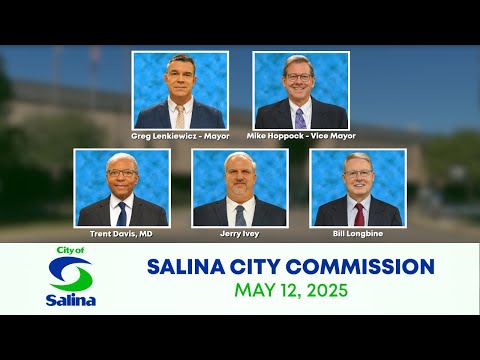
Commission action At the regular meeting the commission approved the HDR real-property acquisition agreement (authorized the interim city manager to execute) in an amount not to exceed $200,340; the motion carried 4–0 with one commissioner recused from that vote. Staff said more detailed acquisition budgets would return to the commission after appraisals and market analyses were complete.
What to watch Staff and HDR described three decision points that will materially affect the city's share of cost: final construction bids (planned after the 2026 bid letting), firm commitments from the U.S. Army Corps of Engineers on the ecosystem component, and the outcome of ongoing value-engineering. The city also must complete right-of-way acquisition under federal rules before the RAISE-funded bid letting can occur.