Get Full Government Meeting Transcripts, Videos, & Alerts Forever!
Get email alerts on the Education Funding topic
No spam. Unsubscribe anytime.
Mitchell County commissioners approve school funding package that moves technology to recurring spending
Summary
Mitchell County commissioners approved “scenario 1” for the school budget at a budget workshop, shifting one-to-one technology funding into recurring operations, allocating an Article 44 special allocation and a one-time $175,000 payment while warning the fund balance will fall significantly.
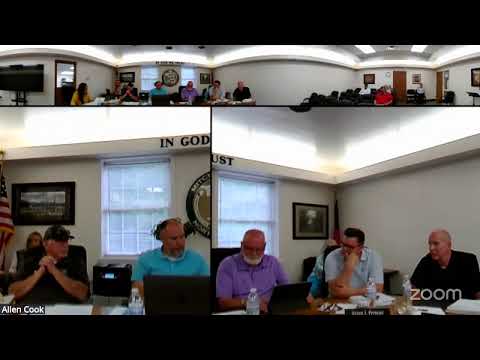
Mitchell County commissioners voted unanimously to approve “scenario 1” for the Mitchell County Schools budget during a budget workshop, moving one-to-one student technology funding into recurring county support and approving one-time and special allocations to the school system.
County management presented three scenarios to the Board of Commissioners. The approved scenario removes the previous one-to-one (1:1) technology stipulation and makes that technology funding a recurring county operational commitment, allocates an Article 44 special allotment of $185,009.76 to the schools and adds a one-time $175,000 special allocation to be used “where the school board sees it most,” county staff said. County staff described the one-time $175,000 as nonrecurring and the recurring technology funding as an ongoing obligation.
County management framed the decision against a rapidly shrinking fund balance after a major storm and ongoing debris-removal costs. “We are running a ton of cash flow in the county right now,” the County Manager said, noting a large up-front payment for debris removal that has been drawn down and that additional reimbursements and invoices are still coming. Staff estimated the approved scenario would reduce the county’s fund-balance ratio from about 38% to roughly 21.7%.
Why it matters: moving the technology allocation into recurring operational funding changes county obligations going forward and reduces the cushion the county keeps for emergencies. County management warned that the fund balance would be further stressed as remaining debris-removal bills and other storm-related costs are billed over the next several months.
Details of the approved package and discussion
- Recurring technology: The County Manager proposed that the county move the one-to-one technology program into recurring operational funding. Staff said this could be the largest recurring allocation to the schools in roughly 15 years.
- Article 44: The county will allocate $185,009.76 under Article 44 as a special allocation to the school request as presented at the meeting.
- One-time allocation: Commissioners approved a one-time $175,000 payment to be used at the discretion of the Mitchell County Schools board (“where most needed”), and staff emphasized that the $175,000 is not recurring.
- Remaining shortfall and tax option: County staff said the schools’ original request totaled about $860,009.76 and that, even after the recurring technology funding and the Article 44 allocation, the schools would face a funding gap of about $402,437. Staff noted that, to fully close the gap, the Board of Education would need to request a property tax increase; staff estimated that 1 cent on the tax rate equals about $227,150, and that meeting the shortfall would require a roughly 1.77¢ increase on the $100 valuation. The commissioners did not promise to approve any tax increase; staff said the Board of Commissioners would hold a public hearing if the Board of Education formally requested it.
- Vote and motion: A commissioner moved to approve scenario 1 as presented, including the $175,000 one-time allocation; the motion carried unanimously.
Discussion and concerns
Commissioners and staff repeatedly stressed the county’s recent storm recovery costs and the need to preserve a fund-balance safety net for future emergencies. The County Manager cautioned that further events — including a large wildfire during the dry season — could demand substantial, immediate cash and that the county’s recent debris expenses have materially drawn down reserves. Staff told the board to expect additional invoices and federal/state reimbursement timing that may stretch across months.
Several commissioners said they were uncomfortable but saw the vote as a necessary response to the schools’ needs; one commissioner said they were not fully at peace with any option but did not offer an alternative. Commissioners urged continued cooperation and earlier joint discussions with the Board of Education in future budget cycles so both boards can plan together.
What happens next
The county manager and finance staff will reflect the approved scenario in the formal budget documents and proceed toward the budget adoption process. If the Board of Education decides to request a property tax increase to close the remaining gap, the commissioners said they would schedule a public hearing and take the request up at that time. Staff also said debris-removal reimbursements and other storm-related receipts are expected to be received in stages over the next year, which will affect the county’s fund balance as reimbursements are processed.
Ending note: Commissioners described the vote as a difficult trade-off between supporting schools and safeguarding county reserves. County staff and commissioners emphasized that next year’s budget will be tighter if the county must absorb similar storm costs again.