Get Full Government Meeting Transcripts, Videos, & Alerts Forever!
Get email alerts on the Housing Services Shelter Treatment topic
No spam. Unsubscribe anytime.
Planning commission tables United Way plan for Evergreen building after extensive public comment
Summary
United Way Dickinson asked the Planning and Zoning Commission on May 14 to approve a special use permit to convert the former Evergreen long‑term care building into a multi‑purpose residential facility offering emergency shelter, inpatient and outpatient substance‑use treatment, transitional housing and a diversion program.
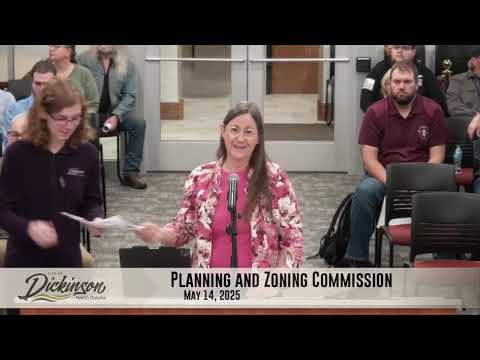
United Way Dickinson asked the Planning and Zoning Commission on May 14 to approve a special use permit to convert the former Evergreen long‑term care building into a multi‑purpose residential facility offering emergency shelter, inpatient and outpatient substance‑use treatment, transitional housing and a diversion program. The commission voted to table the application so staff can review the newly submitted documentation and the city can host additional public outreach.
The proposal, presented by Dakota Gant, executive director of United Way Dickinson, envisions a three‑story, 79‑room facility with separate wings for emergency shelter, inpatient treatment and transitional supportive housing, a commercial kitchen, private rooms with showers and a dedicated space for the nonprofit House of Mana. “This is not just a homeless shelter, this is alcohol treatment to individuals in need, provide an alternative to incarceration, a diversion program,” Gant told commissioners.
Natalie Burchek, City Planner, told the commission staff initially found the submitted special‑use application incomplete because it lacked a detailed list of partner organizations, a site plan showing how the facility would operate, a financial plan and a day‑to‑day operations manual. After Gant presented a multi‑page operations and financial plan during the meeting, Burchek said staff would need time to review the new materials. “It is definitely a step towards addressing everything that we had requested,” she said.
Supporters at the hearing included Southwestern District Health Unit (represented by Al Webster reading a letter from Executive Officer Sherry Adams), Allison Wanner and Lelissa Ward from the SWMCCC community treatment program, Stark County State’s Attorney Amanda Ingolstedt and Jonathan Holt, the state commissioner of Recovery and Reentry. Wanner and Ward described partnerships with the existing county treatment program and said colocating services would improve continuity of care. Holt said the project aligned with the Armstrong administration’s goals for reentry and diversion.
Neighbors and homeowners raised safety, traffic and property‑value concerns. Multiple residents who live within several hundred feet of the Evergreen building said they had not seen the full materials before the meeting and asked for clearer staffing, security and long‑term maintenance commitments. “One of my concerns is the overnight staffing — 1 to 2 staff overnight does not sound adequate when you're talking possibly up to 79 residents,” Jackie Miller, a homeowner whose property abuts the site, told commissioners.
United Way provided program details at the hearing, including 24/7 staffed supervision, key‑fob access to gender‑segregated wings, security cameras in common areas (not in bedrooms or bathrooms), an 8–10 foot perimeter privacy fence, daily trash controls, drug testing and curfews for residents in non‑emergency programs. The nonprofit outlined startup and operating funding sources and projected program revenues; Gant said the organization has secured or is eligible for multiple state and federal grants and private implementation funding but that staff would supply confirmation letters to the city upon request.
Commissioners asked for more information about grant confirmations, a multi‑year operating budget, evidence of billing and reimbursement pathways and clearer guarantees about visitor policies and security. Planning staff and commissioners also emphasized that even if the commission recommends approval the final decision rests with the City Commission. The Planning and Zoning Commission moved to table the special use permit and directed staff to: review the newly submitted materials in detail; organize a public forum that includes the applicant and partner agencies (law enforcement, health partners, SWMCCC); and return the item to a future meeting for action.
Next steps include staff review of written materials, a public engagement session for affected neighbors and a subsequent Planning and Zoning hearing. The planning commission’s action was procedural and did not approve or deny the special use permit; it paused action pending additional review and community engagement.