Get Full Government Meeting Transcripts, Videos, & Alerts Forever!
Get email alerts on the County Budget topic
No spam. Unsubscribe anytime.
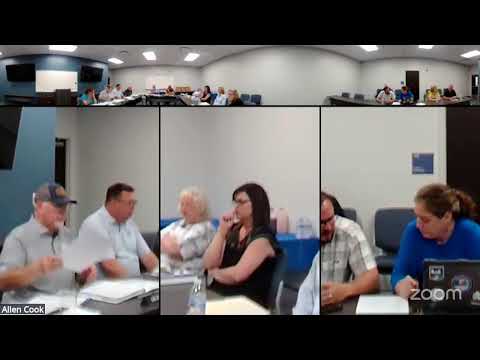
Mitchell County commissioners review $27.9 million proposed budget, debate one‑year pre‑K funding options
Summary
County finance staff presented a proposed fiscal 2025–26 budget of $27.9 million, balanced with a $2.1 million fund‑balance appropriation. Commissioners discussed preserving fund balance, possible one‑time uses (including dissolving an EDC capital reserve), and scheduling a June public hearing and final adoption in June.
Mitchell County commissioners on Tuesday reviewed a proposed fiscal 2025–26 budget that county finance staff said totals $27.9 million and relies on a $2.1 million appropriation from the county’s fund balance to balance the plan.
“‘This is for 2526 proposed budget, and this is a total of $27,900,000 with the fund balance appropriation to balance this budget of 2,100,000,’” a county staff member told the board during the presentation.
The presentation laid out the budget’s main assumptions and pressures. The proposal holds the current property tax rate at 56¢ per $100 of assessed value; staff said one cent of that rate would generate about $227,150. The county is projecting a 97% tax collection rate for 2025–26. The budget includes a 3% cost‑of‑living adjustment for employees and recognizes a recent increase in state retirement contribution rates (14.46% for regular employees and 16.08% for law enforcement, as stated during the meeting). The presenter also flagged increasing operational costs for new and expanded facilities, including the law enforcement center and Butler School, and an anticipated full year of operating costs for the county’s new facilities.
Why it matters: Commissioners said the county remains in a fragile cash position because of ongoing recovery and rebuild expenses following a recent storm and because multiple large capital and FEMA‑related projects are still in progress. The board must decide whether to use one‑time fund balance to cover recurring or near‑term needs — notably a one‑year gap in local pre‑K operations — or to preserve that cushion for disaster response and cash flow.
Most of the discussion focused on a one‑year shortfall for local pre‑K operations. County staff and board members discussed several options to cover the immediate gap without raising taxes, including using the fund balance, delaying or reducing certain capital purchases, temporarily reducing some outside allocations and examining a long‑standing EDC capital reserve. Staff said the EDC reserve was created by a prior board resolution and currently has about $110,831 remaining; the reserve is restricted and has been held for job‑creation matches unless the EDC or the board agrees to repurpose it.
Board members and staff emphasized that some options would require separate legal or procedural steps. For example, using the EDC reserve would likely require dissolving or amending the prior resolution that created it and coordination with the EDC board. Commissioners also discussed delaying the purchase of one vehicle (the presenter referenced roughly $61,000 for a vehicle line item) and trimming outside‑agency allocations as possible one‑time offsets. Staff warned that FEMA reimbursements and other disaster funds will continue to arrive over several years and that some project costs and reimbursements (the presenter estimated more than $10 million are already in the current budget related to FEMA and that similar amounts could be added next year) remain uncertain in timing.
The board did not take a formal vote on policy changes during the meeting. Instead, commissioners reached consensus on scheduling next steps for the budget process: a public hearing on the proposed budget on June 2 and a target date for final adoption (the board discussed June 17 as the regular meeting for adoption, or a special meeting at the end of June if needed). Staff said they will refine numbers and return with any changes before adoption.
Board members asked staff to check a specific state statute cited in discussion about whether certain preschool funding obligations must be funded from Article 44 receipts or from general county funds; staff agreed to research the statutory language and to report back. Commissioners also asked staff to prepare options that would show the fiscal impact of (a) funding one year of pre‑K from fund balance, (b) using available carryover or restricted reserves (including the EDC reserve) and (c) reducing selected capital or outside agency allocations, and to present those scenarios at the next budget workshop.
The meeting included several other budget details discussed by staff: an estimated Article 44 (local sales tax) allocation of about $408,093 for the county, with $130,000 slated for the county EDC in the draft; a small contingency of $20,000; capital items including a dispatch repeater upgrade (about $46,000); and a modest carryover of ARPA funds for senior center projects. Staff also reiterated that the budget assumes continued payment for 24‑hour ambulance coverage included in the current year.
Board members voiced competing priorities — a desire to preserve fund balance for disaster and cash‑flow needs versus urgency to avoid cutting pre‑K services for one year — and asked staff to return with a short list of practical one‑time funding scenarios and the legal steps needed to repurpose restricted reserves.
The board scheduled a public hearing for June 2 and agreed to target final action in June; staff said a final adoption will require updated, auditable numbers and any legal resolutions needed to free restricted funds.