
North Dakota lawmakers boost housing funds, quadruple homeless grant but several proposals fall short
Get AI-powered insights, summaries, and transcripts
Subscribe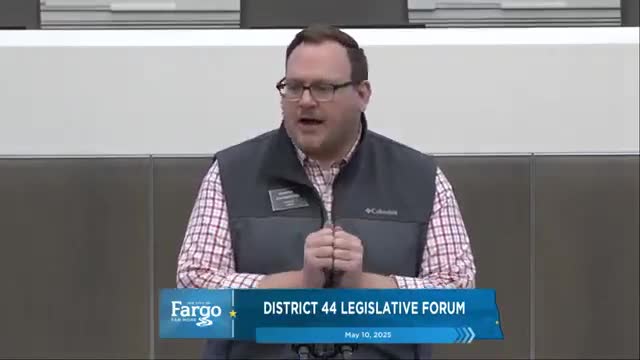
Summary
Lawmakers approved new cash for the Housing Incentive Fund and a $10 million statewide homeless-services grant, while other requests — including a $25 million HOME infrastructure proposal and a $13.5 million rent‑help carryover — were cut in late budget negotiations.
Lawmakers this year increased state spending on housing and homeless services, directing new cash to developer incentives and service providers while several larger proposals failed in final budget negotiations.
At the center of the measures, the housing incentive fund received $25,000,000 in cash, described by forum speakers as the largest direct cash appropriation to the fund since it was created during the oil boom. Josh Beauchea, who spoke at the Fargo forum, said the money is meant to serve as bridge financing through the North Dakota Housing Finance Agency: "The housing incentive fund is used through the North Dakota Housing Finance Agency as a bridge financing tool for developers, and getting that number up was really important."
Advocates and legislators also secured a $10,000,000 appropriation to the North Dakota homeless grant program; speakers said that amount represented a roughly fourfold increase over the program’s historical state funding and will flow to local service providers for rapid rehousing and supportive services. Beauchea said the homeless grant money "is a recognition of the emergency, the crisis we are in in our state and that every community is facing as it relates to housing."
Not every request made it through. A separately proposed $25,000,000 HOME infrastructure program intended to offset development costs in smaller communities was rejected in the final hours, as was roughly $13,500,000 in residual funding for the Rent Help program that had been seeded by federal COVID-era funds. Forum speakers said the Rent Help reduction removed money previously used to pay landlord claims and help households avoid eviction. Representatives at the forum characterized the Rent Help cut as a late, rapid appropriation change made while negotiators trimmed the overall budget.
Speakers also described additional unmet requests: $3,000,000 for a proposed comprehensive engagement/deflection center in downtown Fargo did not receive funding, and local advocates continue to press for sustained levels of grant support and clearer outcome measures. "What data are we collecting to show that people are getting housed?" Beauchea asked; he said advocates and officials plan continued work during the interim to set performance metrics.
Carla, a state representative who serves on the House Appropriations Committee and took part in the forum, urged continued coordination between state and local leaders so that future appropriations address not only construction but also operating supports and rehabilitation of existing housing stock.
Ending
Local stakeholders said the new funds provide short‑term relief and more capacity for developers and service providers, but they emphasized the state must sustain funding and measure outcomes if the investments are to translate into long‑term reductions in homelessness. Several larger infrastructure and rental‑assistance proposals failed in final budget negotiations, leaving gaps advocates want addressed in the next session.