Morristown council introduces 12-year tax-exemption plan for Lackawanna Place redevelopment
Loading...
Summary
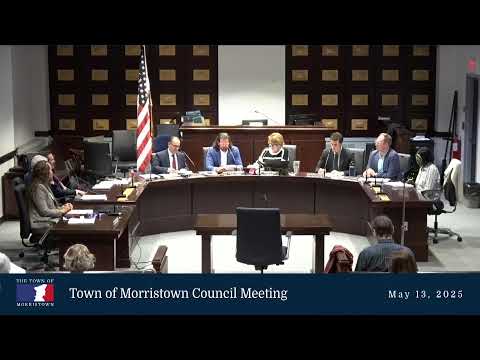
Morristown — The Town Council on May 13 voted to introduce an ordinance (O-20-2025) that would authorize a 12‑year long‑term tax exemption and financial agreement with Lackawanna Place Morristown Urban Renewal LLC to build an 89-unit, transit‑oriented rental project behind the train station.
Morristown — The Town Council on May 13 voted to introduce an ordinance (O-20-2025) that would authorize a 12-year long‑term tax exemption and financial agreement with Lackawanna Place Morristown Urban Renewal LLC to build an 89-unit, transit‑oriented rental project behind the train station.
The measure was introduced by the mayor and approved unanimously by council members present. Town financial advisers and redevelopment counsel told the council the short, 12‑year agreement is intended to make the project financeable while returning substantial revenue to the town during the exemption period.
In a presentation to the council, Bob Powell of Nassau Capital Advisors said the project would include 89 rental apartments (about 76 market‑rate studios, one‑ and two‑bedrooms and 13 income‑restricted units at roughly 50% of Morris County area median income). He described the proposed financial agreement as a payments‑in‑lieu‑of‑taxes (PILOT) contract under the state long‑term tax‑exemption statute and summarized its negotiated terms: 13% of annual gross revenues (AGR) in years 1–5, 13.5% in years 6–10 and 14% in years 11–12, at which point the property would revert to the tax rolls.
“A pilot agreement is a form of financial assistance that municipalities are allowed to provide to developers under a state statute,” Powell said, explaining that annual gross revenues include all tenant income (rents, fees and other project revenue) and that the payments are secured by a lien on the property similar to a tax lien.
Powell told the council the project’s estimated total cost is about $45 million, with roughly $18 million of developer equity. Under Powell’s model, in a stabilized year (year 2 in his analysis) the project would generate total PILOT payments near $577,000, of which the town’s net share after statutory distributions and fees would be roughly $477,000. Powell said the negotiated PILOT would reduce the town’s tax take relative to full conventional taxes by roughly 15% in the early years but also provides predictability that lenders prefer.
Redevelopment counsel Johnny Glissino described the project as “transformative,” noting the PILOT was necessary to attract private investment. “But for the pilot agreement that is before you tonight, this project would never get built,” Glissino said during council remarks.
Council discussion emphasized the project’s transit orientation and affordable‑housing contribution. Council President Umbriac said the administration negotiated a shorter, more town‑favorable term than many PILOTs and announced the administration’s plan to direct part of the municipal benefit to a local nonprofit: “We are going to do a financial agreement . . . with the Morris Educational Foundation for 12 years at $25,000 per year,” Umbriac said, describing the MEF as a nonprofit partner to the public schools. Council members said the payment is intended to support school programs and not to replace conventional school funding.
Action and next steps: Mayor Tim D. P. Doherty moved to introduce ordinance O-20-2025. The council voted to introduce the ordinance by title; the ordinance will return for a public hearing and final vote at the May 27 council meeting.
Why it matters: Town officials said the negotiated PILOT aims to make the project financially viable while preserving a higher share of conventional taxes than typical, accelerating redevelopment of a long‑vacant surface lot adjacent to transit and adding income‑restricted units that count toward the town’s affordable‑housing obligations.
Context and caveats: Powell and other advisers cautioned that projected returns are at the low end of market expectations and that the project’s economics depend on lease‑up, assumed rents and construction costs. Powell said the modeling used conservative 3% rent growth assumptions. The council did not adopt the ordinance on May 13; it was introduced and scheduled for public hearing on May 27.