Get Full Government Meeting Transcripts, Videos, & Alerts Forever!
Get email alerts on the Transportation Infrastructure topic
No spam. Unsubscribe anytime.
County staff detail $1 billion infrastructure need over decades; road and bridge mill levy central to plan
Summary
Development & Transportation officials presented a multi‑decade infrastructure backlog and Transportation Mobility Plan that together approach $1 billion in needs; staff said restoring the full road & bridge mill levy is central to sustainably funding both maintenance and multimodal projects.
Jefferson County Development & Transportation (D&T) told the Board that county infrastructure needs total roughly $1 billion over a 20–30 year horizon if the county wants to both maintain existing assets and build multimodal, pedestrian and bicycle facilities identified in the Transportation Mobility Plan (TMP).
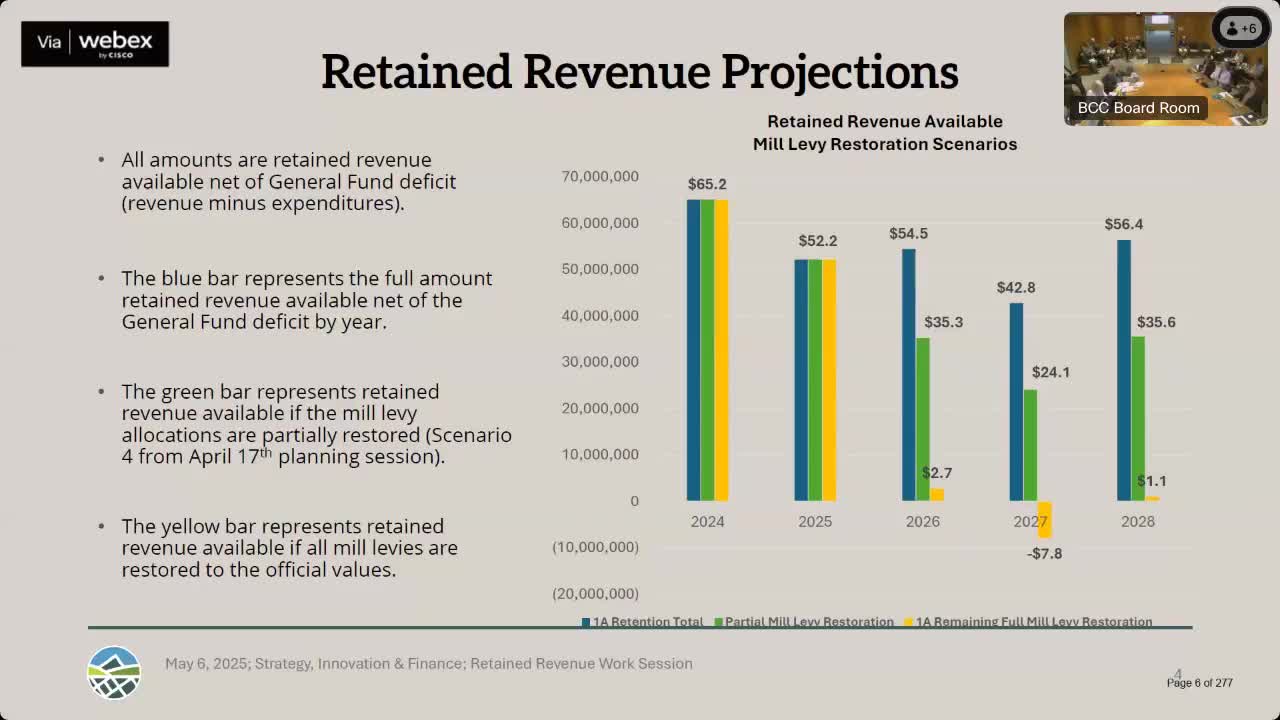
D&T presented two funding paths: continue at current funding levels (partial service), or restore the full authorized road & bridge mill levy to enable a larger maintenance program plus new multimodal projects. "We need approximately $17.8 million more annually devoted just to our maintenance infrastructure program," the D&T presenter said, explaining that restoring the full mill levy would allow a 15‑year resurfacing cycle and materially reduce deferred maintenance.
Key figures and priorities: - D&T estimated roughly $630 million in currently unfunded road projects plus ~ $500 million of new TMP projects (total ~ $1.13 billion). - Under current funding the county resurfaces about 120 lane miles per year; full mill‑levy restoration would let the county reach roughly 200 lane miles per year and reduce lifecycle costs. - Bridge and structure work: D&T maintains 108 bridges and hundreds of minor structures; staff currently budgets around $1.25 million for structures and said critical needs are growing. Restored funding would increase structure funding to about $3.25 million a year, enabling more repairs and replacements.
Staffing and retention: D&T asked for additional field and inspection staff (two engineering inspectors, two construction inspectors, one transportation planner) and said recruitment/retention is a major constraint. "We pay around $21 per hour for a starting road and bridge employee and $25 once they get their CDL," the presenter said, noting neighboring jurisdictions often pay higher wages and offer bonuses that draw recruits away.
One‑time vs ongoing: D&T distinguished maintenance (ongoing) from one‑time capital projects. Road and Bridge is an enterprise fund with statutory restrictions: federal and local rules mean money already in the general fund cannot be moved into Road & Bridge; restoring the authorized mill levy increases Road & Bridge revenue for future years but typically only takes effect for collections the year after a levy change, which can delay project spending until 2027 if the levy is changed in late 2025.
Where 1A dollars fit: Staff identified certain TMP and flood‑related activities that can be eligible for 1A retained revenue if the board determines they fit ballot language; D&T also proposed a $2.5 million 1A request intended for right‑of‑way mitigation and survey work, while acknowledging some of that sum may be reallocated to flood needs.
Commissioner questions and next steps: Commissioners asked D&T to present the equivalent figures for a partial mill‑levy restoration so the board can compare outcomes. Staff agreed to refine the requests into options tied to board direction.
Ending: D&T asked the board to consider mill‑levy restoration as part of a long‑term infrastructure strategy and to provide direction on the mix of retained‑revenue and levy changes the board prefers.