Get Full Government Meeting Transcripts, Videos, & Alerts Forever!
Get email alerts on the Charter Amendments topic
No spam. Unsubscribe anytime.
City staff explain three charter amendments on March 4 ballot: firearms in liquor-licensed establishments, rental-notice authority, and redistricting process
Summary
City staff explained three charter amendment proposals on the March 4 ballot: a firearms ban in liquor-licensed establishments, a new approach to rental-notice requirements and a redistricting process change.
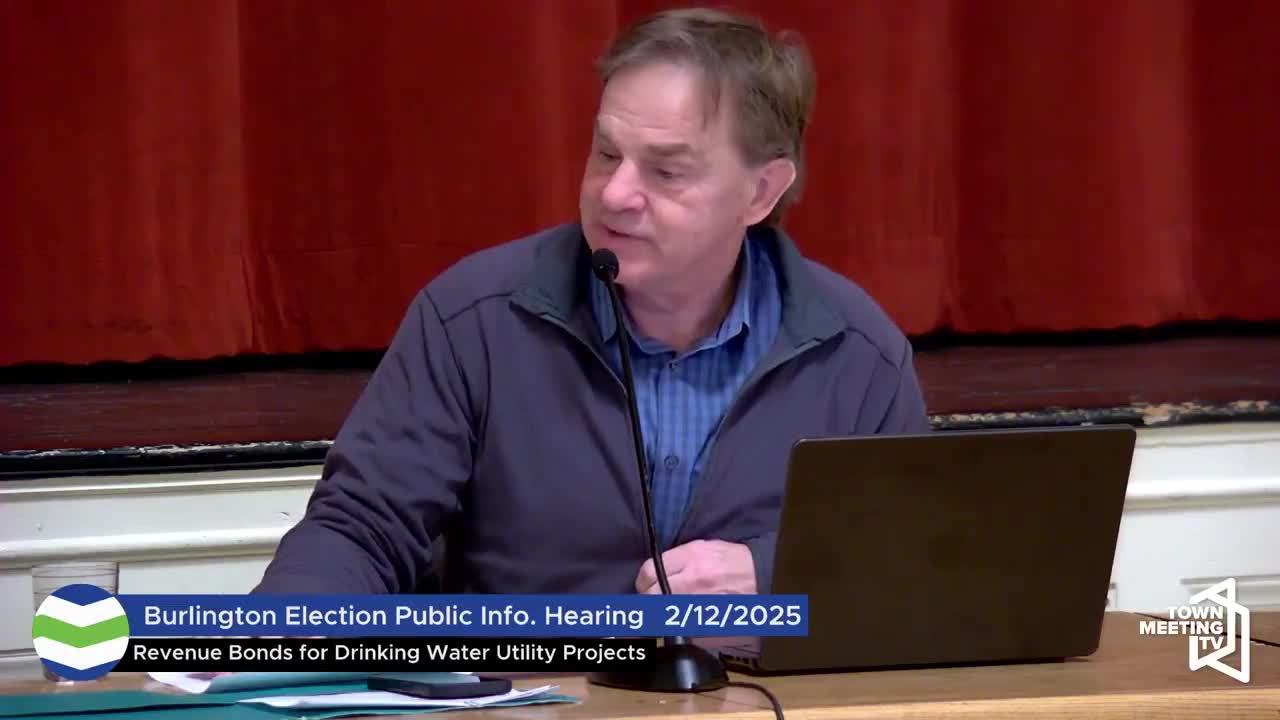
Erin Jacobson, chief of staff, and the city attorney’s office explained three proposed charter amendments that will appear on the March 4 ballot and described the process that follows a voter-approved charter change.
"The Vermont General Assembly has adopted a charter for the city of Burlington," Jacobson said, adding that charter amendments approved by voters are forwarded to the legislature for final enactment. She summarized each ballot measure:
1) No guns in bars: The proposed amendment would add a charter provision allowing the city to prohibit possession of firearms in any establishment licensed to serve alcohol (first-class liquor license). Exemptions in the draft include on-duty law enforcement, members of the armed forces and the Vermont National Guard acting in their official capacity, and owners or operators who are lawfully permitted to possess firearms. The city attorney’s office noted that under 24 V.S.A. section 2295, state law currently limits municipal regulation of firearm carry; the charter change would be required to allow a municipal restriction. The presenter reminded listeners that Burlington voters approved a similar proposal in 2014 but the legislature did not act on it then.
2) Rental-notice authority: The amendment would remove specific notice periods currently written in the charter and authorize the city council to adopt by ordinance the timing and content of landlord and tenant notice requirements, including special notice periods or content for vulnerable populations such as elderly tenants, tenants with disabilities and low-income tenants. The city attorney’s office referenced 9 V.S.A., chapter 137, as the state statute that governs residential tenancies and rental notices.
3) Redistricting: The proposed change would delete the charter section that currently contains detailed, legally described ward and district boundaries and instead allow the city council (no more frequently than every five years) to propose boundary adjustments based on U.S. Census data; those changes would take effect upon voter approval and would not require the General Assembly’s reapproval. The effect would be to simplify the legal process for redistricting in Burlington and keep implementation at the local-voter level.
Jacobson and the city attorney’s office emphasized that a "yes" vote on any of the three items would forward the proposed charter amendment to the Vermont General Assembly for consideration; a "no" vote would keep the charter unchanged. No members of the public offered testimony during the hearing.