Get Full Government Meeting Transcripts, Videos, & Alerts Forever!
Get email alerts on the Transportation Demand Management topic
No spam. Unsubscribe anytime.
Burlington committee agrees to pursue TDM ordinance revision after heated debate over selling residential permits to commuters
Summary
Committee moves to start ordinance work after months of debate
Committee moves to start ordinance work after months of debate
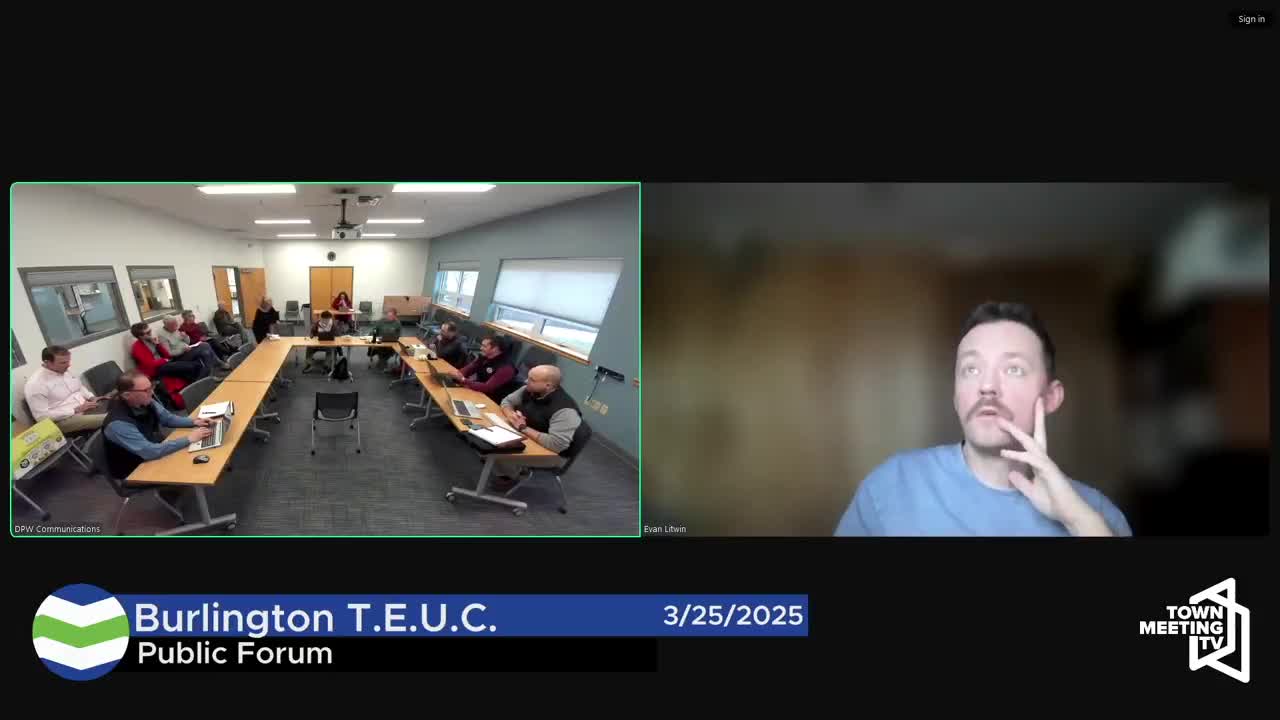
The Burlington City Council Transportation & Utilities Committee voted Tuesday to begin drafting revisions to the city's transportation demand management ordinance and to bring the full TDM plan to the full City Council for a presentation and broader review. The decision came after more than an hour of public comment and committee discussion focused largely on one controversial proposal: allowing commuter permits for nonresidents to park in residential permit zones.
Why it matters: neighbors say the commuter-permit idea could undermine existing residential parking protections and the city's TDM goals
The committee's move to advance ordinance work kept the focus on creating a point-based TDM requirement for new development while leaving potentially divisive implementation questions, including any residential parking changes, to more public engagement. "We would not implement any of the action items in this plan without doing more engagement," Director Charles Dillard told the committee when presenting the plan.
Committee discussion and public comment
Residents and neighborhood leaders urged caution and broader public outreach. Jean Keller, who identified herself as a Ward 1 resident, told the committee she reviewed the draft and called the idea of selling commuter permits "rather irrational," arguing it would encourage single-occupant vehicle trips and could direct commuter parking into residential streets. Keller asked a series of operational questions about permit duration, monitoring, enforcement costs and how peak occupancy would be measured.
Several other residents and councilors amplified those concerns. Becca Brown McKnight, city councilor for Ward 6, said she had received "around 25 emails" from constituents opposed to the proposal and said the city should proceed with public engagement before making changes to residential parking. Sharon Bush and others urged neighborhood-by-neighborhood outreach, noting differences in distance to downtown and existing parking pressures.
Director Dillard and staff emphasized that the draft plan includes multiple tools and that the residential-permit concept was only one potential measure. Dillard described a point-based approach tailored to development size and location and cited neighboring municipalities' programs as models. "If through the engagement, it is clear that this particular strategy is not desired, of course, we could move it from the action," he said.
Committee action and next steps
The committee voted to schedule work on the TDM ordinance for the next committee meeting, to ask staff (Director Charles Dillard) for the existing ordinance and any draft language or materials, and to request a full-council briefing on the TDM plan so all councilors can review the proposals before action. The motion passed on a voice vote with no recorded roll-call dissent.
What remains unresolved
Committee members and the public repeatedly said residential permit changes should not proceed without robust engagement. Several councilors asked that a representative from the Public Works Commission, which currently administers the residential permit program, participate in any outreach so technical and operational questions are addressed early. The committee also flagged a need to clarify jurisdictional roles (what the council decides vs. the commission) in any future ordinance changes.
Ending
Staff will return with the existing TDM ordinance text, any draft revisions and materials for a dedicated ordinance discussion at the committee's next meeting; the committee also seeks a fuller briefing for all council members before further votes. The draft plan and public comments were left on the record for subsequent engagement and review.