Lifetime Citizen Portal Access — AI Briefings, Alerts & Unlimited Follows
Draft Walk/Bike action plan reviewed; councilors press for funding and faster implementation
Loading...
Summary
Committee reviewed a draft update to Burlington’s Walk/Bike (active transportation) plan; staff urged the update to satisfy federal grant requirements and to position the city for Safe Streets for All funds, while council members asked for prioritization, cost estimates and a tighter implementation timeline.
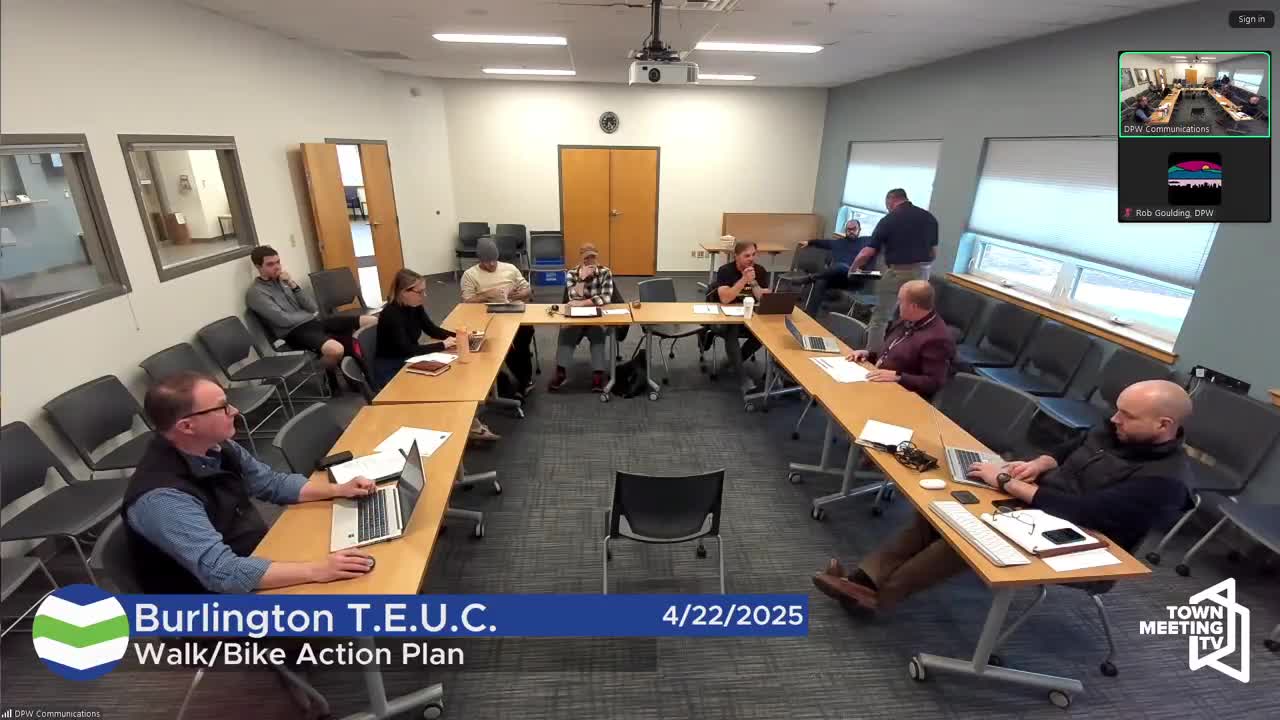
BURLINGTON, Vt. — City staff walked the Transportation, Energy & Utilities Committee through a draft update to Burlington’s active‑transportation (walk/bike/roll) plan and said the update is both required by federal guidance and intended to position the city to pursue grants such as the U.S. Department of Transportation’s Safe Streets for All program.
Philip Peterson, senior transportation planner, told the committee the draft emphasizes arterial corridor configurations (for example narrowing lane widths and adding buffered bike lanes on corridors such as Shelburne Road), data‑driven countermeasures at high‑crash locations and project lists that could be advanced through grant applications. “We need to show the federal government that as a community we’re still committed,” Peterson told the committee.
Nut graf: councilors and public commenters said the plan contains useful project ideas but that the city needs clear prioritization, local funding strategies and realistic timelines so projects do not stall while awaiting competitive federal grants.
Committee members focused on two practical issues: how to pay for near‑term projects that are shovel‑ready if federal grants carry long delivery timelines, and what a realistic short‑term implementation horizon should be. Peterson said many federal grants have multi‑year lead times; the Safe Streets for All grants typically require several years between award and construction because of federal permitting and compliance processes. He said staff will prepare a grant proposal and recommended projects but acknowledged that federal funding alone can slow implementation.
Councilors asked staff to return with ballpark cost estimates for high‑priority projects and a proposed delivery timeline (for example, a five‑year “aggressive but realistic” implementation window). Several public commenters and council members urged that the walk/bike update be coordinated with the citywide transportation plan and other corridor and land‑use initiatives so the city does not build isolated improvements that do not advance broader mode‑shift goals.
Public commenters urged the city to invest more in frequent, reliable bus service and in physically separated east‑west bike connections; several asked the city to consider devoting recurring local funding to active‑transportation projects rather than relying solely on grants. Nolan Rogers, an online participant, said the city should prioritize walking and biking infrastructure that creates attractive, high‑value destinations similar to Church Street and the waterfront bike path.
Ending: staff told the committee they will revise the draft to incorporate committee feedback, supply cost ballparks and prioritized projects, and return with a grant application plan and a proposed timeline for implementation and coordination with the broader transportation plan.