Get Full Government Meeting Transcripts, Videos, & Alerts Forever!
Get email alerts on the Municipal Budget topic
No spam. Unsubscribe anytime.
Geneva council opens 2026 budget workshop, outlines timeline and options for water, sewer and capital spending
Summary
At a workshop meeting, Geneva city officials reviewed the components of the 2026 budget, discussed water and sewer rate study timing and constraints on using enterprise fund revenue, and outlined the capital-improvement and budget-adoption timeline.
Geneva City Council met in a 2026 budget workshop focused on how the city’s three core funds are built, timing for a water and sewer rate study, and the capital-improvement and budget-adoption schedule. City Manager (name not specified) opened the meeting by saying the session would “give you kind of an outline of all the factors that go into [the] budget” and stressed council would not be setting the budget that night.
The workshop walked council members through the city’s budget structure, with Adam (staff member) explaining that municipal budgets in Geneva are organized into three principal funds: the general fund, the water fund and the sewer fund. “General fund budget is essentially anything that is not water and sewer and capital,” Adam said. He summarized revenue sources for the general fund as property and sales taxes, PILOT payments, licenses and fines, and said water and sewer funds rely principally on user fees and grants and are restricted to those utilities’ uses.
Why it matters: councilors pressed staff for clarity about which revenues can be used where and how the budget process will unfold so they can set policy direction early. Council members emphasized interest in both limiting tax-levy growth and pursuing revenue options in enterprise funds (water and sewer) that by law must be spent on those services, not returned to the general fund.
Most immediate items
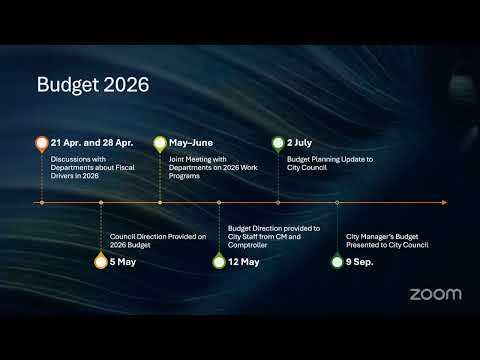
- Water and sewer rate study: Staff said a consultant RFP was due that week and that preliminary results are expected in July, with the objective of incorporating any changes into the 2026 budget process. “The RFP is due back this week, and the plan is to have preliminary information in July,” Adam said. - Timing and process: Council was given a schedule: department briefings in April (department heads will present work programs, not final numbers), council direction-setting in May, a manager’s proposed budget in September, public hearing later in September, and adoption before Nov. 1 per the charter.
Key budget constraints and financial context
- Funds and constraints: Staff repeatedly clarified that water and sewer revenues cannot be transferred to the general fund for general use: they must fund enterprise operations and capital. The manager and staff emphasized any rate increases or billing changes would need to be directed back into the respective utility systems. - Fund balances: Staff reported estimated unaudited 2024 year-end fund balances (rounded): general fund about $5.2 million (roughly 26% of the 2025 budget), water fund about $1.6 million, and sewer fund about $2.4 million. Staff described those fund balances as “very healthy” for current emergency and cash‑flow needs. - Debt and bond rating: The city’s outstanding debt was cited (about $49 million). Staff said sewer debt is the largest share (roughly 45% of total debt, per the presenter) and that the city’s debt capacity is below New York State’s typical 9% limit; Geneva is currently around 5.7% of taxable assessed value. Staff said Geneva’s credit rating is high (an "A" level category with a positive outlook), which reduces borrowing costs. - Tax cap and levy: Staff reviewed the New York State property-tax cap (2% or CPI, whichever is lower) and the mechanics of overriding the cap (a supermajority 60% vote). They advised that municipalities often pass an override as a precaution even if they do not ultimately exceed the cap because state calculations and local estimates can differ.
Revenue opportunities and limits discussed
Council members asked about options to grow revenue without increasing the property-tax levy. Topics included: - Water and sewer: revising billing practices and rates, exploring bulk or intermunicipal rates when selling water to other jurisdictions, and re‑examining prior benefit-assessment district options. Staff cautioned any revenue from those sources must be used on water/sewer systems and not to provide general tax relief. - PILOTs and IDA agreements: Staff reiterated that Payments in Lieu of Taxes (PILOTs) are negotiated with the Industrial Development Agency (IDA) and are recorded as general fund revenue; some PILOTs phase out over time and may be renegotiated or become fully taxable once terms end. - State and federal aid: Staff flagged the state budget as not finalized and said CHIPS and other state aid were included in proposed bills. Federal pass‑through grants that support programs like CDBG or FEMA remain uncertain.
Capital planning and service priorities
Staff walked council through the capital improvement plan (CIP) process, describing a 3–5 year horizon for major projects and noting common funding mixes—grants plus bonded debt—for large projects. They urged council to align capital priorities (roads, plant upgrades, parks) with strategic goals and the city’s capacity to deliver projects in a given year.
Council direction and next steps
Councilors requested clearer breakdowns inside broad budget lines (for example, more detail about line items currently grouped under “contractual services”) and asked staff to present revenue‑goal scenarios that show tradeoffs—what a given levy change would buy in services or capital investment. The city manager and staff said they will provide more granular contract definitions and that department heads will present program-level plans in April and May to inform council’s direction-setting.
Votes at a glance
- Motion to adjourn: Moved by Council Metropolis, seconded by Councilor Morocco; outcome: approved (all in favor, verbal "Aye" recorded in the transcript). No roll‑call tally of individual yes/no votes was recorded in the meeting transcript.
Ending
Staff will circulate the meeting slide deck and supporting materials after the workshop. Council set a May special meeting to finalize budget direction and asked for department presentations in April so members can compare program requests and revenue scenarios before the manager’s September proposal.